



Vintage Pottery Spaniels
These vintage pottery spaniels are traditional mantelpiece ornaments that bring quintessential Victorian character and symmetry to a room.
Vintage Pottery Spaniels
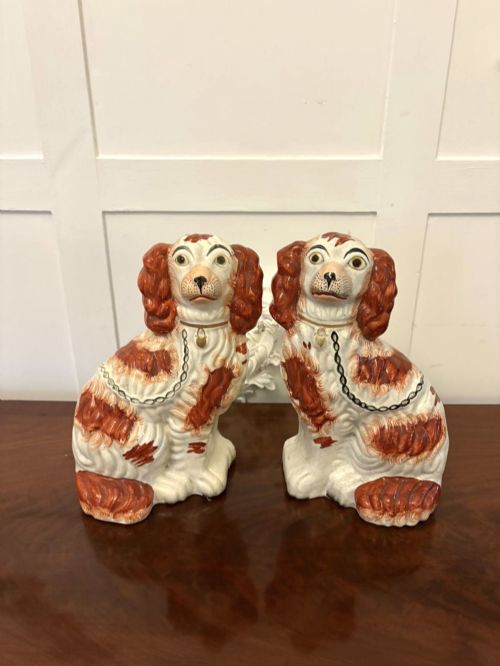
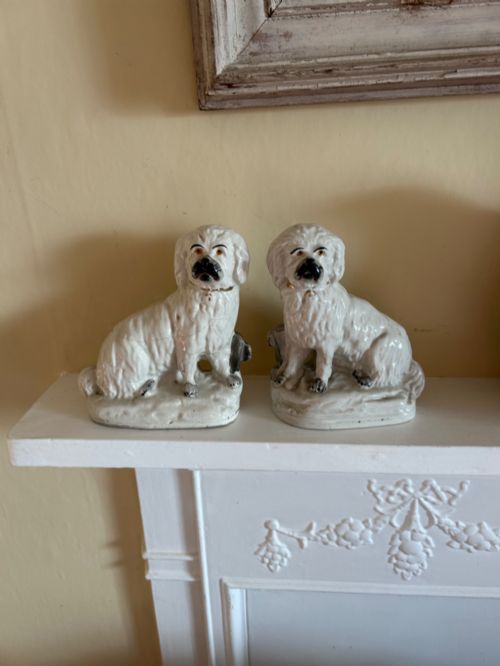
Vintage pottery spaniels are classic fireplace mantel ornaments typically modelled as pairs facing inwards, designed to sit on either side of a hearth. These decorative figures originate from the Victorian period, spanning the nineteenth century from eighteen sixty through to nineteen hundred.
Buyers will encounter various forms on this page, including traditional pairs of Staffordshire dogs, money boxes, hand-painted spaniels, and related ceramic figurines such as Maltese terriers. Most examples follow English traditional styles, often described as comforter spaniels meant to guard the household.
Materials and construction
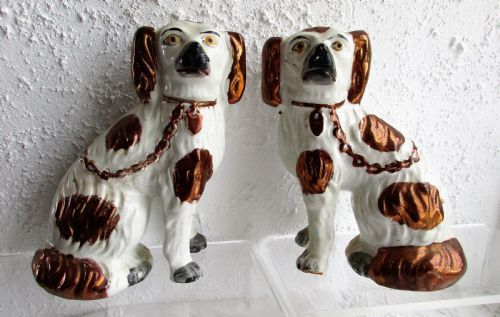
Potters shaped these figures from earthenware and ceramic, forming them as hollow Staffordshire dogs before firing. Artisans then applied colourful enamel, enamel paint, or striking copper lustre glazes to finish the surface.
Many specimens feature delicate gold leaf or gilt highlights applied to collars, chains, and lockets, adding a refined decorative touch to the finished ceramic body.
Vintage Pottery Spaniels Retail Price Guide 2026
Typical asking prices for vintage pottery spaniels among the pieces listed under this phrase on Sellingantiques today, from the lower quarter to the upper quarter. They describe what is for sale here now, not the wider market.
Listings feature Victorian earthenware and ceramic figurines from eighteen sixty to nineteen hundred, including copper lustre and hand-painted styles.
Judging quality in vintage pottery spaniels
The application of copper lustre and gilt highlights also distinguishes better pieces, where metallic finishes remain bright and evenly distributed without heavy fading or excessive rubbing from age.
Beswick
The Vintage Pottery Spaniels Glossary
- Comforter spaniels
- Traditional Staffordshire pottery dog figures modelled after the King Charles spaniel, historically placed on mantelpieces to bring comfort and protection to Victorian homes.
- Copper lustre
- A metallic pottery glaze containing copper that produces a reflective, coppery sheen across the ceramic body when fired in a reducing kiln.
- Earthenware
- Porous pottery fired at lower temperatures, serving as the standard ceramic base material for these nineteenth-century figures before glazing and painting.
- Gilt
- A thin layer of gold leaf or gold paint applied to ceramic details such as padlocks and chains to enhance the ornamental appearance.
Vintage Pottery Spaniels: Frequently Asked Questions
How were these spaniel figures originally displayed?
These ceramic dogs were traditionally positioned in symmetrical pairs on either end of a living room mantelpiece, facing inward toward the centre of the fireplace.
Victorian households regarded them as comforting household guardians that symbolized loyalty and domestic security.
What periods do these pottery spaniels come from?
The pieces available originate predominantly from the Victorian era, spanning the nineteenth century with specific examples dated across the eighteen sixties, seventies, eighties, and nineties.
Production continued into nineteen hundred, maintaining the traditional English Staffordshire styles established earlier in the period.
How do I identify a money box version?
Certain Victorian Staffordshire dog figures incorporate a functional coin slot neatly moulded into the top of the ceramic body or head.
These money boxes combine the standard decorative mantel ornament format with a practical receptacle for saving coins.
What variations exist in the painted finishes?
Decorations range from plain white bodies with gold gilt highlights to rich copper lustre finishes and vibrant red or black and white enamel paint.
Hand-painted touches define the eyes, muzzles, and collars, meaning no two pairs share identical facial expressions.