



Vintage Pottery Creamers
These vintage pottery creamers are small ceramic table vessels for serving milk or cream, bringing tactile historic charm to your daily tea service.
Vintage Pottery Creamers
When you search for vintage pottery creamers, you encounter an array of utilitarian vessels designed to accompany tea or coffee services. These pieces range from simple utilitarian jugs to whimsical figural cow creamers produced across British and continental workshops.
The selections span several distinct eras, notably the eighteenth and nineteenth centuries, featuring periods such as the Georgian, Regency, and Victorian epochs. You will frequently find earthenware bodies shaped into traditional jugs or modelled as cattle, alongside pearlware and creamware examples.
Regional variations appear regularly, including Welsh folk art productions, Leeds creamware, and French provincial wares. The forms serve both functional pouring roles and decorative cabinet display purposes.
How they were made
Potters built these vessels using earthenware, pearlware, and creamware bodies shaped on the wheel or pressed in moulds to achieve animal and figural forms like the classic cow creamer. Artisans then applied liquid clay slips and smooth ceramic glazes to seal the porous bodies.
Decoration relied on hand-applied techniques including colourful enamel painting, purple transfer printing, and lustrous metallic finishes such as copper lustre. Firing took place in traditional kilns, fixing the mineral pigments and vitreous coatings to the ceramic substrate.
Vintage Pottery Creamers Retail Price Guide 2026
Typical asking prices for vintage pottery creamers among the pieces listed under this phrase on Sellingantiques today, from the lower quarter to the upper quarter. They describe what is for sale here now, not the wider market.
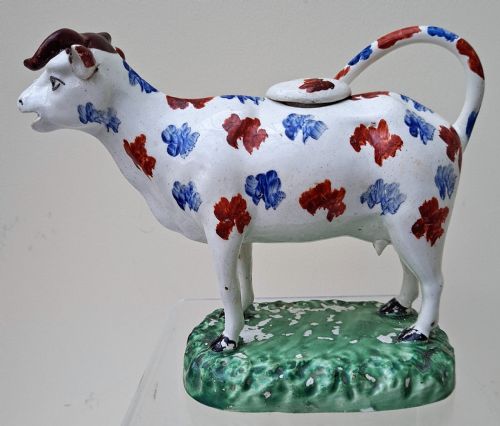
Several cows stand ready to pour your morning milk straight from their noses.
What varies in quality
Quality in these vessels rests upon the crispness of the modelling, particularly in figural pieces like cow creamers where facial details and anatomical proportions reveal the modeller's skill. Finer examples exhibit precise brushwork in hand-painted enamel and even distribution of lustre or transfer decoration.
The refinement of the ceramic body itself sets superior items apart, with thin, well-thrown creamware walls contrasting against heavier, coarser folk art pieces. Preservation of the original glaze sheen and vibrancy of the pigments dictate the overall desirability of the object.
Leeds Pottery·Herculaneum·Copeland Spode·Staffordshire
The Vintage Pottery Creamers Glossary
- Creamware
- A refined earthenware developed in Yorkshire featuring a pale straw or butter-yellow hue under a clear lead glaze. This ceramic body became standard for domestic tableware during the eighteenth century.
- Pearlware
- An improved earthenware introduced by Josiah Wedgwood that used a bluish glaze to counteract the natural yellow tint of the clay body. It often serves as a ground for vibrant underglaze or transfer-printed decoration.
- Cow creamer
- A hollow ceramic figurine of a cow modelled with an opening on the back for filling and the mouth forming the pouring spout. These whimsical vessels were popular in Georgian and Victorian British potteries.
- Lustreware
- Pottery finished with a metallic glaze that reflects light with a copper, silver, or gold sheen. This technique involves firing metallic oxides in a reduced oxygen atmosphere.
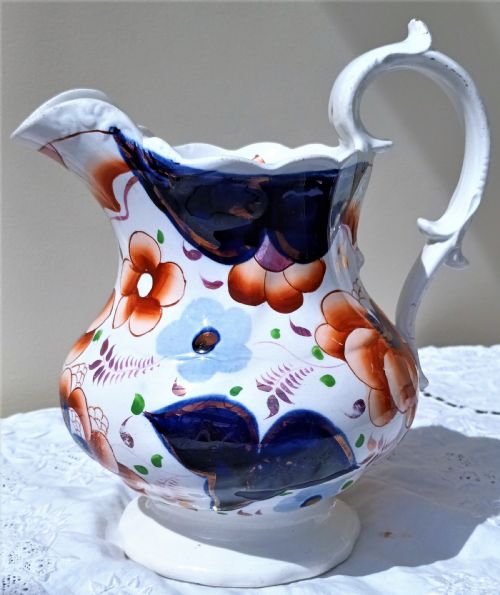
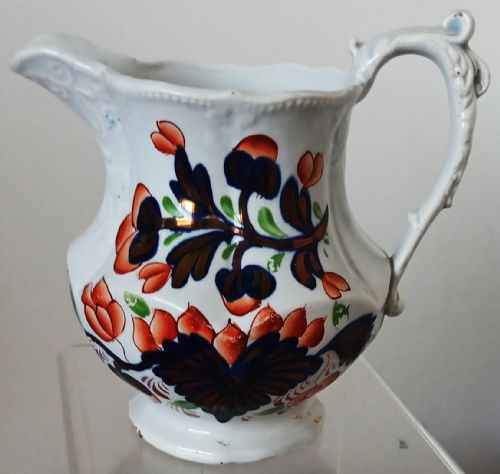
- Gaudy Welsh
- A style of brightly coloured, hand-painted pottery produced in the nineteenth century featuring cobalt blue, iron-red, and copper lustre accents. It was largely made for export to Wales and rural markets.
Vintage Pottery Creamers: Frequently Asked Questions
What were cow creamers used for?
These figural vessels served as functional cream jugs on tea tables, where guests poured milk from the animal's mouth.
They also functioned as decorative conversation pieces in middle-class dining rooms.
How do I date a ceramic creamer?
Dating relies on identifying the ceramic body type, such as distinguishing creamware from later Victorian earthenware.
Decoration styles, potting techniques, and any impressed factory marks provide further chronological clues.
Are these creamers safe for daily use?
Most antique pieces are better suited for display or gentle service due to historical glaze compositions and age.
Hand washing in warm water preserves the fragile enamels and metallic lustre finishes.
What is the difference between pearlware and creamware?
Creamware utilises a warm, yellowish glaze over a refined earthenware body typical of the eighteenth century.
Pearlware incorporates cobalt in the glaze to create a whiter appearance that mimics porcelain.