
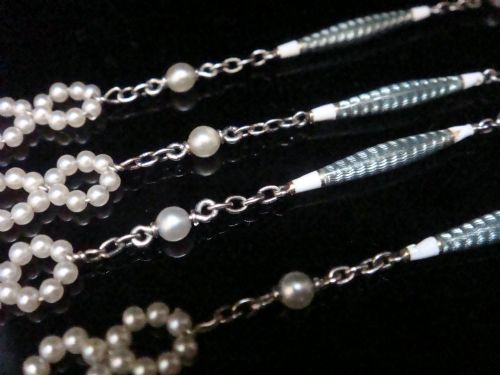


Vintage Platinum Pearl Necklace
A vintage platinum pearl necklace combines luminous pearls with durable metal settings across Edwardian, Art Deco, and Mid-Century periods.
Vintage Platinum Pearl Necklace
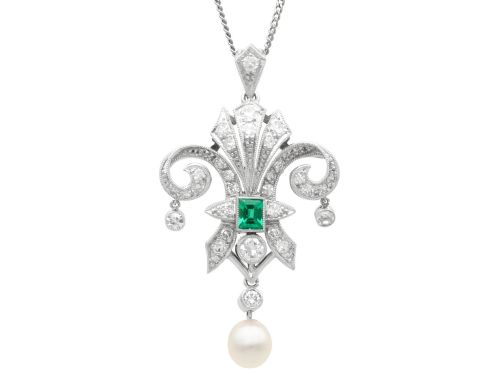
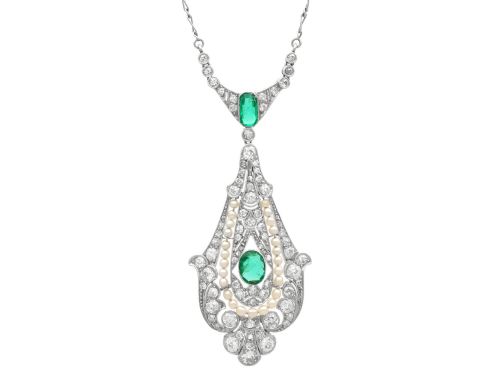
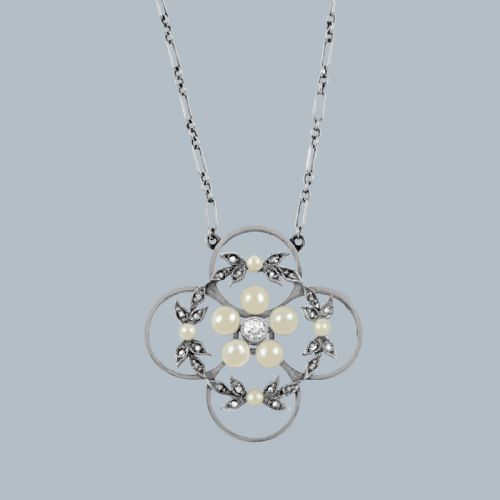
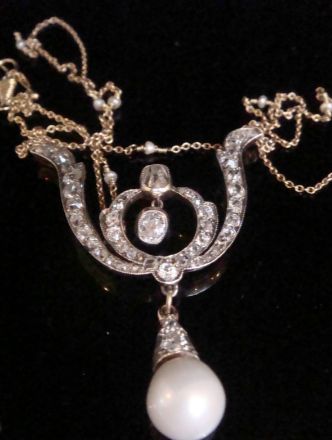
A vintage platinum pearl necklace encompasses delicate pendants, long chains, and single strands incorporating diamonds, gold, and coloured gems. These pieces span the Edwardian era, the 1920s, 1930s, and mid-century, reflecting changing aesthetic preferences over decades of design.
Buyers most frequently encounter Edwardian and 1920s examples on this page, often featuring intricate platinum work paired with seed pearls or saltwater pearls. Many designs integrate complementary stones such as diamonds, emeralds, opals, and peridots alongside gold elements.
Materials and Construction
Craftsmen utilised strong platinum to create fine, intricate settings that could securely hold pearls and small diamonds without bulky metalwork. This metal choice allowed for delicate openwork designs characteristic of the Edwardian and Art Deco periods.
Makers combined platinum with various golds, including 15ct gold and yellow gold, while stringing natural seed pearls and saltwater pearls alongside gemstones like emerald, opal, and enamel.
The site's listings show pieces spanning five distinct periods, from Edwardian and 1910 through the 1920s, 1930s, and 1960.
Assessing Quality
Quality rests upon the fineness of the platinum metalwork and the uniformity and lustre of the pearls used in the construction. Pieces featuring certified natural saltwater pearls or substantial diamond accents stand apart from simpler seed pearl designs.
The complexity of the metal setting, particularly in Edwardian and Art Deco pendant necklaces, dictates the level of craftsmanship. Integration of supplementary stones like emeralds or opals further distinguishes finer examples.
The Vintage Platinum Pearl Necklace Glossary
- Platinum
- A dense, strong, and ductile precious metal prized in antique jewellery for its ability to hold intricate settings securely. It gained widespread popularity during the Edwardian period for its bright white finish.
- Saltwater Pearl
- A pearl formed in marine molluscs, known for its deep lustre and orient. These pearls often appear in fine antique necklaces alongside diamonds and platinum.
- Seed Pearl
- Very small natural pearls, often measuring under two millimetres in diameter. Jewellers used them extensively to create delicate, shimmering strands and detailed pendant motifs.
- Edwardian
- A stylistic period spanning the early twentieth century, characterised by light, garland-style jewellery. Pieces from this era frequently employ platinum and diamonds to create lace-like effects.
Vintage Platinum Pearl Necklace: Frequently Asked Questions
What periods do these necklaces come from?
The listings span the Edwardian era, the 1920s, 1930s, and the mid-century. Each period brings distinct design characteristics, from delicate Edwardian platinum filigree to bolder 1930s gemstone pairings.
Buyers will find that Edwardian and 1920s examples appear most frequently, often showcasing intricate metalwork alongside pearls and diamonds.
Are the pearls natural?
Many listings specify natural pearls, including natural saltwater pearls and natural seed pearls. These organic gems formed naturally within molluscs before modern culturing techniques became widespread.
Certification details sometimes accompany specific pieces to verify their natural origin, particularly in fine Edwardian and Art Deco items.
What metals are used besides platinum?
While platinum forms the primary white metal setting for many of these pieces, gold frequently appears alongside it. Listings include 15ct gold, 18ct gold, and general yellow gold elements.
This combination of platinum and gold is typical of transitional pieces from the early twentieth century, where makers blended metals for structural strength and colour contrast.
What other gemstones appear in the necklaces?
Diamonds are the most frequent companion to pearls, often set in platinum pendants or flanking the central clasp. Other stones appearing in the evidence include emeralds, opals, peridots, and enamel work.
These coloured stones help date pieces to specific stylistic movements, such as the vibrant gemstone combinations of the 1920s and 1930s.
How should I care for an antique pearl necklace?
Pearls are organic and relatively soft gems that require gentle handling, avoiding harsh chemicals, perfumes, and ultrasonic cleaning methods. Wiping them with a soft cloth after wear helps preserve their lustre.
Checking the stringing periodically is also wise, particularly with delicate seed pearl chains and longer single strands.