




Vintage Place Card Holders
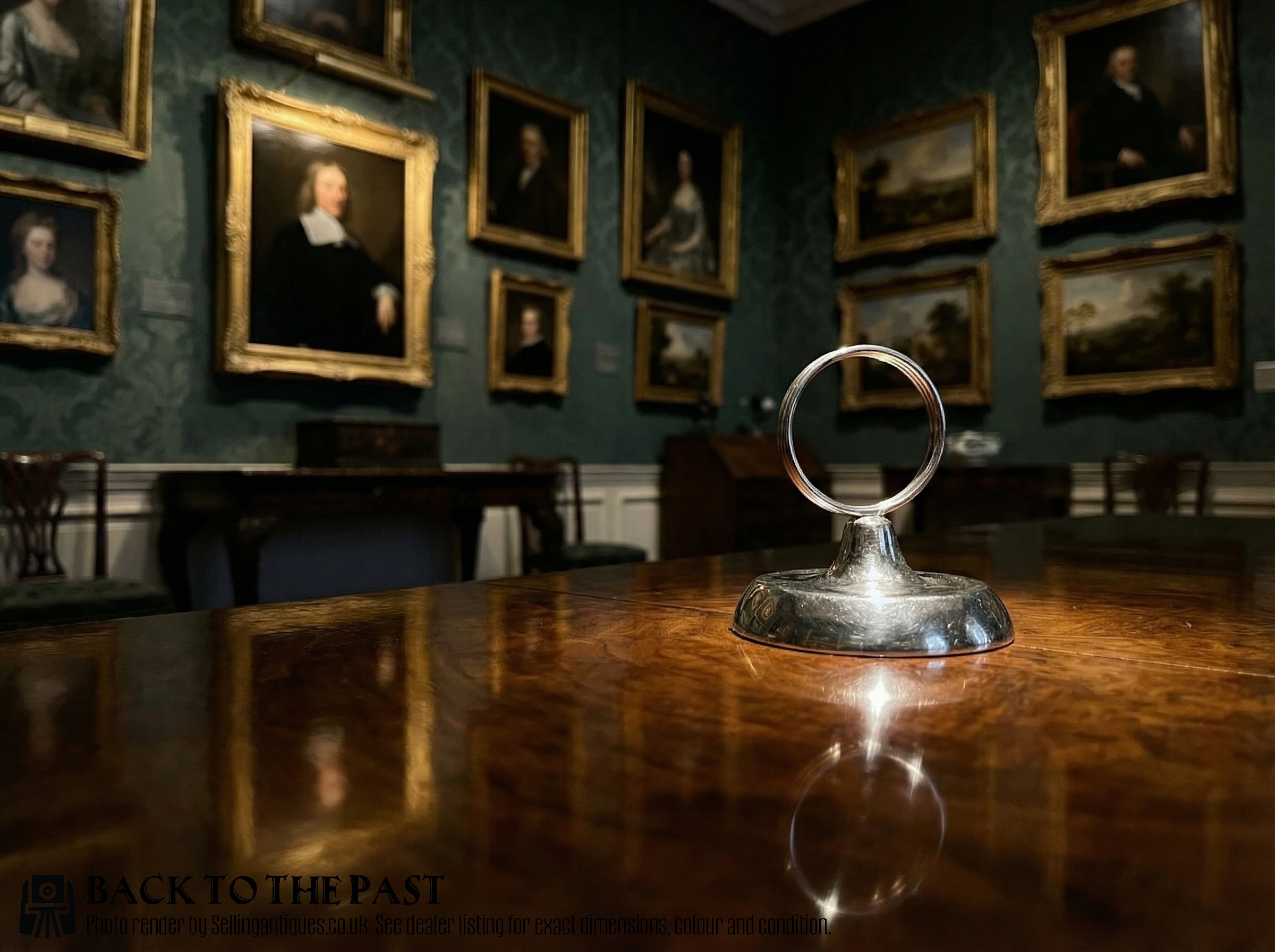
These vintage place card holders sit upon dining tables to designate guest seating, bringing miniature sculpture and refined sparkle to formal meals.
Vintage Place Card Holders
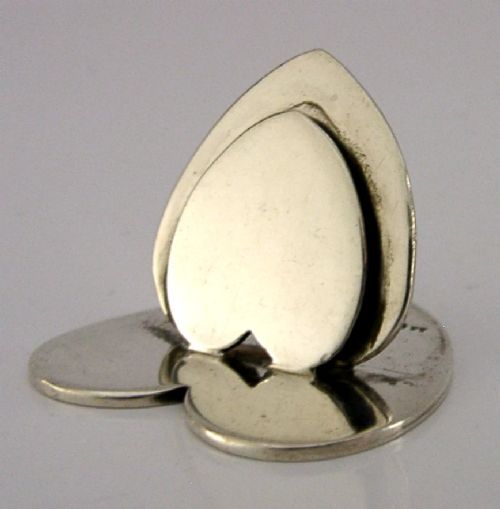
Vintage place card holders are small tabletop accessories designed to display names or menu selections at dinner parties. The selection centres heavily upon sterling silver and silver plate forms, frequently grouping menu card holders and place markers together.
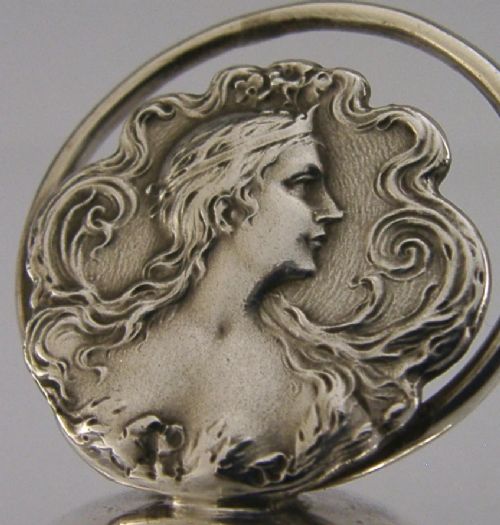
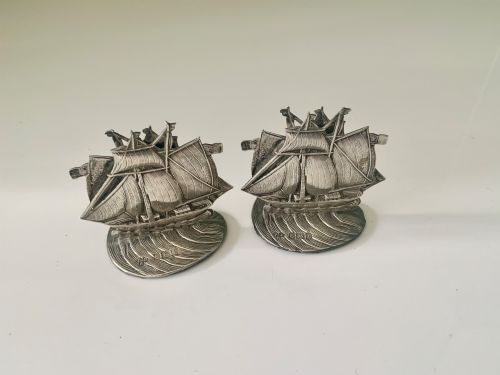
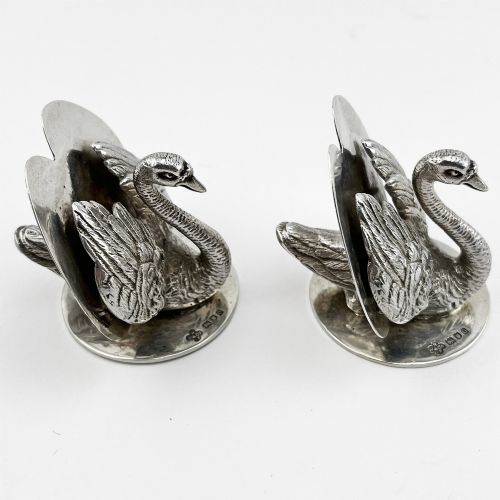
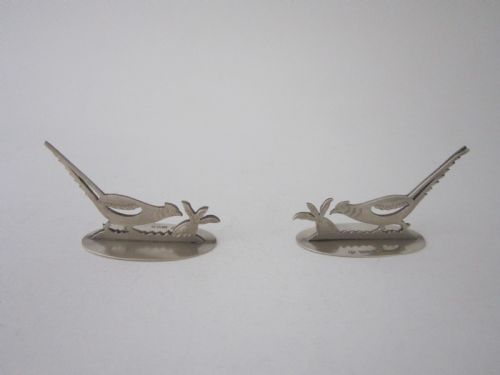
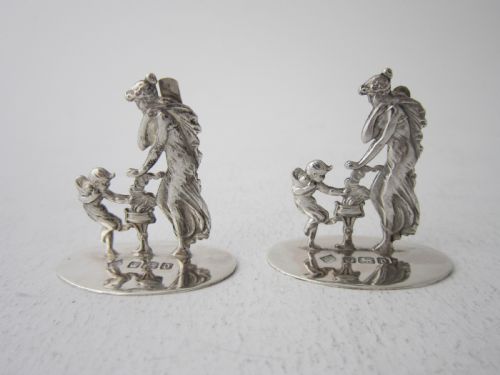
You will encounter pieces spanning Edwardian, George V, George VI, Victorian, and Mid-Century Modern periods. Animals, birds, and figural subjects dominate the physical forms, alongside military motifs and enamel flags.
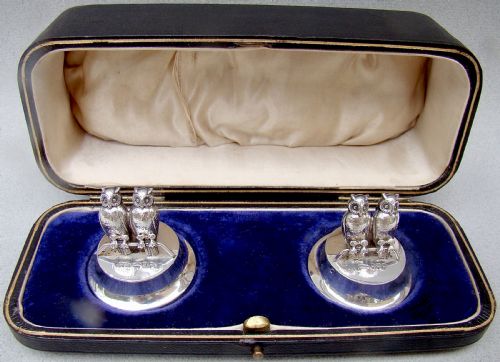
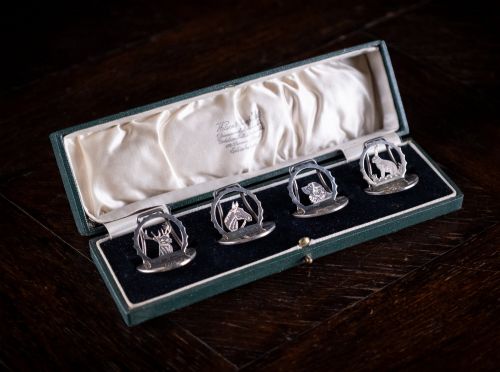
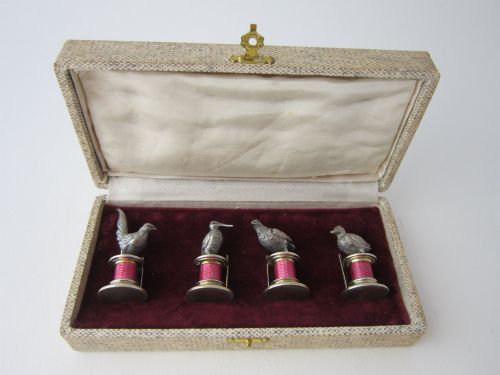
Most examples appear as matched pairs or larger sets, though individual pieces emerge. Makers utilised various media, mounting silver onto velvet or silk within fitted presentation boxes.
How they were made
Silversmiths utilised sterling silver and silver plate, often casting dimensional figures of animals, birds, and equestrian subjects. Detailed chasing and engraving bring texture to feathers, fur, and military insignia.
Enamel work, particularly guilloche enamel, adds vibrant colour to flags and decorative panels. Artisans mounted these metals alongside silk and velvet linings inside fitted presentation boxes.
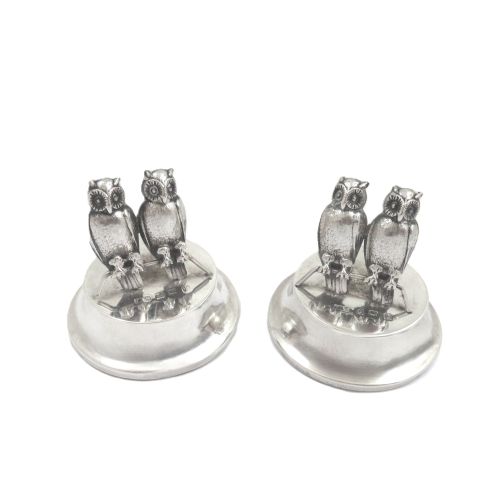
Dinner guests in the Edwardian era could admire miniature silver owls and swans guarding their seating arrangements.
What varies in quality
Quality rests in the sculptural fidelity of the cast figures and the crispness of the chasing. Pieces modelled as owls, foxes, grouse, and horses demonstrate distinct levels of artisan skill in anatomical detail.
The sophistication of the enamel work and the presence of complete, original fitted presentation boxes elevate specific sets. Complete sets of four, six, or larger groupings demand closer attention than isolated single items.
Levi & Salaman·A. Wilcox·Sampson Mordan·Asprey·Liberty
The Vintage Place Card Holders Glossary
- Sterling silver
- A silver alloy containing 92.5 percent pure silver by mass and 7.5 percent other metals, usually copper. This standard provides the primary material for the finer pieces.
- Guilloche enamel
- Decorative enamel technique where a mechanical pattern is engraved beneath a translucent layer of enamel. This gives a shimmering, geometric depth to flags and decorative panels.
- Menu holder
- Tableware accessory designed to hold printed menu cards upright on the dining table. They share similar construction with place card markers.
- Silver plate
- A layer of silver applied to a base metal core, such as copper or nickel silver. This method offered a brighter table setting at a more accessible cost.
- Assay office
- A body that tests the purity of precious metals and stamps items with hallmarks. Marks from Birmingham, Chester, and London appear frequently on these pieces.
Vintage Place Card Holders: Frequently Asked Questions
How do I clean tarnished silver holders?
Use a soft microfibre cloth designed for silver alongside a gentle, non-abrasive silver polish. Avoid harsh dipping solutions, as these can strip dark antique patination from recessed details.
Take particular care around guilloche enamel panels and silk or velvet box linings, keeping moisture and cleaning chemicals away from these delicate areas.
Can these hold modern place cards?
Most vintage pieces feature narrow slots or spring clips originally sized for thin card stock. Standard modern place cards usually fit without issue.
If a card is too thick, trim the bottom edge slightly or use stiff parchment cut to fit the specific channel of the holder.
Were these sold individually or in sets?
Makers produced these accessories both as individual pieces and as matched pairs, sets of four, sets of six, or larger dining groupings. Fitted presentation boxes often housed sets for safe storage.
Finding a complete set of animal or figural holders remains more unusual than encountering isolated examples.
How do I identify the date of manufacture?
Examine the piece for silver hallmarks, which typically include a maker's mark, a standard mark for sterling silver, a town mark, and a date letter. These stamps reveal the exact assay office and year of testing.
Stylistic cues such as Edwardian naturalism or Art Deco geometry also help narrow down the period of creation.