



Vintage Pine Merchants Chest
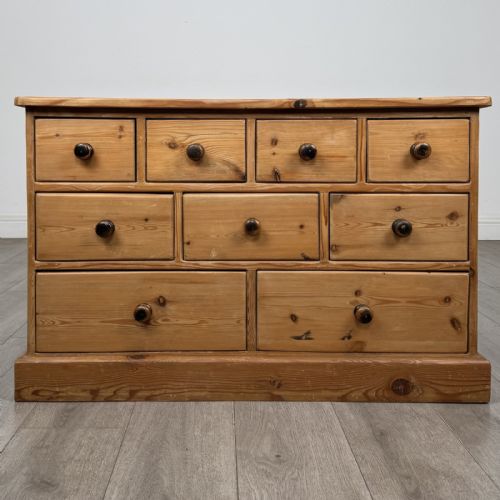
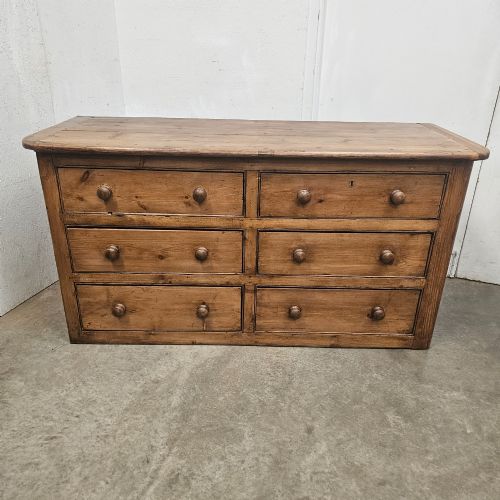
A vintage pine merchants chest offers practical utility and multi-drawer storage, bringing traditional workshop or shop character into modern interiors.
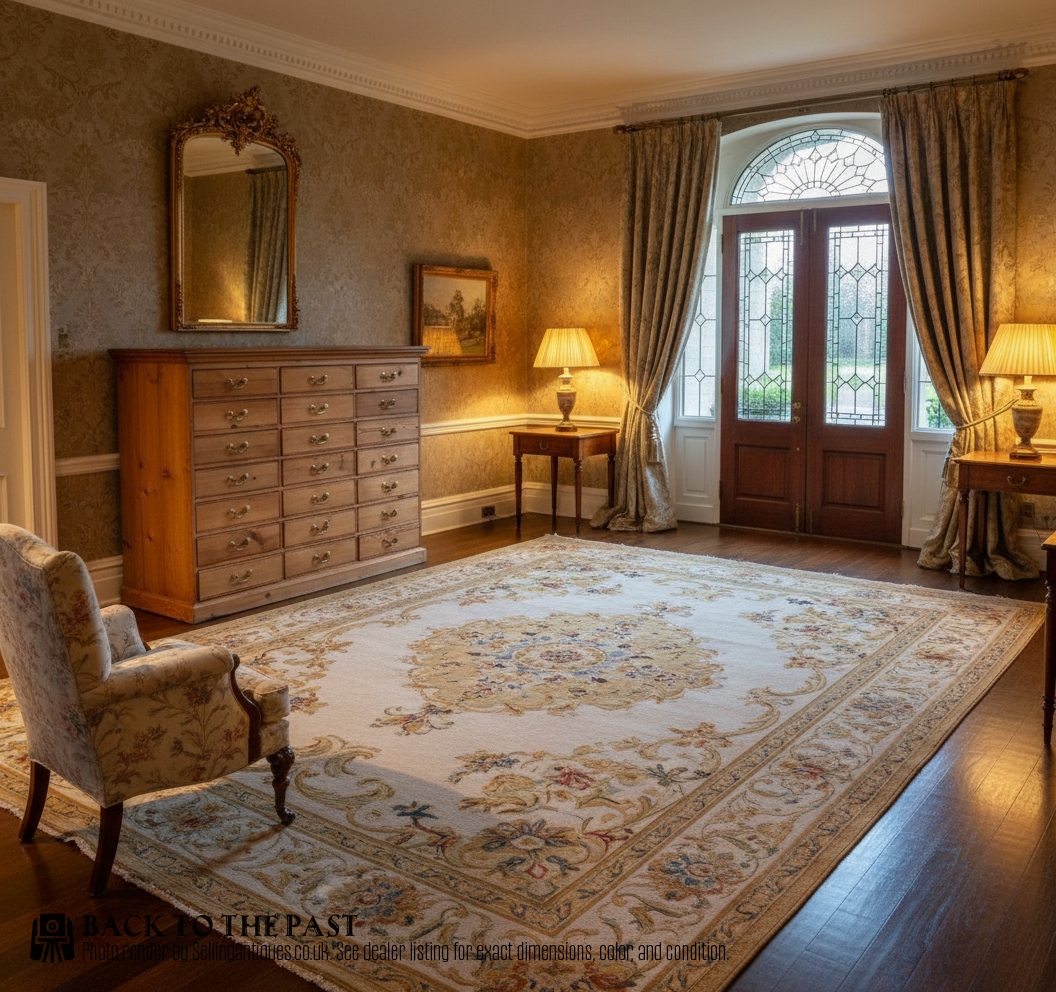
Vintage Pine Merchants Chest
When you search for a vintage pine merchants chest, you encounter multi-drawer configurations designed for commercial, trade or office use. These pieces include banks of drawers, shop fittings, shop counters and filing cabinets spanning the nineteenth and twentieth centuries.
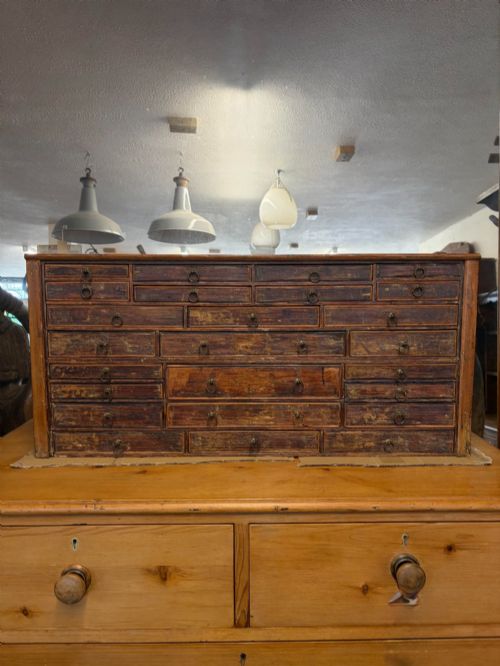
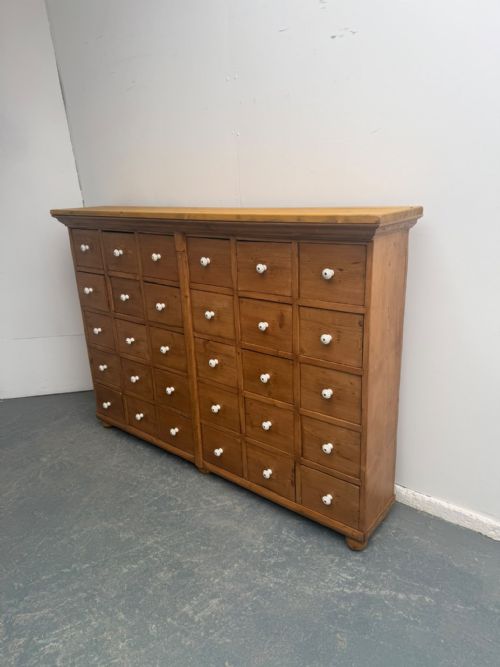
The selections available here range from tall nineteenth-century banks of twenty-five or thirty drawers originating from chemists or drapers to smaller Edwardian seed chests and mid-century office units. Many retain original painted finishes or sign-written details from agricultural and commercial merchants.
Victorian and Edwardian examples dominate the selection, alongside French and Hungarian regional variations and later industrial pieces. Buyers find both natural wood surfaces and painted exteriors in cream or light green tones.
How they were made
These pieces are constructed primarily from solid pine, utilising durable timber suitable for heavy commercial application. Cabinet makers joined carcasses and drawer boxes using traditional joinery methods appropriate for everyday trade use.
Hardware additions such as brass, iron and metal pulls or handles fastened the numerous small drawers. Some examples incorporate painted wood surfaces, ceramic label holders or glass elements, reflecting their working origins in shops and offices.
Vintage Pine Merchants Chest Retail Price Guide 2026
Typical asking prices for vintage pine merchants chest among the pieces listed under this phrase on Sellingantiques today, from the lower quarter to the upper quarter. They describe what is for sale here now, not the wider market.
Listings feature pine alongside brass, iron, and painted wood across Victorian, Edwardian, and mid-century eras.
What varies in quality
Quality in a vintage pine merchants chest depends upon the integrity of the original multi-drawer construction and the survival of surface character. Pieces retaining original paintwork, authentic sign-writing or period hardware carry greater historical interest.
Scale and proportion also define the range, from substantial multi-drawer shop fittings down to compact watchmakers cabinets or seed chests. The complexity of the drawer arrangement, such as counts reaching twenty-five or thirty compartments, distinguishes specialised trade furniture from standard domestic chests.
The Vintage Pine Merchants Chest Glossary
- Bank of Drawers
- A piece of furniture containing a high density of small drawers, originally built for organising trade stock, seeds or watch parts. They provide extensive compartmentalized storage.
- Shop Fitting
- Custom cabinetry and counters built for commercial premises during the nineteenth and early twentieth centuries. These pieces were designed to withstand heavy daily retail use.
- Seed Chest
- A specialised small cabinet featuring numerous shallow drawers for storing and displaying agricultural seeds. Florists and merchants utilised them on counters.
- Sign-Written
- Painted lettering on furniture identifying the original commercial enterprise or merchant. This detailing provides historical provenance directly on the wood.
- Pine
- A soft softwood widely used in utilitarian and country furniture due to its availability and workability. It frequently takes paint well or ages to a warm patinated surface.
Vintage Pine Merchants Chest: Frequently Asked Questions
What is a merchants chest?
A merchants chest is a multi-drawer storage unit originally utilised in shops, offices and trade premises for organising small items. They are characterised by numerous small compartments.
Today, buyers use them in homes for organising paperwork, collections or everyday items while adding distinct period character to a room.
How do I date a pine chest?
Dating relies on construction methods, hardware materials, timber characteristics and any accompanying trade labels or sign-writing. Victorian and Edwardian examples display specific joinery and drawer configurations.
Comparing the style of handles, locks and the type of pine helps narrow the production era between the nineteenth and mid-twentieth centuries.
Where were these chests used?
These cabinets served in diverse commercial environments including agricultural merchants, seed shops, watchmakers, hardware stores and offices. They functioned as counters or back-fitting storage.
Their robust construction was intended to withstand the constant demands of busy Victorian and Edwardian trade businesses.
How do I care for painted pine?
Painted pine surfaces benefit from gentle dusting with a soft, dry cloth to protect the historic finish and any original sign-writing. Avoid harsh chemical cleaners or excessive moisture.
Keeping the furniture away from direct heat sources and strong sunlight preserves the stability of the timber and the integrity of the paint.