


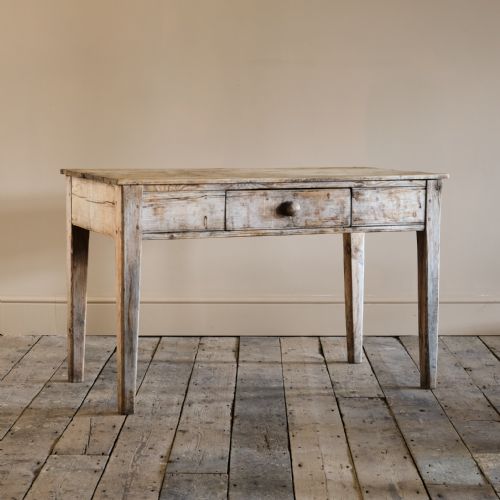
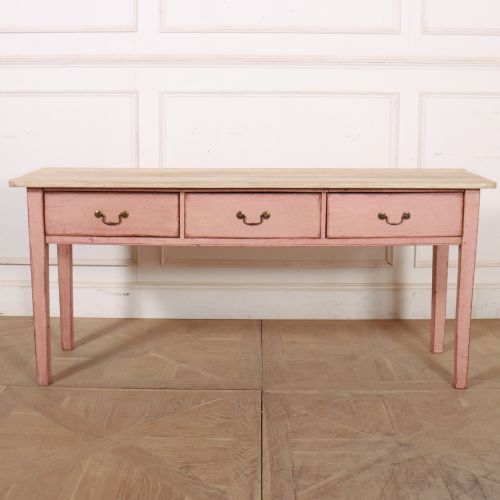
Country House Pine Drawers
Country house pine drawers bring utilitarian warmth and honest storage to a room, offering practical timber character shaped by daily domestic use.
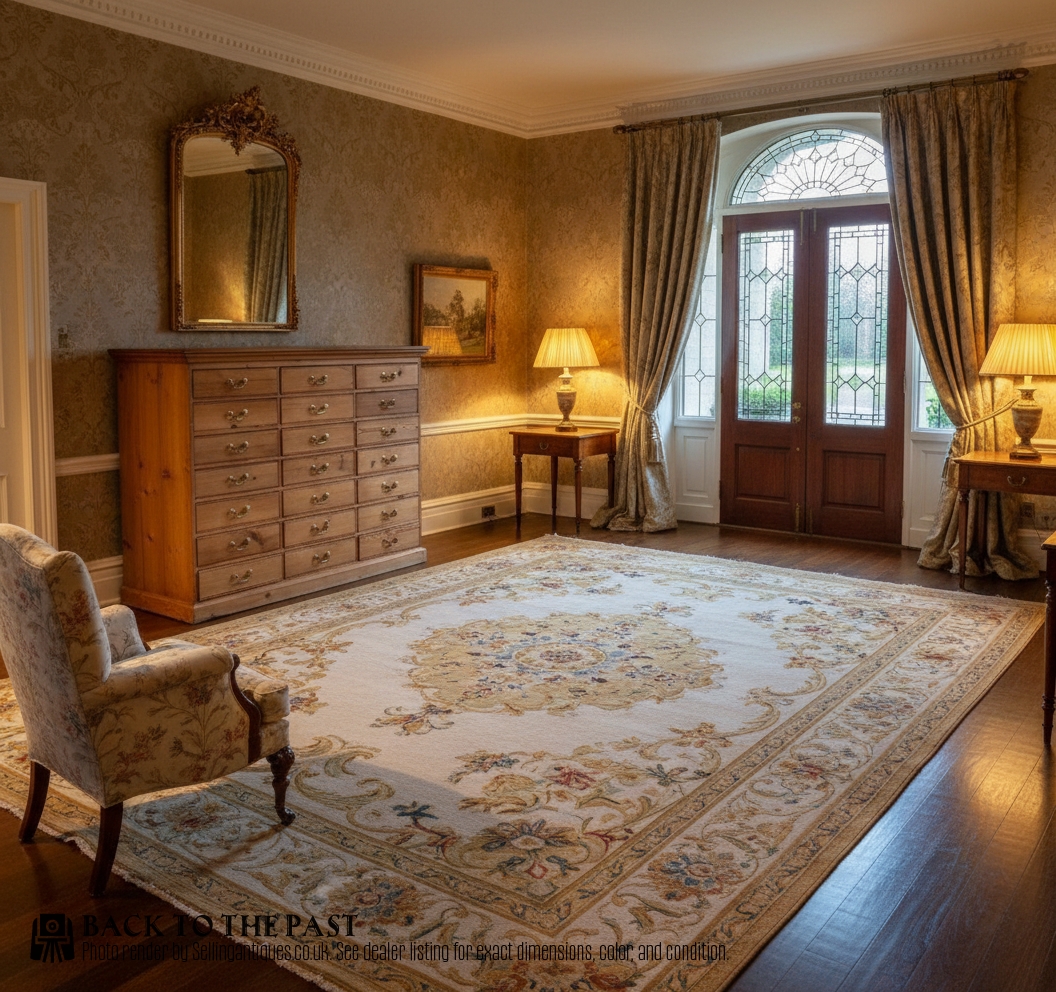
Country House Pine Drawers
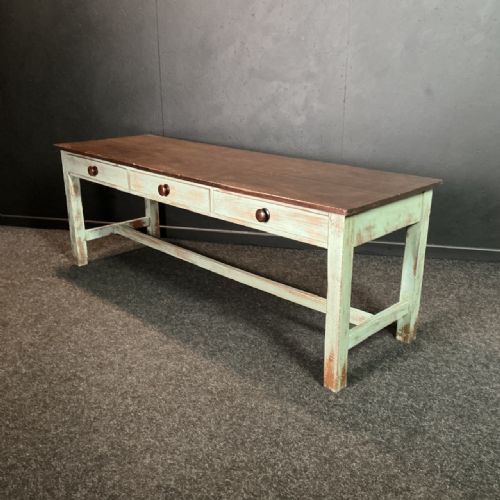
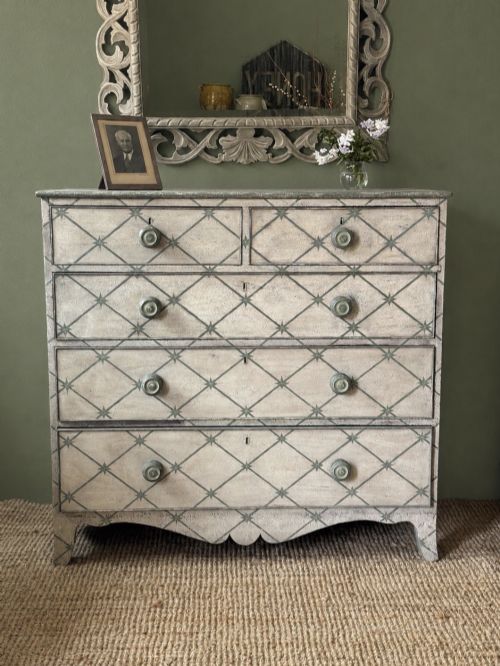
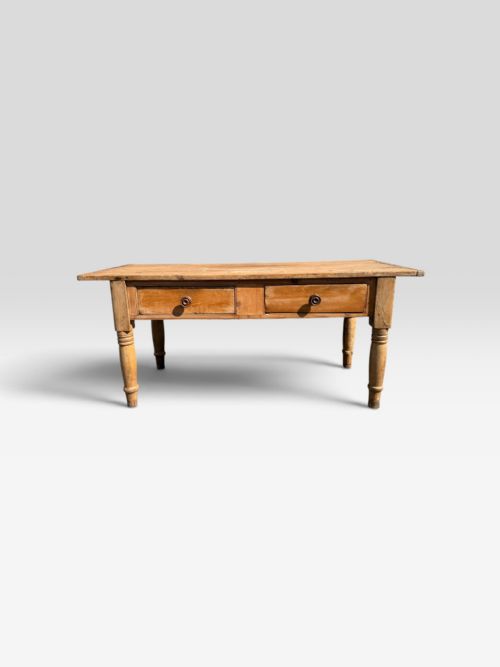
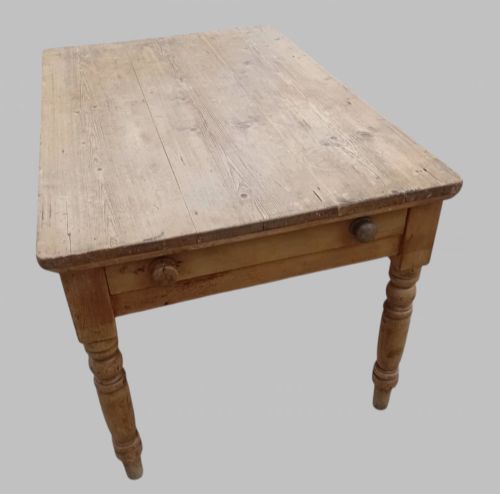
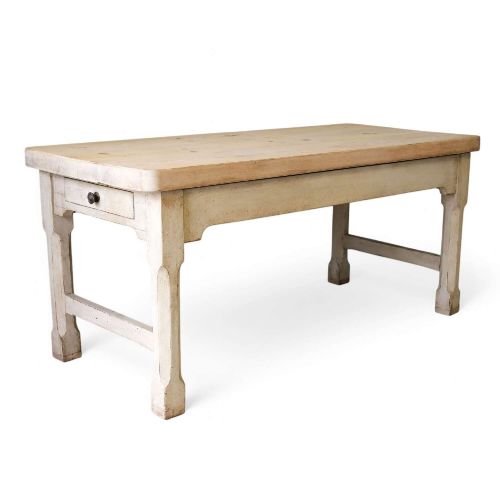
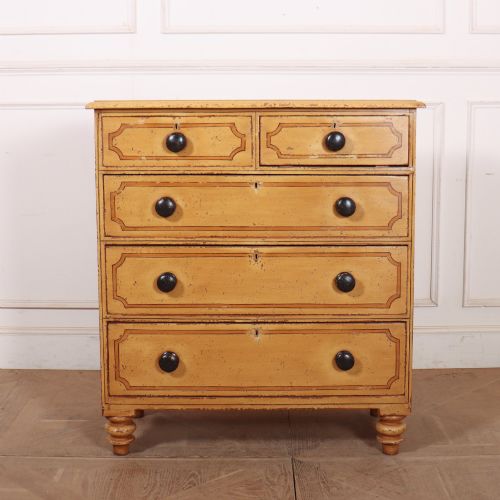
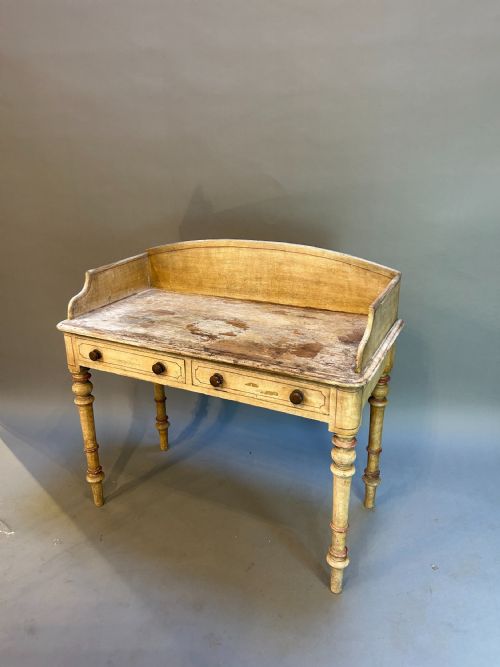
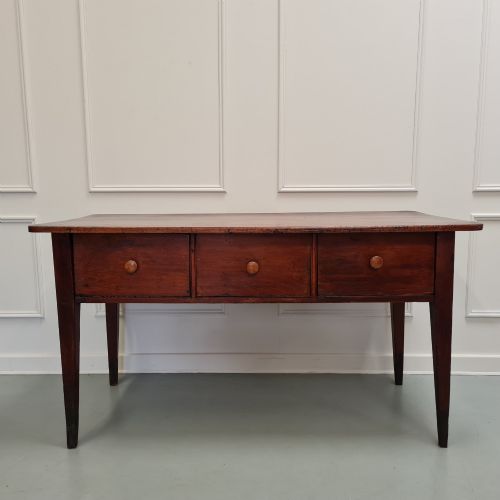
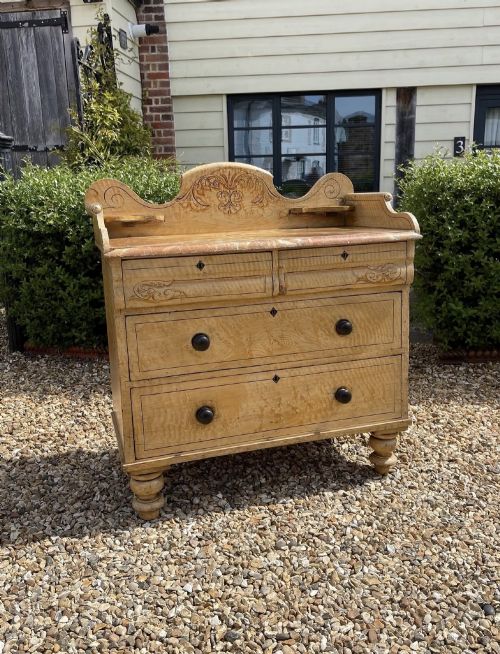
When you search for country house pine drawers, you find practical storage furniture built for domestic utility in rural and estate settings. These pieces range from substantial chests of drawers to dresser bases and side tables fitted with storage.
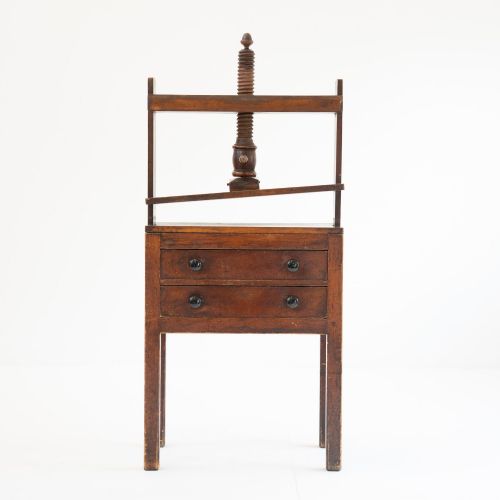
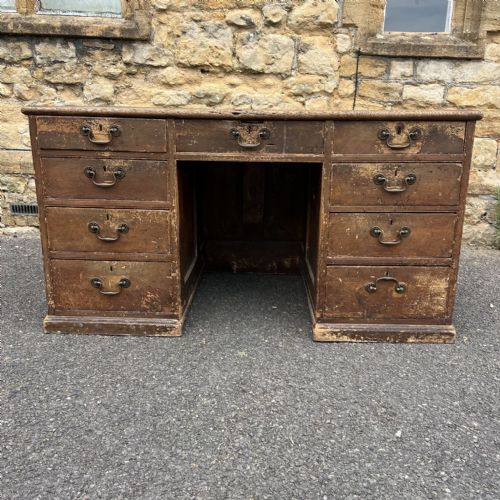
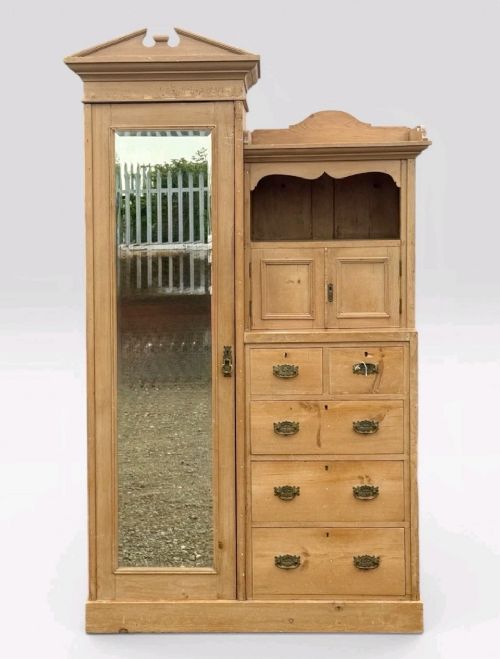
You meet Victorian and nineteenth-century examples most frequently on this page, often showing the marks of long service in scullery, kitchen or bedroom. Alongside standard chests, the selection includes fitted linen presses, writing tables, and banks of drawers.
The aesthetic leans towards English country, rustic farmhouse, and European folk traditions. Many examples carry layers of paint or original scumble finishes applied during their working lives.
Materials and Construction
Makers built these pieces primarily from solid pine, occasionally combining secondary timbers like oak or mahogany for structural stability or drawer linings. The timber was selected for utility rather than show, resulting in sturdy joints and straightforward construction suited to hard work.
Many surfaces carry historical paint, ranging from early decorative layers to later practical coats applied in domestic settings. Brass or iron hardware secures doors and drawers, while traditional hand-cut joints underpin the framework.
A solitary spice box hangs quietly among the heavy tables, proving that even the smallest chest had a purposeful place.
Assessing Quality and Character
Quality in these pieces rests in the integrity of the timber and the honesty of the surface finish. Pieces retaining original paintwork or untouched scumble finishes command greater interest than those stripped down to bare wood.
Proportion and proportion of secondary timbers elevate certain pieces above standard utility items. A well-balanced chest with original brass handles and sound internal construction represents the upper tier of country house storage.
The Country House Pine Drawers Glossary
- Scumble paint
- A decorative technique involving translucent glazes dragged or brushed across a base coat to simulate finer wood grain. It was commonly used in country houses to elevate plain pine.
- Mule chest
- A traditional storage chest featuring one or more drawers beneath the main lifting lid compartment. This hybrid form bridges the chest and the chest of drawers.
- Linen press
- A tall piece of furniture featuring upper cupboard doors enclosing sliding trays for textiles, positioned above a base of lower drawers. They formed essential storage in large domestic households.
- Dresser base
- The lower section of a kitchen or dining room dresser, typically containing a row of drawers above cupboards or an open potboard. They served as heavy-duty preparation and storage surfaces.
Country House Pine Drawers: Frequently Asked Questions
What defines country house pine drawers?
These pieces are practical storage units constructed predominantly from pine for estate and domestic settings. They prioritise robust utility over decorative display.
Over decades of domestic service, many acquired layers of paint or scumble finishes. Their forms range from simple chests to banks of drawers and fitted dressers.
How were these drawers used originally?
Households utilised them in sculleries, kitchens, and bedrooms for storing linens, provisions, and household goods. Their sturdy construction allowed them to withstand heavy daily use.
In larger estates, they served utility roles away from the formal principal rooms. Over time, their function shifted from purely domestic storage to decorative interior pieces.
How do I live with pine furniture?
Pine adapts easily to contemporary and traditional interiors, adding warmth and historical texture to a room. Its neutral tones and painted surfaces complement various design schemes.
Maintain the wood by avoiding excessive moisture and sudden temperature changes. Original paint finishes benefit from gentle dusting rather than chemical cleaning.
How do I tell periods apart?
Eighteenth-century and early nineteenth-century pieces often display hand-cut joinery and deeper patination on the timber. Georgian examples tend to feature more classical proportions.
Victorian and later nineteenth-century items frequently exhibit factory-assisted construction elements and specific regional paint traditions. Examining the secondary woods and hardware helps confirm the date.