




Vintage Pine Coffee Table
These vintage pine coffee tables bring honest utility and warmth to a room, repurposing sturdy country chests, trunks, and benches.
Vintage Pine Coffee Table
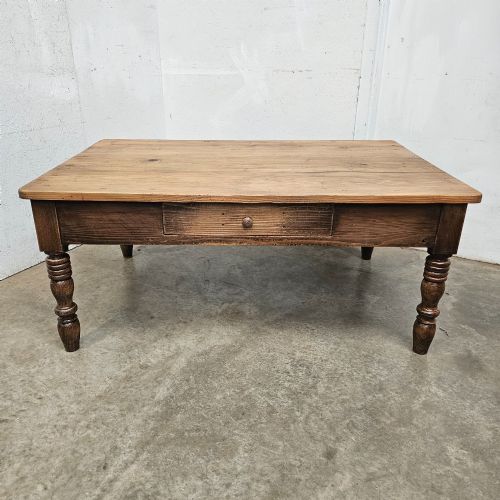
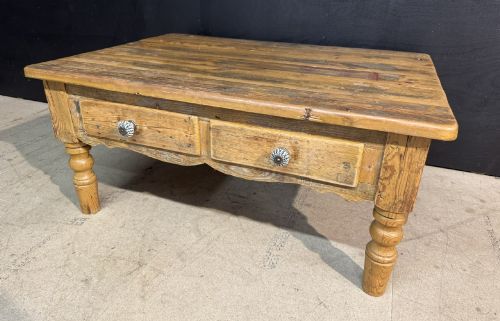
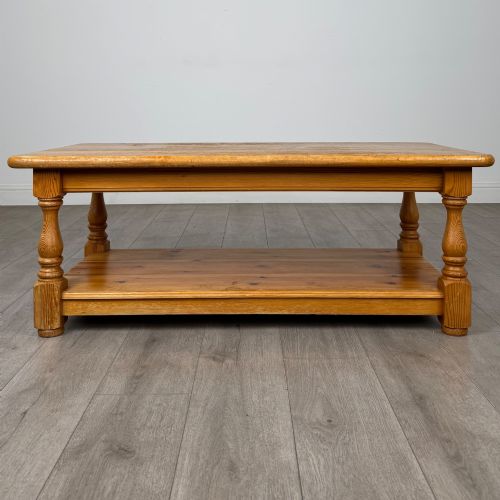
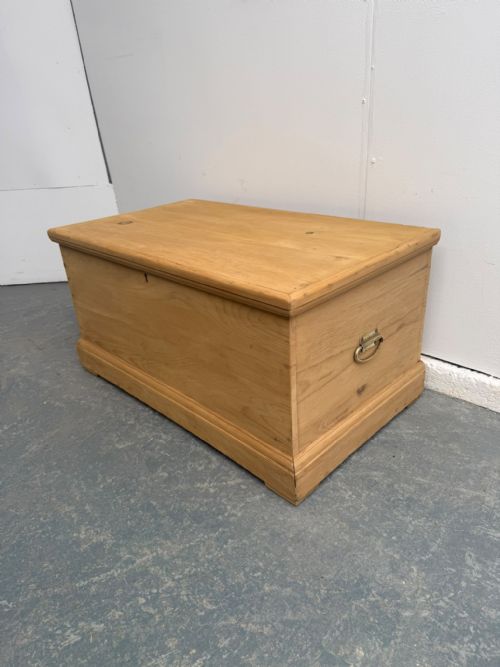
When you search for a vintage pine coffee table, you are looking at practical domestic items from the nineteenth and twentieth centuries adapted for modern living. The selection on this page ranges from purpose-built low tables to repurposed blanket boxes, trunks, and cobblers benches.
You are most likely to meet pieces originating from English, French, and Dutch country traditions, often bearing the marks of active use in workshops, farmhouses, and gardens. Their forms include turned leg tables, metal-bound chests, and low scrubbed trestle structures.
How they were made
These items are constructed primarily from solid pine, alongside auxiliary woods such as sycamore, elm, and oak for structural integrity or contrasting tops. Joinery relies on traditional carpentry methods suited to heavy daily use in domestic and agrarian settings.
Metal hardware plays a functional role in many pieces, incorporating iron braces, brass bindings, and original painted finishes or wax treatments. Surfaces show the character of scrubbed timber, hand-turned legs, and historic patination accumulated over decades.
One listed item is an original nineteenth-century pig scratch, once used on the farm and now repurposed for the home.
What varies in quality
Quality in these pieces rests upon the integrity of the original construction and the preservation of authentic surface patination. A well-proportioned table or chest retains its original timber thickness, sound joints, and hardware without excessive modern intervention.
The distinction between ordinary examples and finer specimens lies in the balance of utility and proportion, such as the elegance of turned legs or the crispness of brass and iron detailing. Original painted or waxed surfaces that have aged naturally carry greater visual weight than heavily restored alternatives.
The Vintage Pine Coffee Table Glossary
- Blanket box
- A large rectangular chest traditionally used for storing textiles and linens. In modern interiors, these often serve double duty as low coffee tables with internal storage.
- Cobblers bench
- A traditional workstation utilised by shoemakers, featuring built-in compartments and low seating proportions. These translate naturally into low coffee tables with distinctive divided surfaces.
- Patina
- The surface sheen and colour depth developed through age, handling, and regular waxing. It indicates long-term use and distinguishes genuine period pieces from recent reproductions.
- Scrubbed pine
- Timber cleaned repeatedly with water and a stiff brush, leaving a pale, matte surface texture. This finish is common on French and English country tables.
- Trestle table
- A table structure consisting of two or more support frames connected by a horizontal beam. This design provides sturdy support for low and wide table tops.
Vintage Pine Coffee Table: Frequently Asked Questions
Are these coffee tables built from old furniture?
Many items sold as vintage pine coffee tables began life as storage trunks, tool chests, blanket boxes, or workbenches. Their low proportions and flat surfaces make them natural candidates for conversion into coffee tables.
Makers and owners adapted these sturdy utilitarian objects over time, preserving their original character while fitting them for modern living spaces.
How do I care for a waxed pine table?
Waxed pine surfaces require simple maintenance to preserve their finish and protect against moisture. Regular dusting with a soft cloth and occasional application of traditional beeswax keeps the timber nourished.
Avoid placing hot cups or wet items directly on the bare wood, and use coasters or mats to protect the historic surface from water rings.
How do I date a nineteenth century pine table?
Dating relies on examining construction techniques, tool marks, and hardware types used in the piece. Hand-cut dovetails, hand-turned legs, and forged iron or brass fittings typically indicate nineteenth-century or earlier manufacture.
Changes in timber colour, screw types, and the nature of the wear patterns help distinguish Victorian and Edwardian examples from twentieth-century reproductions.
Can I store items inside these tables?
Many pine coffee tables on this page derive from blanket boxes, ammunition cases, and tool trunks with hollow interiors and hinged lids. These pieces offer practical concealed storage for blankets, books, or living room items.
Tables built on trestle frames or with open turned legs function purely as display and surface furniture without internal compartments.