
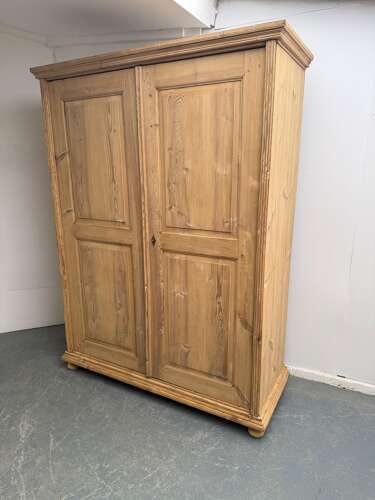
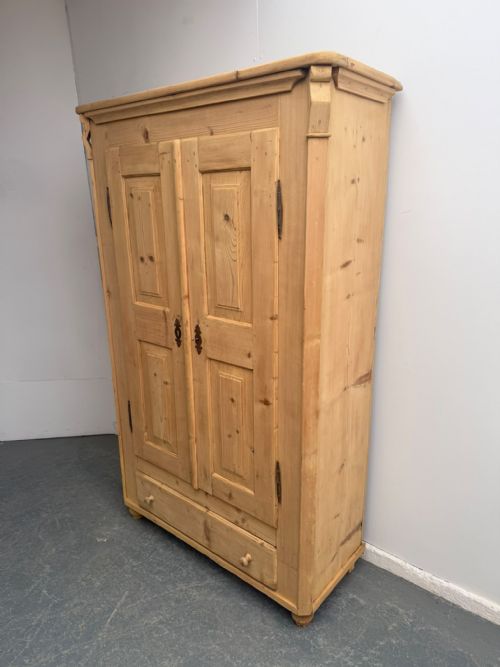
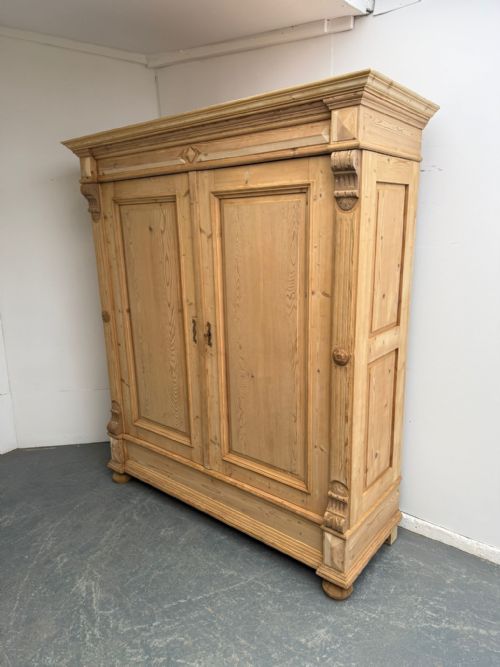
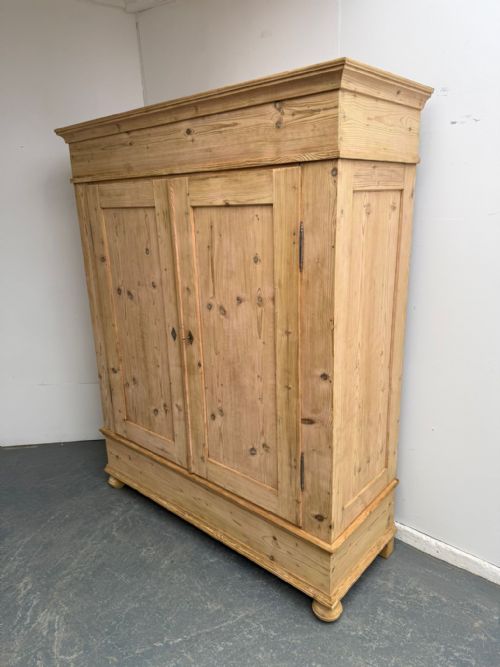





Vintage Pine Clothes Armoire
These vintage pine clothes armoire pieces offer practical storage and timeless character, bringing generous proportions and warm timber grain into modern bedrooms.
Vintage Pine Clothes Armoire
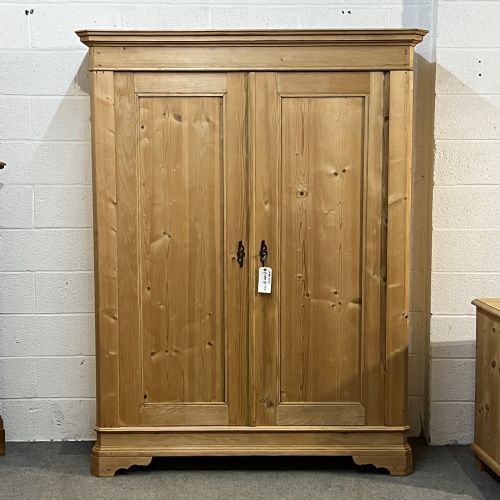
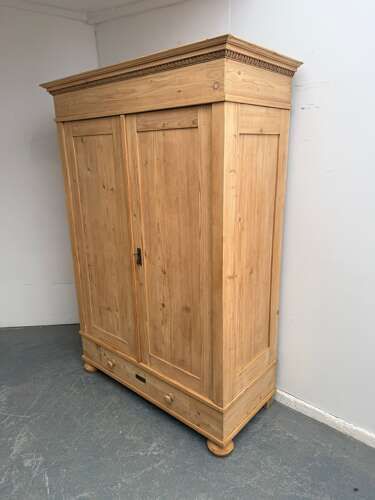
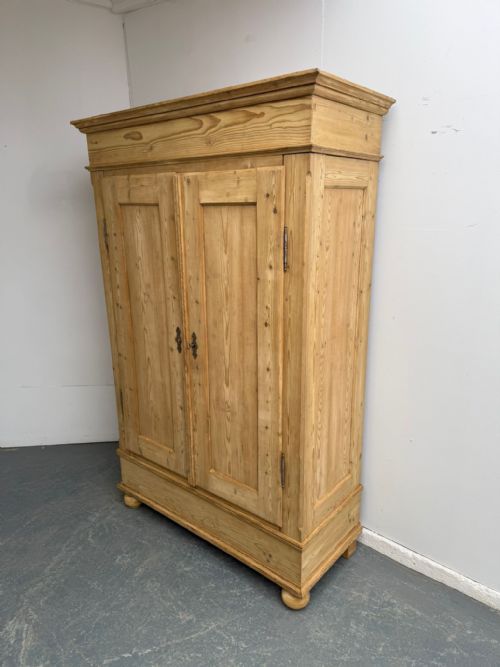
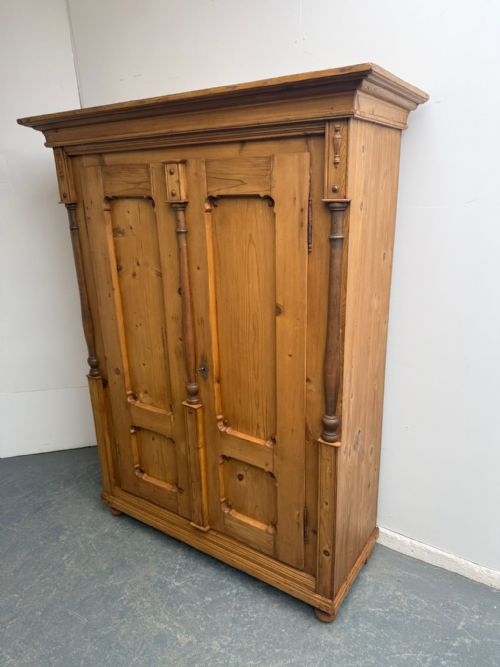
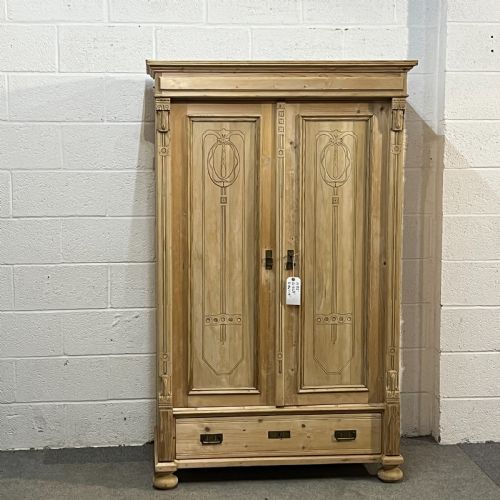
A vintage pine clothes armoire provides substantial timber storage, appearing primarily in Georgian, Victorian, and early twentieth-century formats. Buyers seeking a vintage pine clothes armoire encounter two distinct structural types: large knockdown wardrobes designed for easy transport and solid one-piece cupboards.
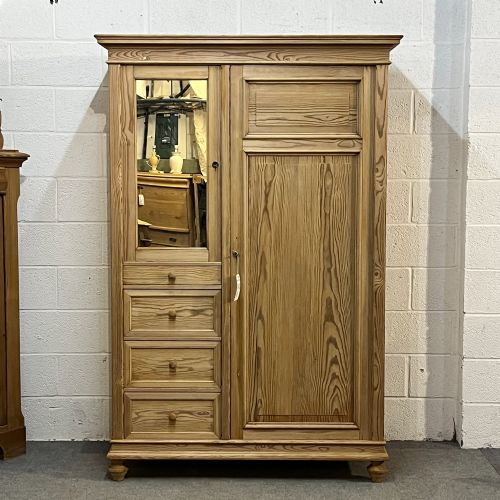
The selection spans tall hall wardrobes, compact children's presses, and mirrored compactums fitted with internal drawers. Regional variations range from English country workshops to French provincial designs and genuine Hungarian examples.
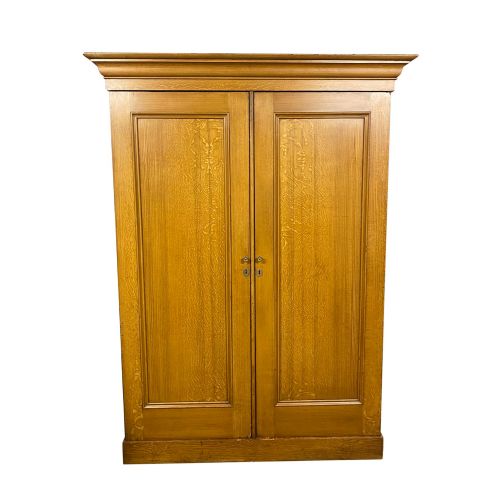
Many items retain bare timber ready for waxing or painting, while others preserve original scumble faux oak paintwork or aged white finishes. Interiors frequently combine hanging space with fixed shelving or deep bottom drawers.
How they were made
Construction relies primarily on solid pine timbers, complemented by structural iron, brass handles, and occasionally glass mirror plates. Many larger examples utilise knockdown framing methods held together with timber pins or internal bolts, allowing the heavy carcasses to be dismantled for movement.
Surface treatments vary between natural wax finishes that highlight the grain and historical decorative techniques like scumble paintwork designed to imitate richer hardwoods such as oak. Traditional joinery methods, including panelled doors and pegged joints, define the construction across the Georgian and Victorian eras.
Some nineteenth-century armoires still bear the pencil marks of the cabinetmaker on hidden panel edges, recording workshop measurements from a bygone era.
What varies in quality
Quality rests on the integrity of the original construction, the thickness of the pine timbers, and the survival of period hardware. Superior pieces retain their original knockdown mechanisms, functioning locks, and unblemished panelled doors without excessive warping.
The presence of original decorative surfaces, such as authentic scumble paint or early surface patination, separates standard utility cupboards from more collectible examples. Clever proportions, such as low cottage profiles or compact dimensions with integrated bottom drawers, also dictate desirability.
The Vintage Pine Clothes Armoire Glossary
- Knockdown wardrobe
- A large piece of furniture designed to be fully disassembled into panels and parts for transport and installation. This construction method was essential for moving bulky bedroom storage through narrow period doorways.
- Compactum
- A multi-functional wardrobe combining hanging space with internal drawers, shelves, or compartments. These clever units maximise storage efficiency within a single footprint.
- Scumble paint
- A decorative surface finish involving translucent glazes manipulated with combs or rags to simulate the grain of expensive timbers like oak. It was frequently applied to pine furniture during the nineteenth century.
- Linen press
- A tall cupboard featuring upper shelving for folded textiles and lower drawer storage. They predate modern hanging wardrobes and were built to preserve household linens.
Vintage Pine Clothes Armoire: Frequently Asked Questions
What is a knockdown wardrobe?
A knockdown wardrobe is built to be dismantled into separate panels, cornices, and base sections using internal bolts or pegs. This ingenious design allowed large bedroom furniture to be moved between rooms and upper floors.
Buyers find this feature common in nineteenth-century pine armoires. It ensures the massive pieces can pass through standard doorways during delivery.
How do I care for waxed pine?
Waxed pine requires occasional reapplication of a quality beeswax to nourish the timber and maintain a soft sheen. Avoid placing these wardrobes near direct heat sources or strong sunlight, which can dry out the wood.
Regular dusting with a dry cloth keeps the surface clean without stripping the aged patina. Over time, the wax builds a deeper resistance to handling marks.
Are these armoires difficult to assemble?
Most knockdown armoires assemble intuitively with interlocking panels and simple internal fixings. Having two people makes the process straightforward, particularly when lifting heavy panel doors onto their hinges.
Keeping the original timber wedges or bolts organised during setup ensures the frame remains square. Once assembled, the heavy timber rests securely under its own weight.
What is the difference between an armoire and a press?
An armoire is primarily designed for hanging garments, featuring tall vertical space behind full-length doors. A linen press traditionally centres on horizontal shelving intended for folded textiles, often paired with lower drawers.
Many nineteenth-century examples blur these lines by combining hanging sections, shelves, and internal drawer banks into one hybrid piece. Check the internal layout to ensure it suits your specific storage needs.