



Vintage Pewter Measure Jug
These vintage pewter measure jug examples are heavy utilitarian vessels of tavern and domestic history that anchor a traditional country interior.
Vintage Pewter Measure Jug
When you search for a vintage pewter measure jug, you encounter sturdy drinking and serving vessels originating from the eighteenth and nineteenth centuries. These pieces encompass public house tankards, ale jugs, spirit measures, and lidded flagons designed for precise capacity.
You will find individual flagons alongside matched sets of measures marked with capacity or royal ciphers like VR. These objects range from small noggin sizes up to half gallon and full gallon capacities.
How they were made
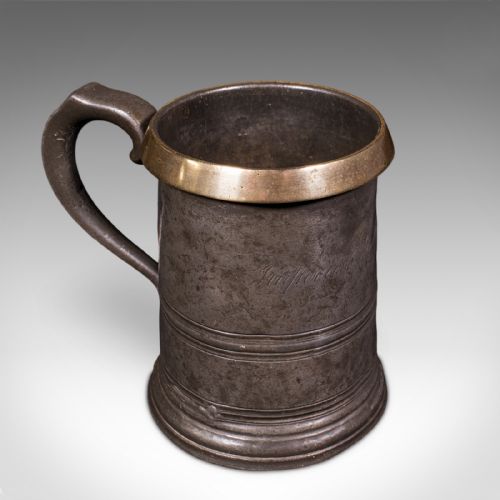
These vessels are cast primarily from pewter, an alloy of tin combined with lead or other metals to achieve a durable yet workable body. Certain examples incorporate brass elements, particularly in handles, fittings, or decorative touches.
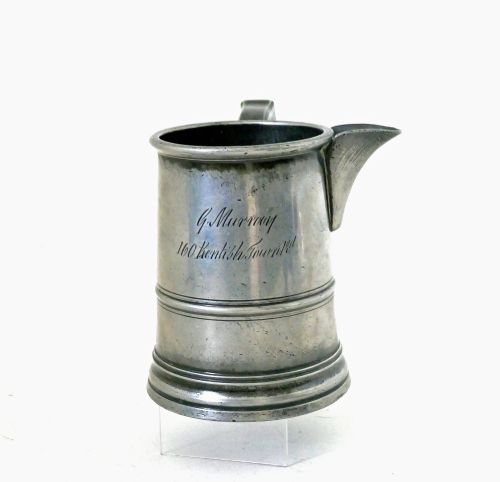
Metalsmiths formed the bodies through casting and hammering, joining sections with solder and finishing the surfaces by hand. Engraved details, such as owner names and addresses like Kentish Town Road, were added with sharp tools after the primary construction.
Vintage Pewter Measure Jug Retail Price Guide 2026
Typical asking prices for vintage pewter measure jug among the pieces listed under this phrase on Sellingantiques today, from the lower quarter to the upper quarter. They describe what is for sale here now, not the wider market.
An eighteenth century ale jug carries the precise address of G.Murrouy at 160 Kentish Town Road.
What varies in quality
Quality in these vessels rests on the crispness of the original cast form and the integrity of the surviving metal. Superior examples retain their intended geometry and capacity lines without excessive distortion from decades of heavy public house use.
The presence of clear touchmarks, capacity stamps, and crisp engraving elevates a piece above anonymous utilitarian stock. Surface patination also plays a role, with untouched dull grey surfaces showing greater desirability than over-polished metal.
G.Murrouy
The Vintage Pewter Measure Jug Glossary
- Pewter
- A malleable metal alloy consisting chiefly of tin, historically used for tableware and drinking vessels. It develops a dark grey oxide patina over centuries.
- Tappit Hen
- A traditional Scottish type of lidded pewter measure with a distinct knob on the lid. These jugs held specific liquid capacities such as the Scots pint.
- Haystack measure
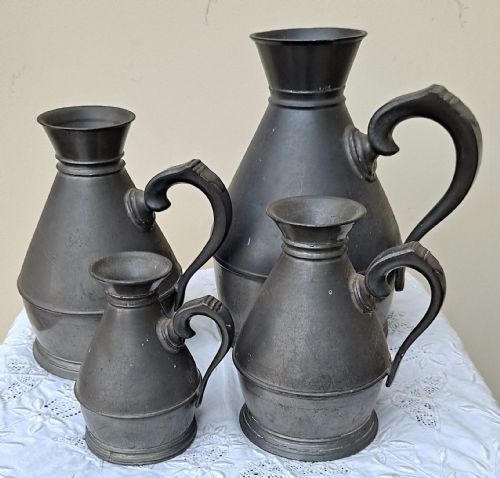
- An Irish style of pewter jug characterised by a bulbous body resembling a stacked haystack. They frequently appear in graduated sets.
- Noggin
- A small historical measure of liquid capacity, typically holding a quarter of a pint. Lidless examples of this size were common for individual spirit servings.
- VR mark
- A royal cipher stamp denoting Victoria Regina, indicating official government verification during the Victorian era. These marks confirm standard capacities for public house use.
Vintage Pewter Measure Jug: Frequently Asked Questions
What is a pewter measure jug?
A pewter measure jug is a historical vessel cast to hold precise volumes of ale, wine, or spirits in taverns and households. They served both to measure liquids and to serve them directly to customers.
Most surviving examples date from the eighteenth and nineteenth centuries and show signs of utilitarian public house life.
How do I identify a Tappit Hen?
A Tappit Hen is a distinctive Scottish flagon featuring a lidded body with a specific finial on top. They were produced in standard Scots liquid capacities.
These pieces often include a crest and have a heavy, robust silhouette compared to standard English jugs.
What are Irish Haystack measures?
Irish Haystack measures are bulbous pewter jugs produced in sets with curved bodies tapering toward the top. They take their name from their visual resemblance to agricultural haystacks.
You frequently find them as graduated sets of four sharing identical regional proportions.
How do I care for antique pewter?
Antique pewter requires minimal intervention and should be kept dry to prevent corrosion. Avoid modern metal polishes that strip away the historical surface patina.
Dust the vessels gently with a soft cloth and maintain stable indoor humidity.