





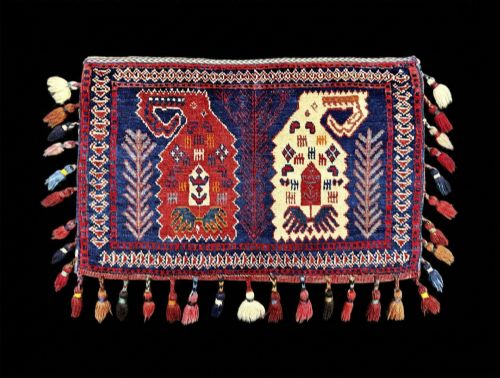

Vintage Persian Saddle Bag
These vintage persian saddle bag pieces are tribal weavings carrying nomadic designs, offering authentic folk art for modern interiors.
Vintage Persian Saddle Bag
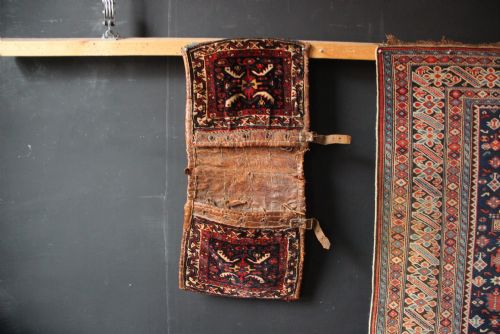
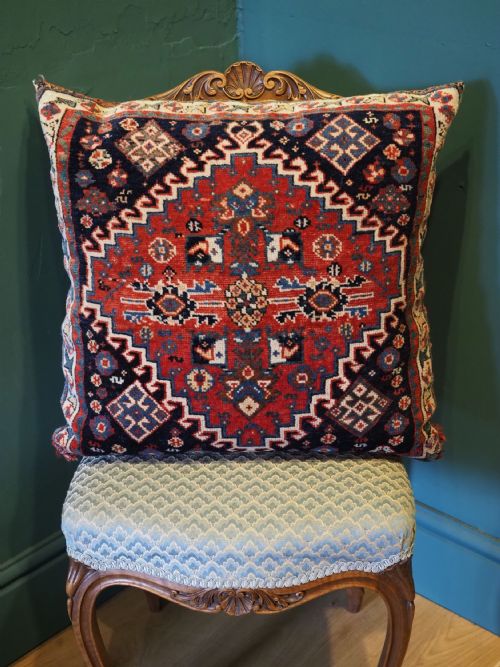
A vintage persian saddle bag represents functional tribal art created by nomadic groups across Persia during the nineteenth and early twentieth centuries. These woven pieces served practical purposes for transport on animals before being repurposed for modern domestic display as cushions, wall hangings or floor rugs.
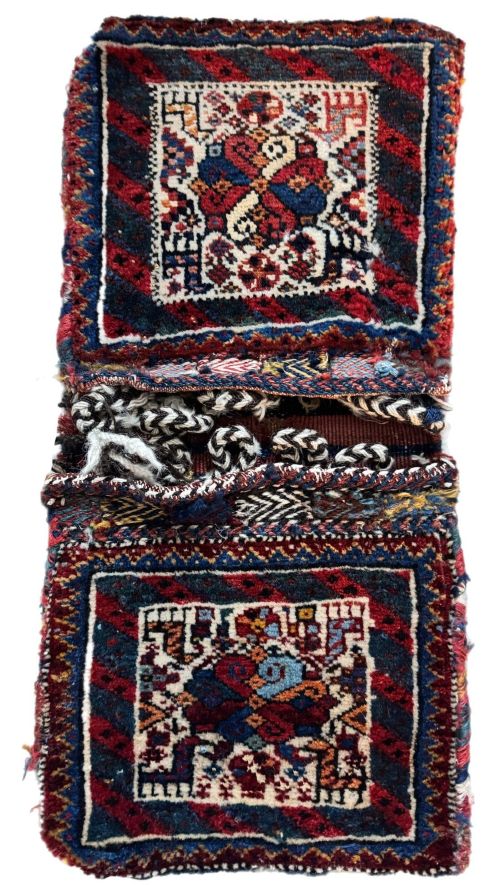
The selections encountered here span tribal groups such as the Afshar, Qashqa'i, Shahsavan, Luri and Kurdish tribes. Pieces appear as complete double pouches, single bag faces, half saddle bags, and smaller vanity or tobacco bags.
Geographical origins range from the Fars province in the south-west to Luristan in the west and Kerman province in the south. Each tribal weaving reflects distinct regional patterns, structures and dye palettes particular to its nomadic creators.
Construction and materials
Makers utilised hand-spun wool for the pile and foundation yarns, yielding tactile surfaces with natural lanolin retention. Cotton structural elements also appear alongside wool foundations, providing stability to the woven textiles.
Natural dyes produced the rich chromatic range observed across these bags, derived from regional plant and mineral sources. Artisans employed flatweave techniques such as sumac alongside knotted pile construction to create varied textures.
Vintage Persian Saddle Bag Retail Price Guide 2026
Typical asking prices for vintage persian saddle bag among the pieces listed under this phrase on Sellingantiques today, from the lower quarter to the upper quarter. They describe what is for sale here now, not the wider market.
Current selections span nineteenth and early twentieth century dates, featuring wool, cotton, and natural dyes across Kurdish, Afshar, and Qashqa'i tribal structures.
Assessing quality in nomadic weavings
Quality rests upon the handle and lustre of the wool, where high-grade staple fibres display depth and resilience. Luminous wool and tightly packed knotting elevate the structural integrity and visual impact of the textile.
Design clarity and the precision of geometric or boteh motifs distinguish finer tribal examples from standard work. The preservation of original complete backs, plain weave sections and structural edges adds significantly to historical integrity.
The Vintage Persian Saddle Bag Glossary
- Khorjin
- A traditional double-pouch saddle bag used by nomads for carrying belongings on pack animals. These items form the core of many tribal textile collections today.
- Sumac
- A warp-wrapping flatweave technique that produces a durable textile without a cut pile. This method creates characteristic ridged surface patterns on tribal bags.
- Boteh
- An almond-shaped or paisley motif representing a floral spray or cypress tree. It appears frequently in Afshar and other Persian tribal designs.
- Pile
- The vertical tufts of wool knotted onto the foundation warp and weft threads to form the soft surface of a rug. Lustrous wool enhances the tactile quality of this layer.
- Flatweave
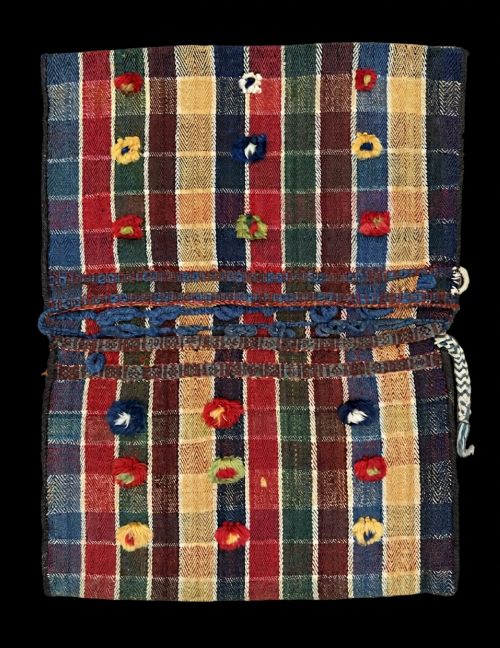
- A textile woven without knots by interlacing warp and weft threads directly. These lighter structures often form the backs or sides of saddle bags.
Vintage Persian Saddle Bag: Frequently Asked Questions
What is a saddle bag face?
A saddle bag face is the decorative front panel of a nomadic transport pouch that has been separated from its plain weave back. These panels survived because their intricate geometric designs made them desirable as small decorative rugs or wall hangings.
Collectors often seek these individual faces for their concentrated artistry and manageable display size within modern homes.
How do I clean a tribal bag?
Gentle surface cleaning and regular light vacuuming without a beater bar protect the delicate hand-spun wool and natural dyes. Professional textile conservators should handle major washing to prevent dye bleed or structural distortion.
Keeping these antique pieces away from direct sunlight preserves the rich chromatic saturation achieved by early nomadic dyers.
Where were these bags made?
Nomadic and village tribes produced these textiles across various regions of Persia, including Fars, Luristan and Kerman. Different tribal confederations such as the Qashqa'i and Shahsavan developed distinct weaving traditions tied to their seasonal migration routes.
Local environmental conditions and available flora directly influenced the specific wool types and dye colours characteristic of each distinct area.
How are tribal groups identified?
Tribal attribution relies on examining specific design repertoires, border arrangements, structural materials and colour combinations. Weavers passed these distinctive motifs down through generations within specific confederations like the Afshar or Luri.
Minor structural details, such as the handling of the plain weave back or selvage finishes, provide further clues to tribal origins.