

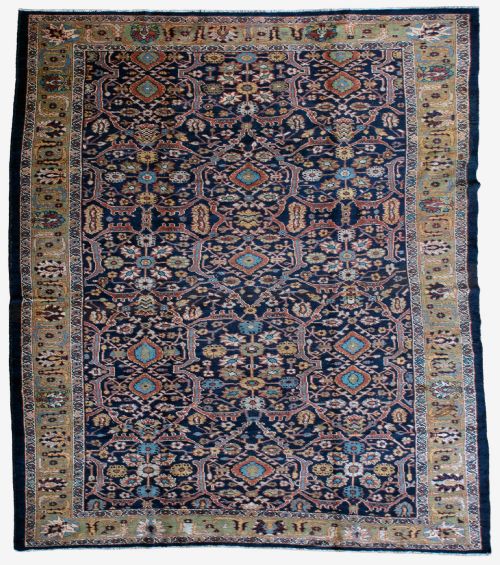
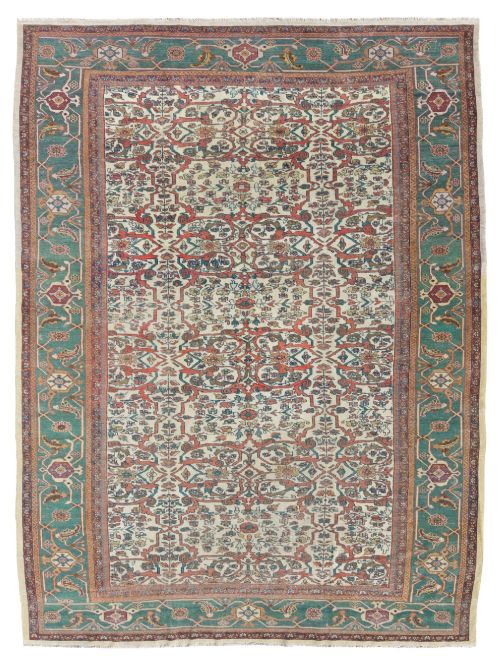
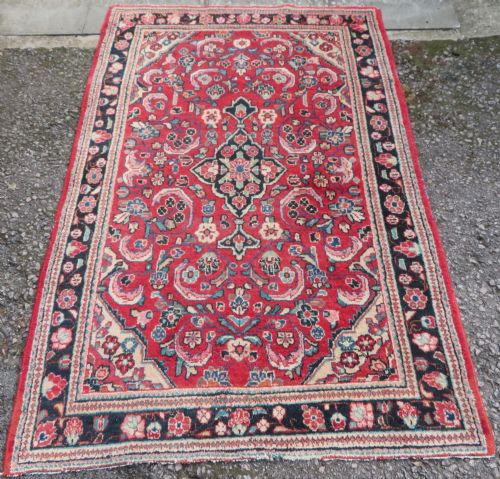
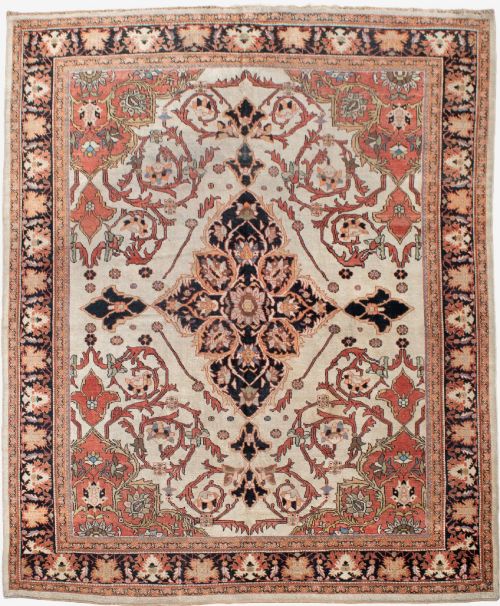
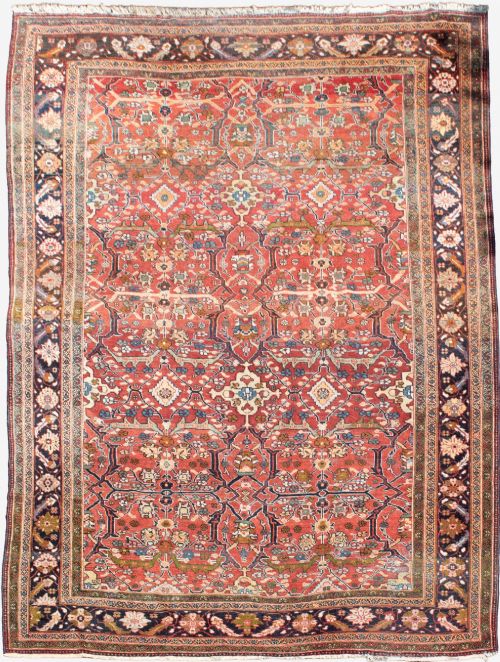


Vintage Persian Mahal Carpet
A vintage persian mahal carpet brings enduring western Persian warmth into a room through generous scale and rich natural dyes.
Vintage Persian Mahal Carpet
A vintage persian mahal carpet is a floor covering originating from the western Persian region, encompassing village rugs, room-size carpets, and long runners. These textiles span periods from the nineteenth century into the early decades of the twentieth century, reflecting traditional Persian weaving patterns.
Buyers will most frequently encounter large room-size formats and expansive carpets alongside smaller village rugs and corridor runners. The titles record examples originating specifically from the Chahar Mahal region and associated tribal workshops.
These floor coverings often display traditional motifs, ivory grounds, terracotta fields, and all-over shrub designs tailored for country house interiors. The regional style connects them to related Sultanabad and Ziegler productions from western Persia.
How they were made
The construction of a vintage persian mahal carpet relies on wool pile knotted onto a sturdy cotton foundation. This pairing provides both the soft surface texture needed for daily use and the structural stability required for large room formats.
Weavers utilised natural dyes to achieve deep terracotta, ivory, and field colours that mellow gracefully over decades. Hand-knotting techniques executed by village and tribal artisans ensure each piece possesses individual character in its weave and design layout.
Several runners arrived with a distinct country house look, ready to greet muddy boots and ancestral hounds alike.
What varies in quality
The refinement of the drawing and the complexity of the design layout distinguish finer examples from standard village productions. Carpets featuring well-spaced motifs, balanced ivory or terracotta grounds, and harmonious shrub patterns demonstrate superior aesthetic execution.
Scale and proportion also define the standing of a piece, with oversize formats and grand room sizes requiring exceptional skill to maintain structural integrity across a vast woolen field. The crispness of the knotting and the depth of the natural dyes further elevate the stature of individual specimens.
The Vintage Persian Mahal Carpet Glossary
- Mahal
- A type of Persian carpet originating from the western region, known for bold floral designs and room-sized formats. These rugs often display soft terracotta or ivory fields suited to traditional interiors.
- Ziegler
- A nineteenth-century commercial production style in Persia that adapted traditional Persian patterns for western decor tastes. They typically feature muted palettes and expansive, open fields.
- Sultanabad
- A nineteenth-century Persian carpet classification closely related to Mahal production, characterised by large-scale floral motifs. These pieces share the same western Persian regional origins.
- Bakhtiari
- A designation for rugs woven by the Bakhtiari tribes in the Chahar Mahal valley of western Persia. They often incorporate distinctive panel designs or village motifs.
- Runner
- A long, narrow carpet format traditionally used in corridors, hallways, or narrow spaces. These pieces maintain the same wool pile and regional designs as larger room carpets.
Vintage Persian Mahal Carpet: Frequently Asked Questions
Where were these carpets made?
These floor coverings were woven in the western Persian region, specifically associated with the Chahar Mahal valley and surrounding villages. Local workshops and tribal weavers produced them for both domestic use and western export.
The regional traditions of this area imparted distinctive design characteristics, including bold floral elements and robust wool construction that has survived across generations.
How do I fit a large carpet into a room?
Room-size and oversize examples serve as foundational elements in spacious reception rooms, studies, or country house drawing rooms. Placing furniture either entirely on the carpet or with just the front legs resting upon it helps anchor the seating arrangement.
Allowing adequate floor space around the border ensures the terracotta or ivory field remains a focal point without overwhelming the proportions of the interior.
How do I care for wool pile?
Regular gentle vacuuming without a rotating brush roll prevents dust from settling into the wool pile of the rug. Keeping the textile away from direct, harsh sunlight protects the natural dyes from premature fading over time.
Professional cleaning tailored for antique Persian textiles should be utilised periodically to maintain the integrity of the cotton foundation and wool fibres.