

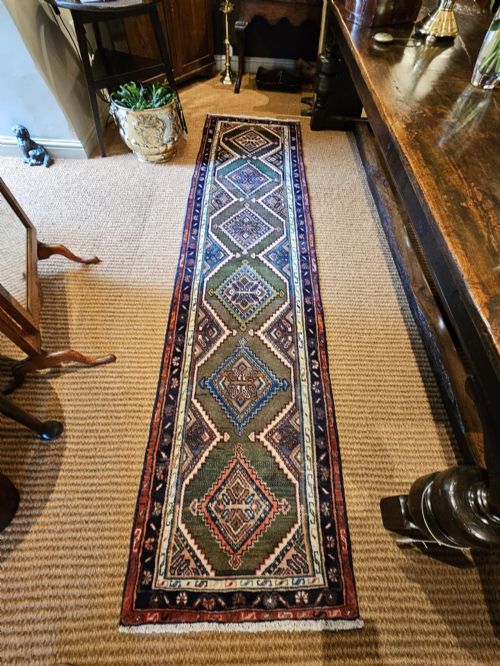
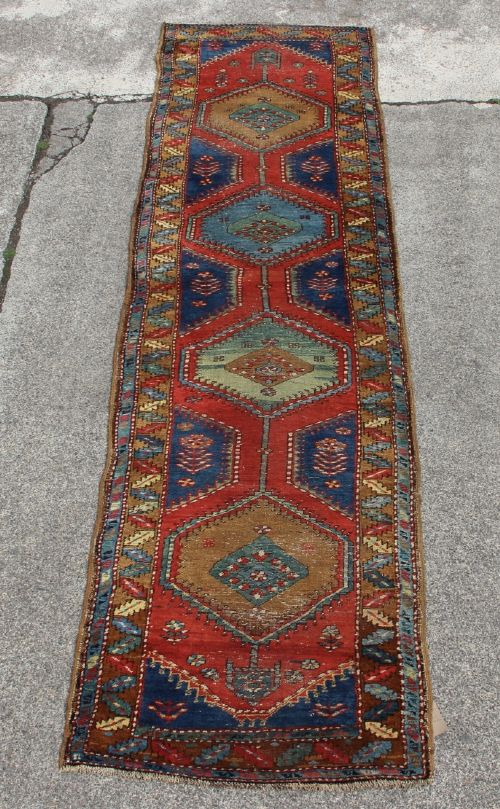



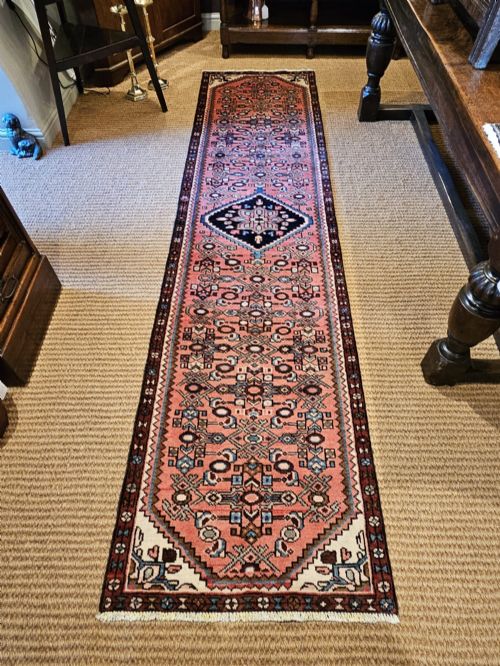
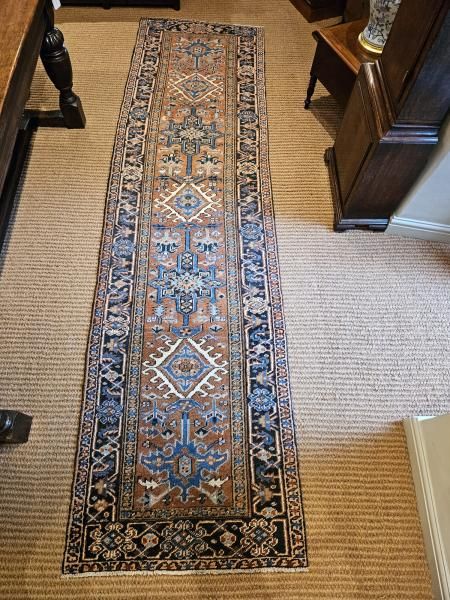

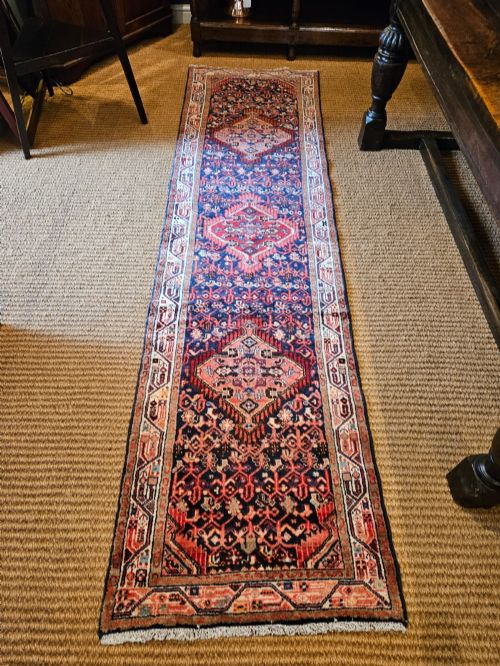
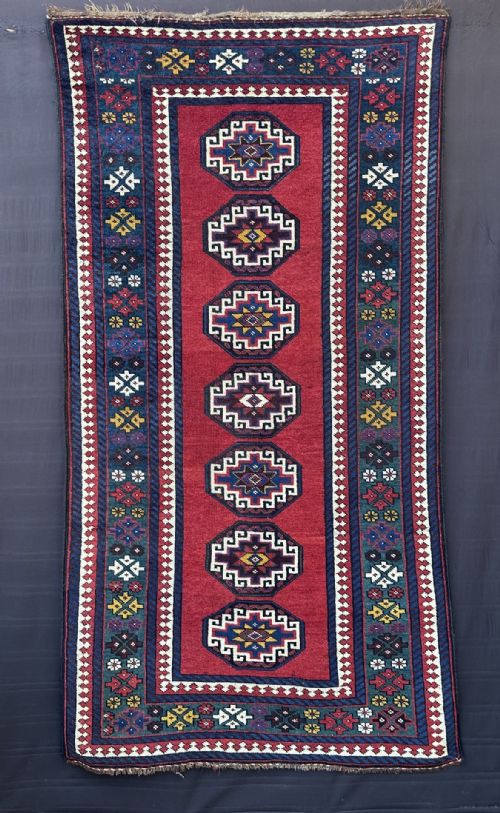
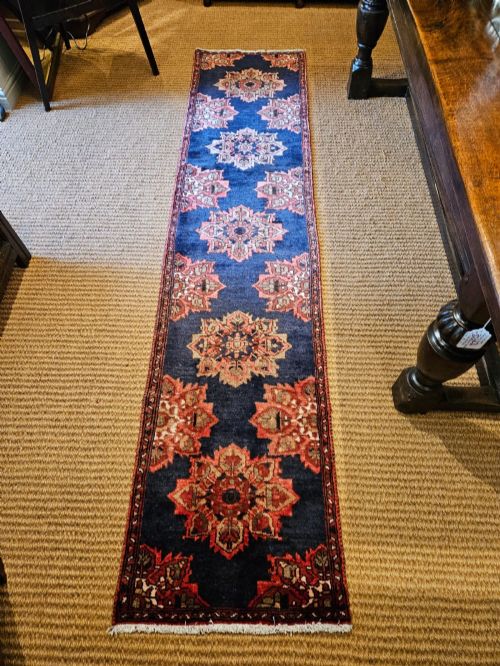
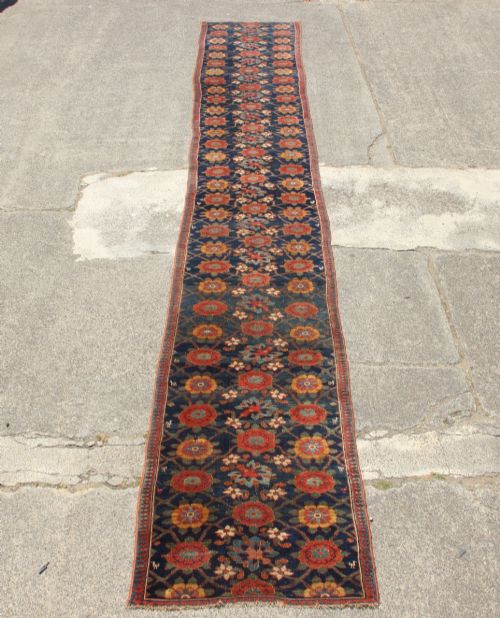
Vintage Persian Hallway Runner
A vintage persian hallway runner brings rich colour and hand-knotted texture to corridors, grounding long spaces with traditional design.
Vintage Persian Hallway Runner
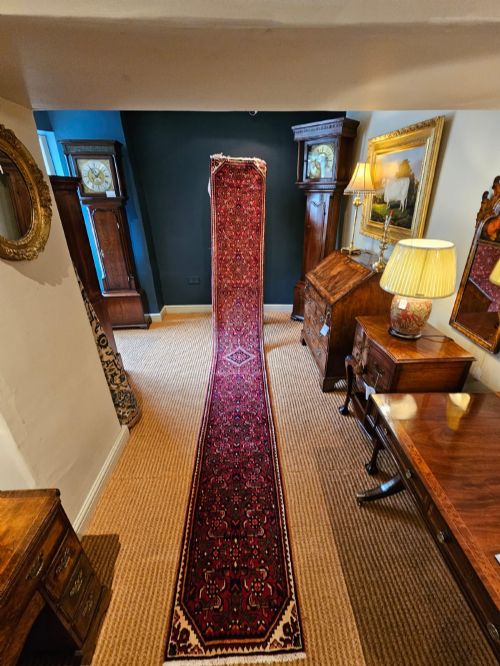
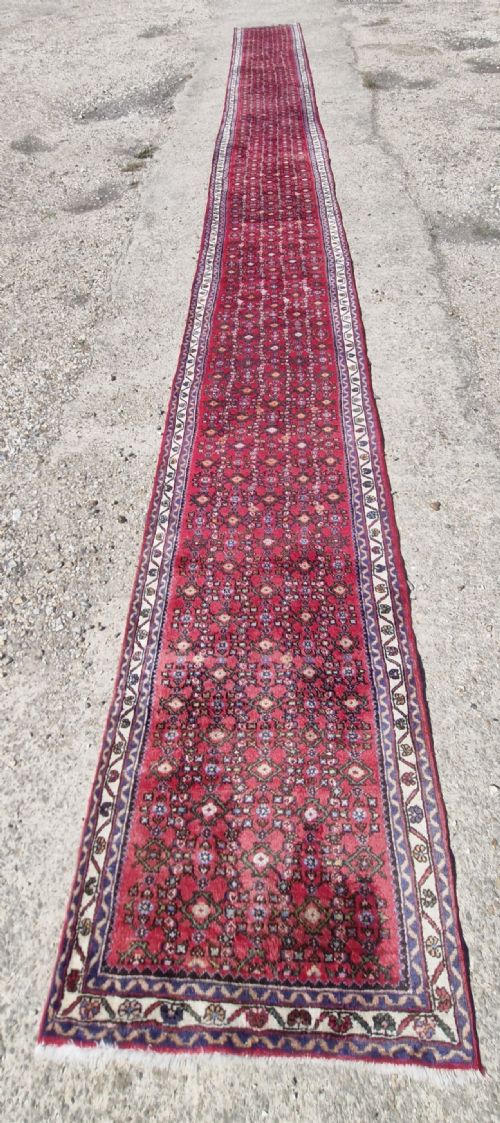
A vintage persian hallway runner is a narrow, elongated textile designed specifically for corridors, landings and narrow walkways. These floor coverings bridge utility and artistry, bringing warmth and character to transit spaces in the home.
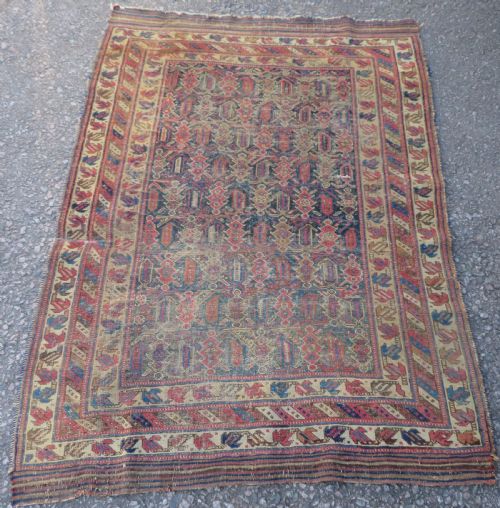
The selection on this page draws primarily from late nineteenth and early twentieth century productions, spanning periods from the 1870s through to the 1930s. Buyers will encounter various regional weaving traditions, including Heriz, Kurdish, Hamadan, Sarouk and Kelardasht origins.
Formats range from compact corridor lengths to exceptionally long runners exceeding five metres. These pieces display distinct tribal and traditional motifs, rendered in deep palettes of navy blue, olive green and rich earthy tones.
How they were made
Makers utilised natural materials, predominantly constructing these runners with durable wool piles set upon cotton foundations. Hand-spun wool provides the resilience required for high-traffic hallway placement while developing a soft handle over decades of use.
Traditional handweaving techniques dominate the construction, employing hand-knotted piles that secure rich vegetable and mineral dyes into the warp and weft. Artisans knotted wool by hand onto upright looms, creating dense structures designed to endure generations of footfall.
Some antique runners arrive with slightly crooked geometries, reminding every buyer that human hands made them without rulers.
What varies in quality
Knot density and structural integrity separate standard examples from finer works, influencing both the crispness of the geometric or floral pattern and the longevity of the rug. Tighter knotting allows for intricate detailing in traditional fields and borders.
The choice of wool and the saturation of the dye define the visual depth of a runner. Hand-spun wool absorbs colour unevenly in subtle, pleasing ways, whereas uniform modern yarn lacks the tonal variation prized by collectors.
Kurdish·Heriz·Hamadan·Sarouk·Kelardasht
The Vintage Persian Hallway Runner Glossary
- Runner
- A long, narrow carpet format specifically suited for hallways, corridors and stairs. These pieces balance length with restricted width to fit transitional architectural spaces.
- Warp
- The stationary vertical threads stretched onto the loom before weaving commences. The fringe of a rug typically consists of the extended warp threads.
- Weft
- The horizontal threads passed alternately over and under the warp threads to bind the knots in place. Together with the warp, it forms the structural foundation of the textile.
- Pile
- The upright, cut ends of the knotted yarn that form the usable surface of the rug. Pile height and density contribute directly to the tactile feel and durability.
- Heriz
- A style of Persian carpet originating from the district east of Tabriz, known for bold geometric medallions and robust construction. These runners frequently feature substantial corner spandrels.
Vintage Persian Hallway Runner: Frequently Asked Questions
Where should I place a long runner?
These narrow textiles suit hallways, corridors, landings and high-traffic transit areas where floor protection and warmth are needed. Their elongated proportions fit straight architectural spaces without overwhelming surrounding furniture.
Ensure you measure both the length and width of your corridor carefully before selecting a piece. Allowing a border of exposed floorboards around the edges maintains balance in the room.
How do I care for an antique wool runner?
Regular gentle vacuuming without a rotating brush head removes embedded dirt and protects the wool pile. Professional cleaning by a specialist in antique textiles preserves the natural lanolin in the wool.
Keep the runner out of direct, harsh sunlight to prevent natural dyes from fading unevenly over time. Using an appropriate underlay prevents slipping and cushions the foundation against hard flooring.
What is the difference between tribal and traditional runners?
Tribal runners display geometric patterns, memory-driven designs and playful irregularities handed down through nomadic groups. Traditional village or city pieces tend to follow structured floral or medallion layouts.
Both styles utilise hand-spun wool and natural dyes, but tribal examples often reveal a more spontaneous approach to composition and colour placement.
How can I tell the age of a Persian runner?
Age is determined by examining the materials, dye types, structural wear patterns and regional weaving characteristics. Vegetable-derived dyes and hand-spun wool generally point towards nineteenth or early twentieth-century production.
Slight irregularities in width and hand-woven symmetry often indicate older, non-industrial manufacture. Comparing knot structures and palette choices against documented regional examples confirms the period.