

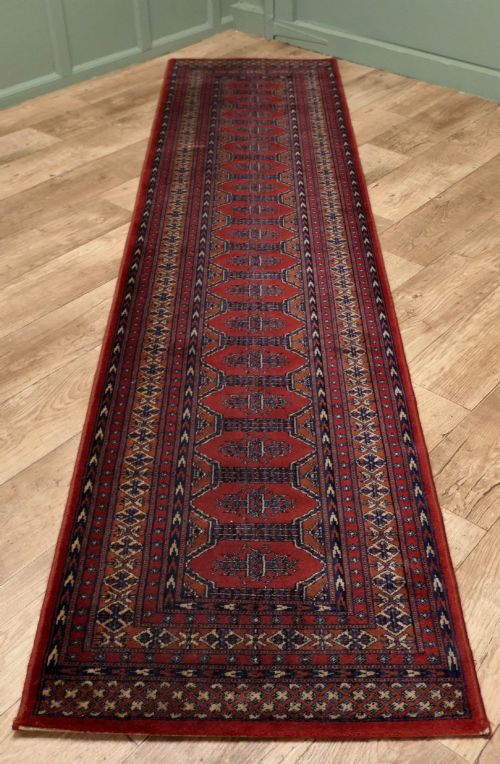
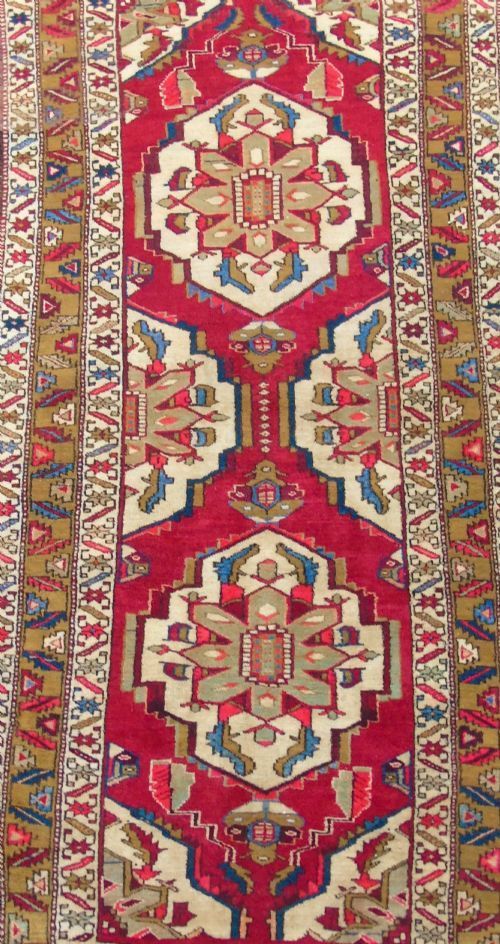
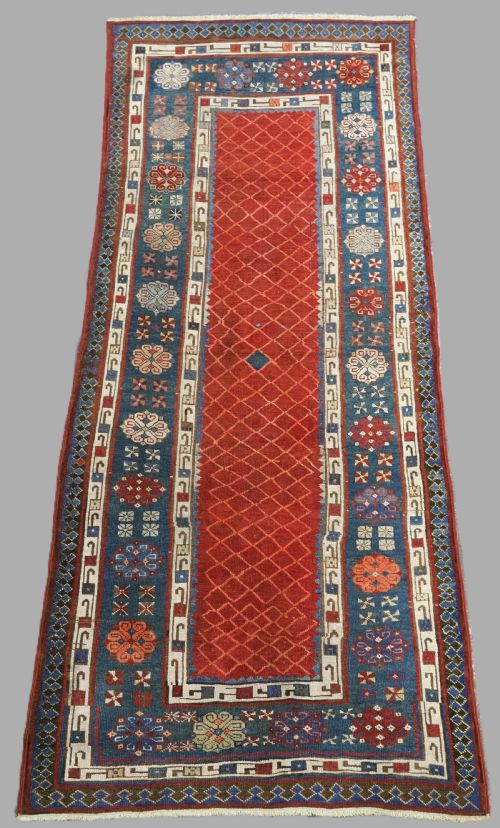
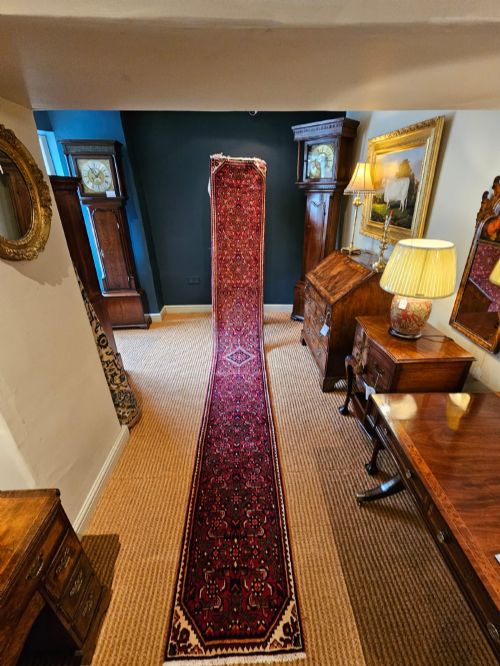
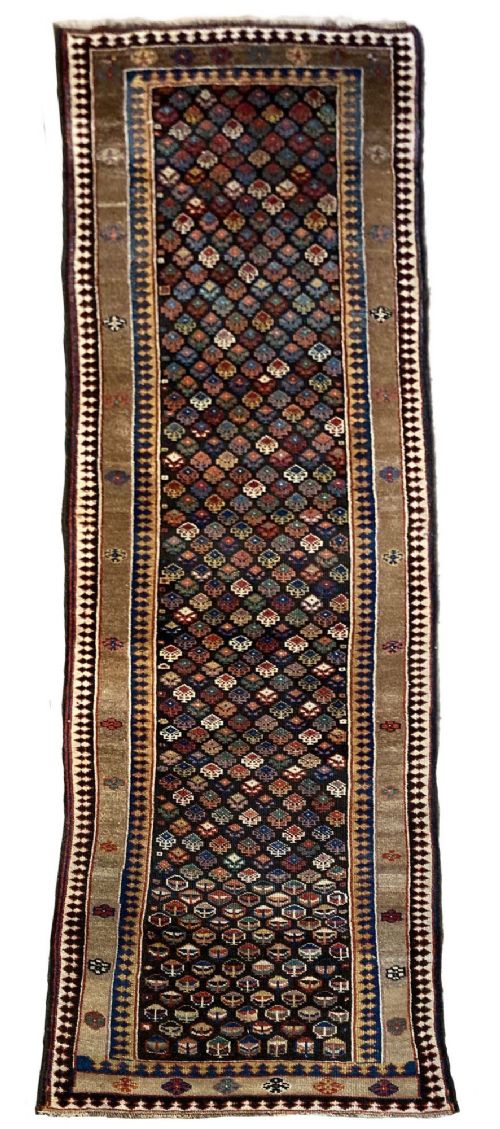
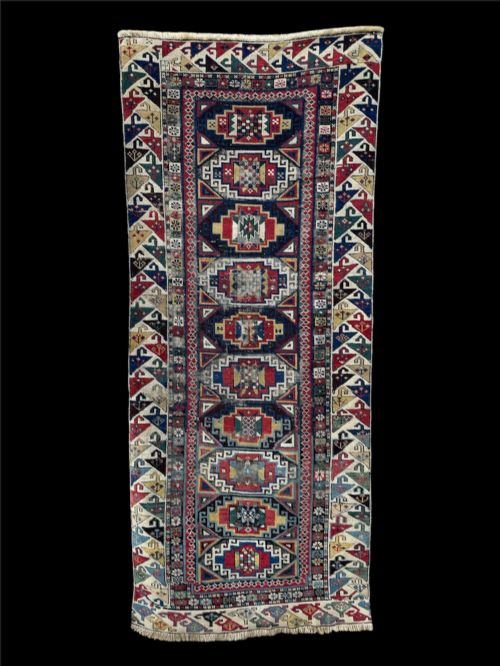


Vintage Passage Runner
A vintage passage runner brings warmth and pattern to long corridors through durable wool construction and traditional regional weaving.
Vintage Passage Runner
A vintage passage runner is a long, narrow textile designed specifically for hallways, stairs, and corridors. These pieces bridge rooms while adding significant decorative presence beneath the feet.
Buyers meet diverse regional forms originating from Persian workshops and Caucasian tribal weaving centres. Common formats range from compact gallery lengths to exceptionally long narrow proportions suited for grand halls.
The selection spans production dates from the nineteenth century through the early decades of the twentieth century. Traditional styles include Heriz, Bidjar, Shirvan, Talish, and Kurdish designs.
Materials and construction methods
Makers utilised natural wool for both the pile and the foundation structure to ensure long-term resilience in heavy traffic areas. Cotton also appears in foundations, providing structural stability for tightly knotted formats.
Weavers employed hand-knotting techniques over sturdy warps, often combining geometric lattice patterns, shrub motifs, and diagonal stripes. Natural dyes achieved the mellow colour palettes seen across blue, ivory, and olive green grounds.
Vintage Passage Runner Retail Price Guide 2026
Typical asking prices for vintage passage runner among the pieces listed under this phrase on Sellingantiques today, from the lower quarter to the upper quarter. They describe what is for sale here now, not the wider market.
Assessing quality in historical runners
Quality rests in the integrity of the wool pile and the precision of the tribal or village design execution. Tightly packed knots and robust foundation materials separate durable pieces intended for sustained hallway use from lighter textiles.
The visual balance of natural dyes and the crispness of linear motifs distinguish finer examples. Preserved pile depth and balanced proportions dictate the standing of individual rugs within their specific regional group.
The Vintage Passage Runner Glossary
- Runner
- A long, narrow carpet format specifically proportioned for corridors, hallways, and staircases. These pieces measure significantly longer than they are wide.
- Pile
- The upright yarn surface of a rug formed by knotted wool fibres. This dense layer absorbs foot traffic and protects the foundation structure.
- Warp
- The stationary lengthwise threads stretched on the loom that hold the structural tension of the rug. Cotton and wool serve as the primary materials for these foundational cords.
- Boteh
- A traditional almond-shaped or paisley motif representing a floral or cypress sprout. This design appears frequently in Persian and Kurdish weaving.
- Heriz
- A style of Persian carpet known for bold geometric medallions and robust structural durability. These runners originate from the northwest region of Persia.
Vintage Passage Runner: Frequently Asked Questions
Where should I place a vintage passage runner?
These narrow textiles fit naturally in hallways, entrance corridors, and along staircases where length is required. Their proportions suit transitional spaces that connect larger rooms.
Placing a suitable underlay beneath the rug helps secure the piece on wooden floors and protects the wool foundation from excessive friction.
How do I care for a wool runner?
Regular gentle vacuuming without a rotating brush roll keeps dust from settling into the wool pile. Professional cleaning by specialists in antique textiles preserves the natural dyes and fibres.
Rotating the runner periodically ensures even wear patterns from foot traffic along the corridor.
What styles are available in these runners?
The available pieces include traditional Persian designs such as Heriz, Bidjar, and Ferahan alongside Caucasian tribal patterns like Shirvan, Talish, and Karabagh. Each region utilises distinct geometric or floral motifs.
Palettes range from rich blue and ivory grounds to mellow earthy tones and olive green backgrounds.
How can I tell different regional styles apart?
Caucasian runners typically feature sharp geometric lattice work, diagonal stripes, and crisp primary colours. Persian village pieces often incorporate structured medallion formats or overall shrub and boteh designs.
Kurdish and Hamadan examples display dense, varied tribal patterns with robust wool construction suited for heavy domestic use.