

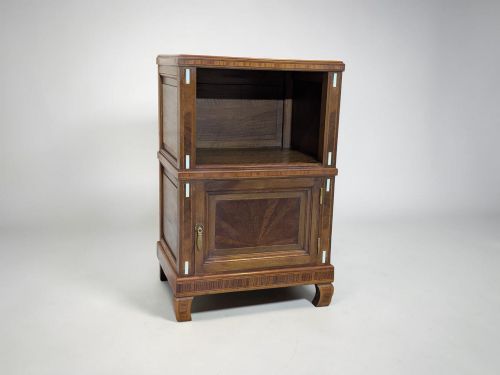
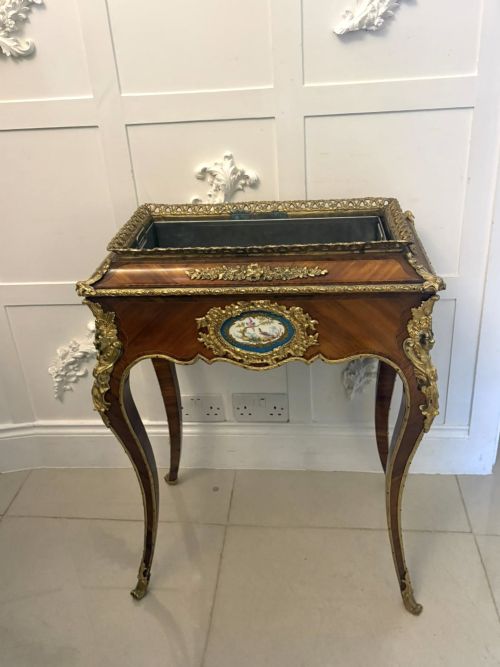
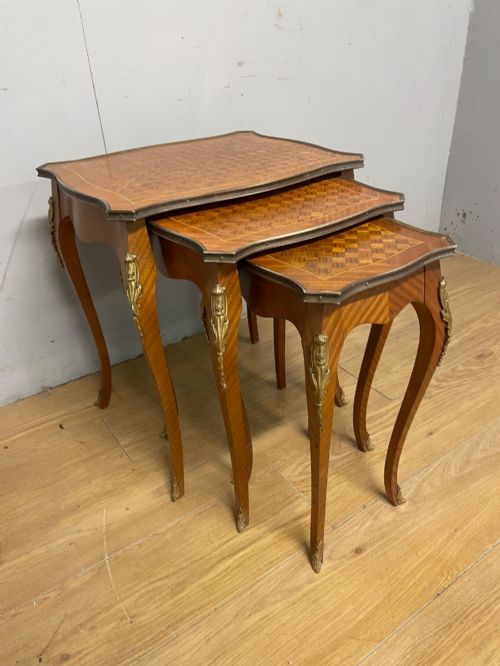
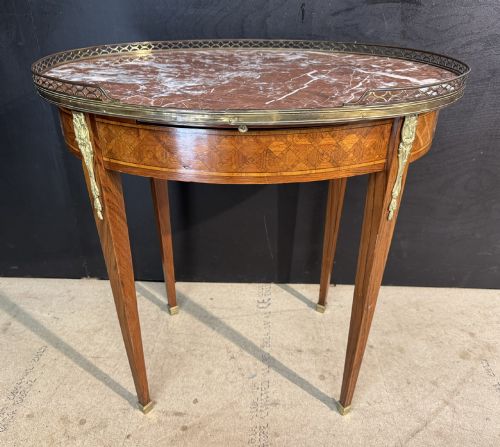
Vintage Parquetry Table
These vintage parquetry tables bring geometric wood veneers and French revival forms into a room, offering both practical surface area and decorative interest.
Vintage Parquetry Table
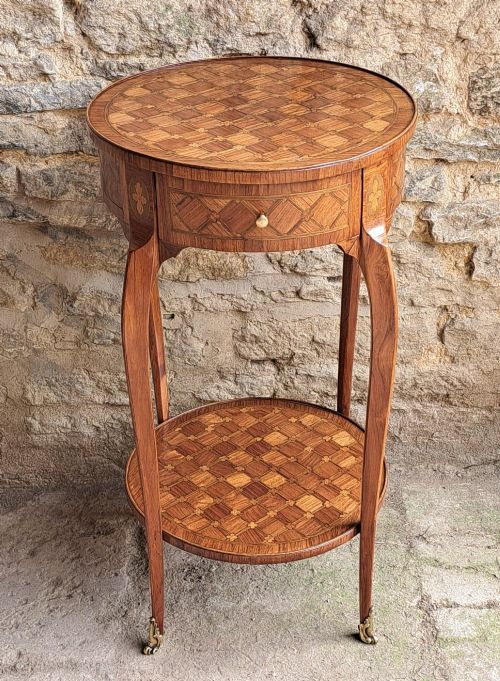
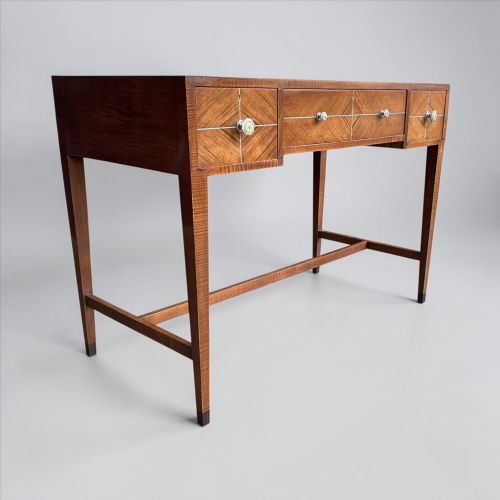
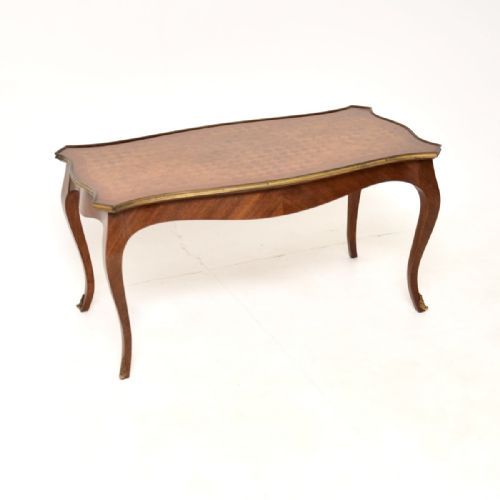
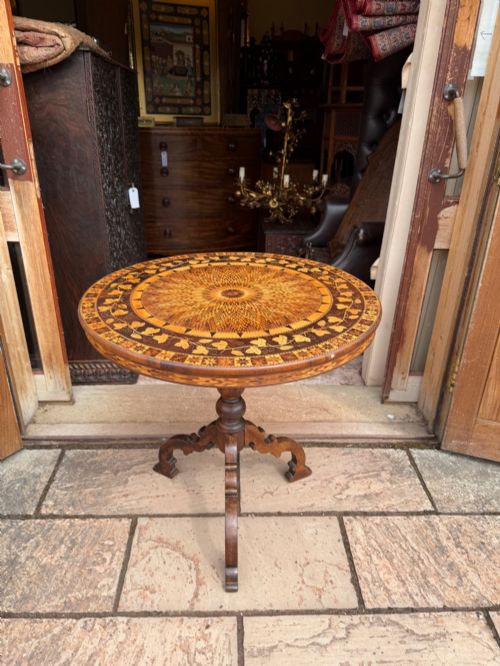
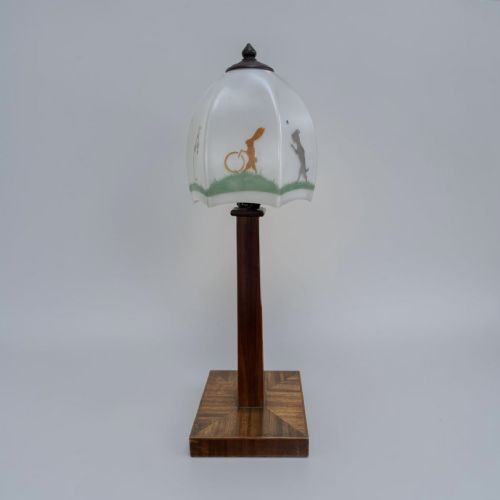
A vintage parquetry table involves pieces designed primarily for domestic use, spanning occasional tables, desks, and bedside cabinets. Buyers searching for a vintage parquetry table will encounter forms influenced predominantly by French Louis styles, alongside Edwardian and Art Deco expressions.
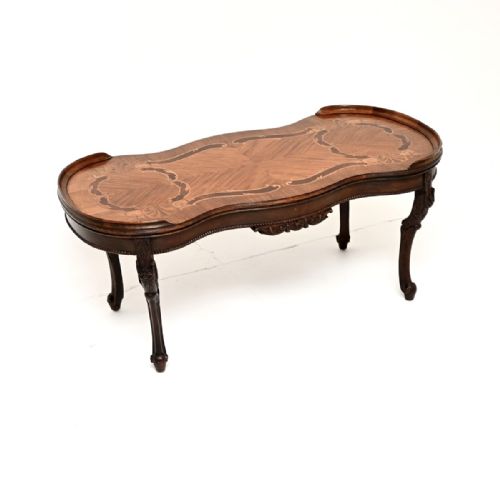
The selection ranges from coffee tables and lamp tables to writing desks and bedside cupboards. Pieces originate largely from the nineteenth century up through the nineteen-thirties, with French provenance strongly represented.
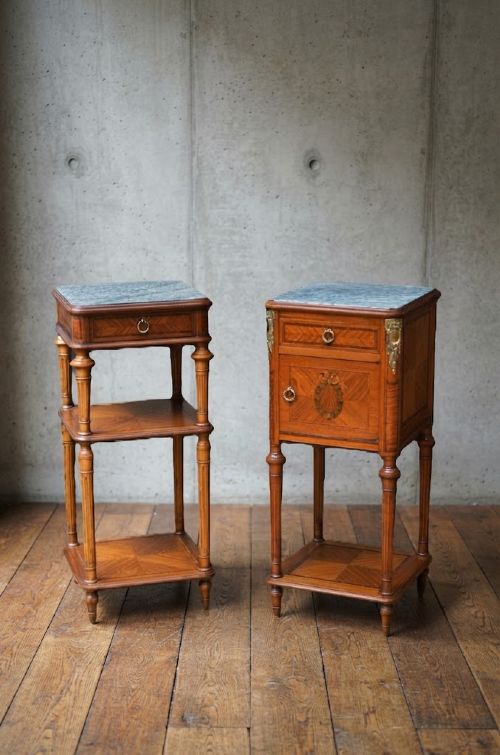
Forms often incorporate specific functional layouts such as nests of tables, drawer leaves, or marble tops. The geometric surface patterns remain the defining characteristic across all listed object types.
Materials and construction methods
Construction relies on timber veneers applied to supportive foundational carcases. Walnut, kingwood, satinwood, rosewood, and fruitwood provide the contrasting tones necessary to build geometric surface compositions.
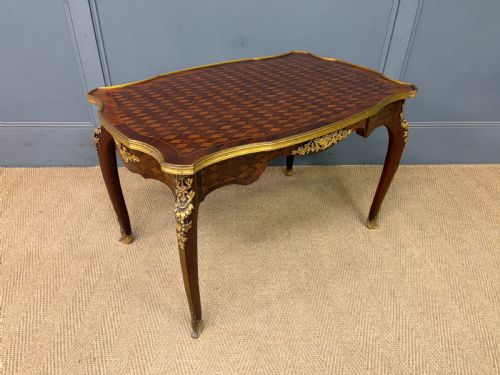
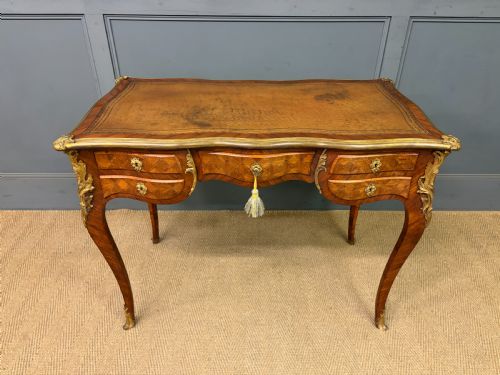
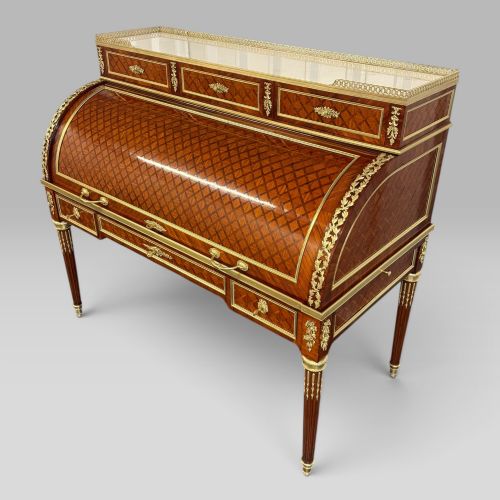
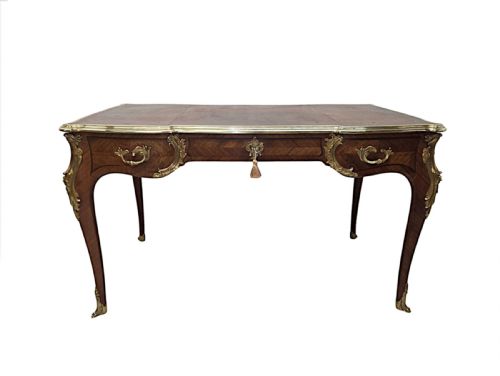
Metal mounts in ormolu and brass frequently accent corners, legs, and handles, often paired with inset marble surfaces or leather writing panels. Cabinetmakers utilised precise sawing techniques to cut thin timber sections for intricate geometric arrangements.
Vintage Parquetry Table Retail Price Guide 2026
Typical asking prices for vintage parquetry table among the pieces listed under this phrase on Sellingantiques today, from the lower quarter to the upper quarter. They describe what is for sale here now, not the wider market.
Periods represented span from the Victorian era and nineteenth century through to nineteen-thirty Art Deco designs.
Distinctions in craftsmanship and design
Quality separates along the precision of the veneer matching and the complexity of the geometric patterns. Finer examples display tight alignment across angles and joints, maintaining structural integrity without relying solely on surface decoration.
The presence of cast ormolu mounts and genuine marble tops elevates a piece above simpler timber-only constructions. Execution of secondary timbers and drawer linings further indicates the standard of workshop production.
CH. Jeanselme and Co·Maurice Dufrene
The Vintage Parquetry Table Glossary
- Parquetry
- Geometric mosaic woodwork used for decorative surface patterns on tabletops and furniture panels. It relies on contrasting wood species to create repeating visual motifs.
- Ormolu
- Gilt bronze mounts applied to furniture corners, legs, and borders. This decorative technique adds metallic contrast to wooden surfaces.
- Kingwood
- A dense exotic timber prized for its rich brown colour and dark figuring. Cabinetmakers selected it for fine veneer work during the eighteenth and nineteenth centuries.
- Etagere
- Open display shelves designed for ornaments and small objects. These tiered structures often feature slender vertical supports.
- Bureau plat
- A flat-topped freestanding writing desk fitted with drawers. It typically stands on cabriole or tapered legs.
Vintage Parquetry Table: Frequently Asked Questions
How do I clean a parquetry table?
Dust surfaces regularly with a soft, dry cloth to prevent dirt accumulation within the veneer joints. Avoid excessive moisture or harsh chemical polishes that might degrade the timber finish.
Apply a microcrystalline wax periodically to nourish the wood and protect the surface from minor spills. Gentle care preserves the historical integrity of the geometric patterns.
Are these tables suitable for daily use?
Many forms, such as coffee tables, desks, and bedside cabinets, function well in modern domestic settings. Placing coasters and protective pads beneath objects prevents surface scratching on antique veneers.
Consider the specific material combinations, as marble tops offer higher resistance to heat and liquids than polished wood alone. Proper placement away from direct heat sources ensures the timber remains stable.
What distinguishes Louis XV style from Art Deco?
Louis XV style pieces feature curved cabriole legs, ornate ormolu mounts, and flowing rococo ornamentation. The forms emphasise asymmetry and traditional French woodworking conventions.
Art Deco items lean towards streamlined geometry, symmetrical layouts, and simplified structural profiles. This later aesthetic strips away excessive ornamentation in favour of clean architectural lines.
How can I tell the period of a table?
Examine the underlying construction methods, timber choices, and hardware styles to estimate the date of manufacture. Nineteenth-century pieces frequently display revival motifs like Louis XV or Louis XVI styling.
Nineteen-thirties examples often align with Art Deco design principles or simpler geometric veneering. Comparing the secondary timbers and joining techniques provides further chronological context.