
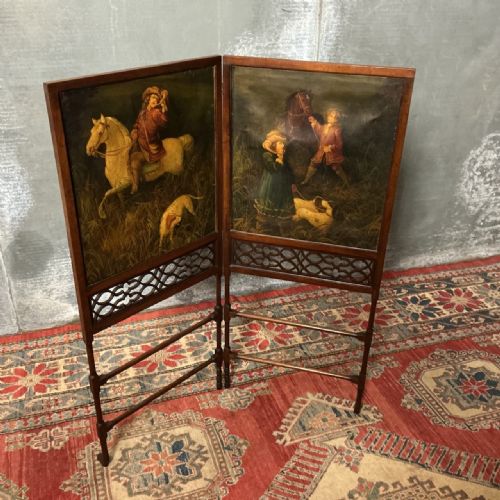

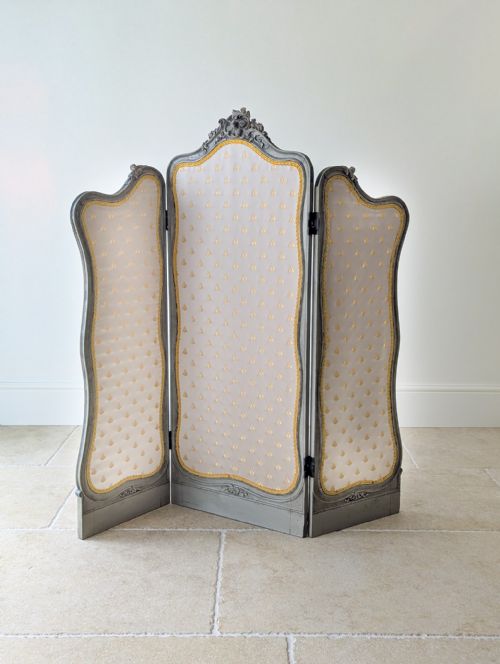
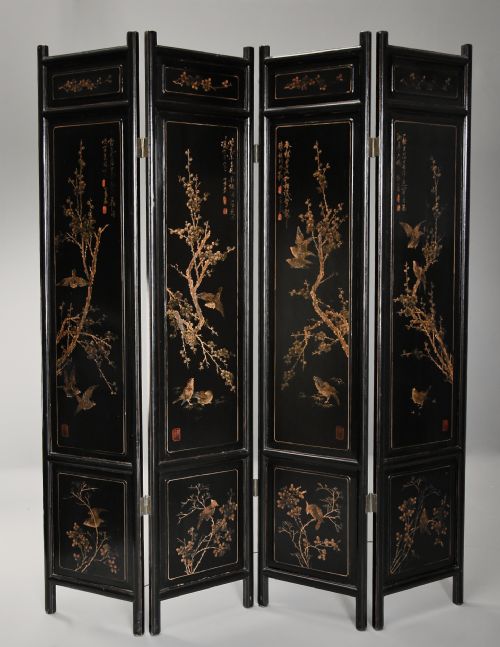
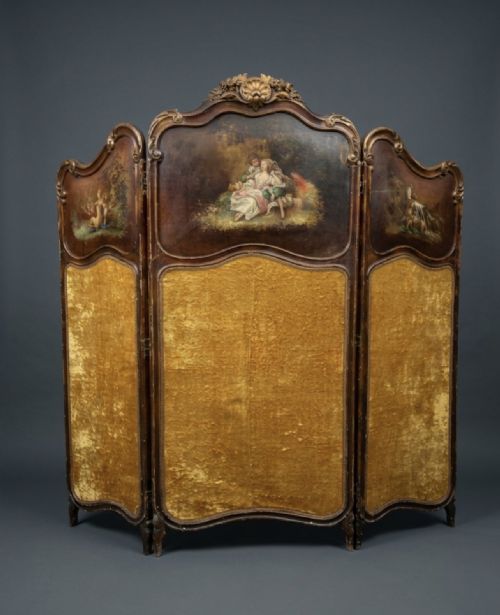

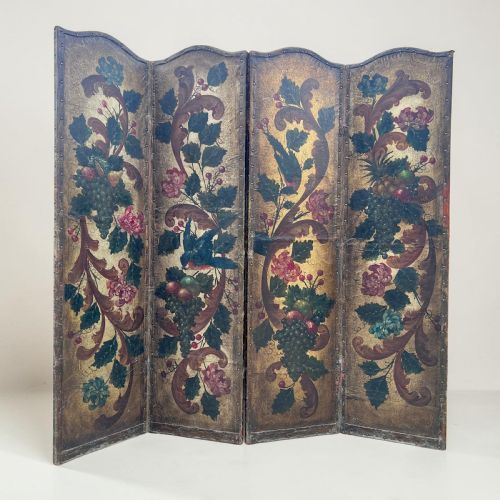


Vintage Painted Room Divider
A vintage painted room divider splits a space with folding panels carrying brushwork, lacquer, or oil scenes from the eighteenth century to the mid-twentieth century.
Vintage Painted Room Divider
A vintage painted room divider takes the form of a folding screen with multiple panels hinged together to stand upright on the floor. Most examples encountered here comprise three or four leaves, though taller six-panel formats and smaller two-fold configurations also appear.
Makers constructed these folding screens in various global traditions, ranging from European Chinoiserie and French Rococo Revival to Chinese black lacquer and Indian fretwork. The primary function remains dividing a domestic interior or creating a decorative backdrop.
The periods represented span from the eighteenth century through the Victorian and Edwardian eras into the early twentieth century. Buyers select these panels to introduce pattern, colour, and division into modern rooms without permanent structural changes.
How they were made
Workshops built the structural frames using timber species such as mahogany, walnut, and various solid woods, often incorporating brass hardware for the hinges. Some pieces utilise leather or canvas stretched across the framework to receive the surface decoration.
Artisans applied paint, oil paint, lacquer, and gold leaf directly to the panels, frequently building up Chinoiserie motifs or pastoral scenes by hand. Certain Asian export items employed hardstone mounting and intricate lacquer techniques upon wooden panels.
Materials recorded on this page include oil paint, lacquer, gold leaf, leather, canvas, brass, and wood.
What varies in quality
The standard of execution in the hand-painted details separates ordinary examples from finer works of art. Skilled artists rendered figures, foliage, and pastoral landscapes with precise brushwork and nuanced shading.
The structural integrity of the hinges and the quality of the timber core dictate the durability of the screen. Substantial frames built from dense hardwoods support heavy layers of lacquer or leather far better than lighter, secondary woods.
The Vintage Painted Room Divider Glossary
- Chinoiserie
- European interpretation of Chinese and East Asian artistic traditions, often featuring figures, pagodas, and landscapes in paint and gold leaf.
- Lacquer
- A durable resin finish applied in multiple layers to wood, capable of being polished to a high gloss and decorated with painted or incised motifs.
- Modesty screen
- A small decorative screen historically used to shield a person from drafts or to provide privacy during dressing.
- Fire screen
- A freestanding panel placed before a fireplace when not in use, sharing similar decorative painting techniques with larger room dividers.
- Fretwork
- Ornamental design created by cutting patterns through wood, frequently seen along the upper or lower rails of screens.
Vintage Painted Room Divider: Frequently Asked Questions
How do I clean a painted screen?
Dust the panels gently with a soft, dry microfibre cloth to remove surface particles without disturbing fragile paint or gold leaf.
Avoid using water, chemical sprays, or abrasive cleaners on lacquer and oil paint, as moisture penetrates aged finishes and causes lifting.
Can these screens support weight?
These folding screens function purely as freestanding room dividers or decorative wall art rather than structural partitions. Placing any heavy object against the panels risks cracking the wood, leather, or lacquer hinges.
Position each fold at a slight angle to ensure the screen supports its own weight safely across the floor.
How do I tell an 18th century screen from a later copy?
Examine the construction of the wooden frames and the composition of the gesso and paint layers under magnification. Eighteenth-century pieces exhibit hand- forged hardware, dense timber shrinkage, and craquelure consistent with age.
Later revival pieces display machine-cut elements and synthetic bonding agents beneath the surface decoration.
What is the best way to place a divider in a room?
Angle the panels in a gentle zig-zag configuration to provide stability and allow the full width of the painted scene to catch the light. Avoid placing the divider in direct sunlight, which fades oil paint and cracks leather or lacquer over time.
Keep the panels away from active heat sources to prevent the wood from warping.