


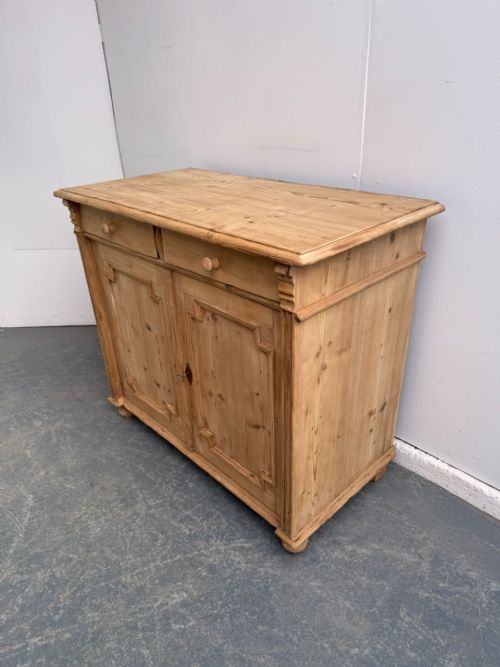


Vintage Painted Kitchen Table
A vintage painted kitchen table brings warmth to a room, offering practical surface space rooted in centuries of domestic utility.
Vintage Painted Kitchen Table
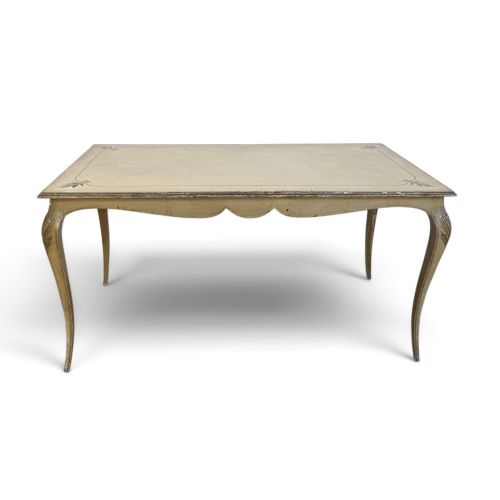
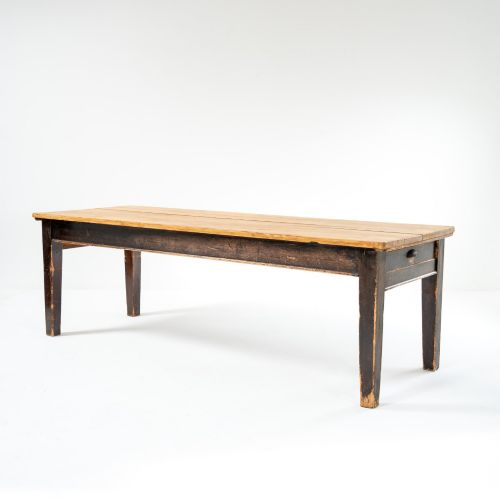
When you search for a vintage painted kitchen table, you encounter robust work surfaces that served practical purposes in European homes and shops. These items include heavy harvest tables, prep tables, dairy tables, and bakers tables originating from periods spanning the eighteenth century through to the mid-twentieth century. English and Scandinavian country houses and French provincial properties generated the majority of these examples.
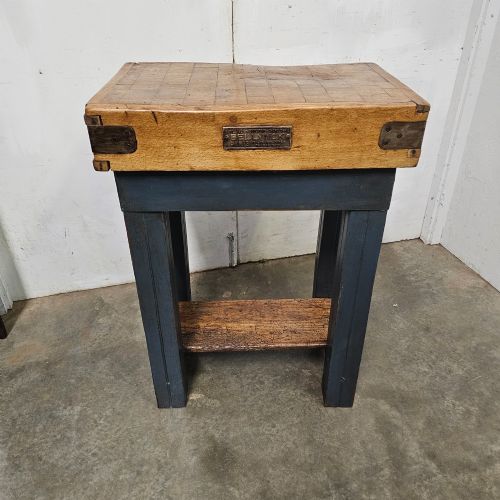
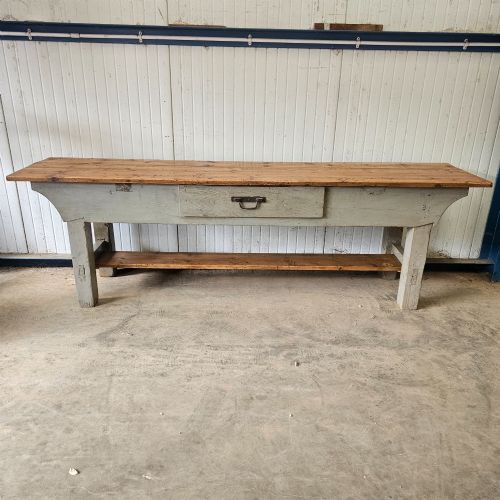
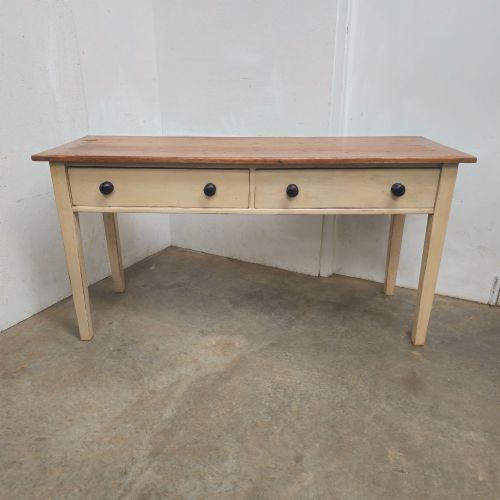
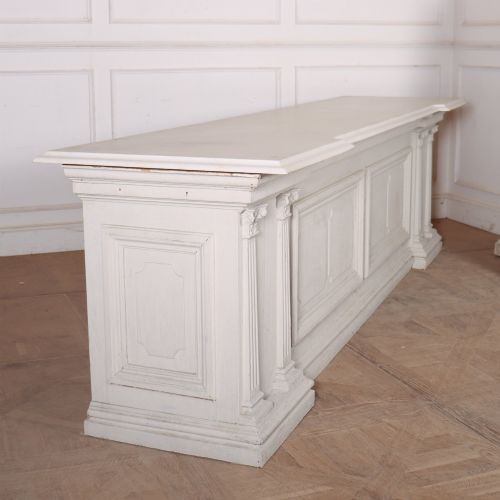
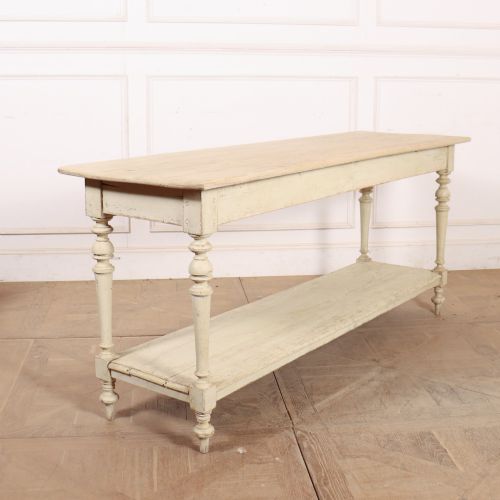
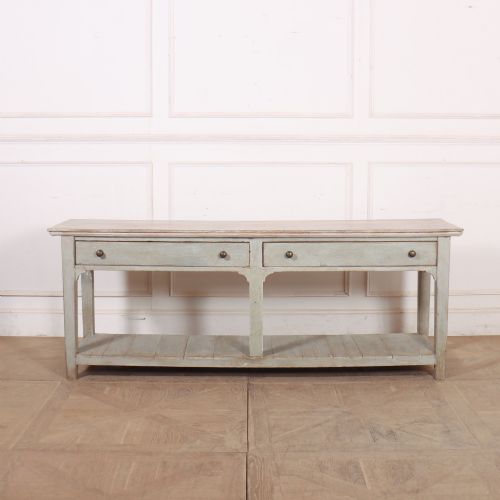
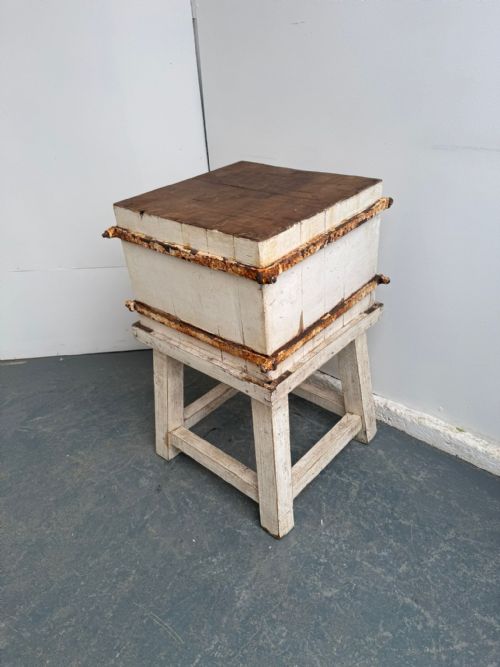
You are most likely to meet sturdy pine tables featuring painted timber bases or legs paired with scrubbed wooden tops. Forms range from simple single-drawer dining tables to large commercial counters, butchers blocks, and potboard dresser bases. Styles lean heavily towards rustic farmhouse and country traditions, showing the honest wear of daily domestic labour.
How they were made
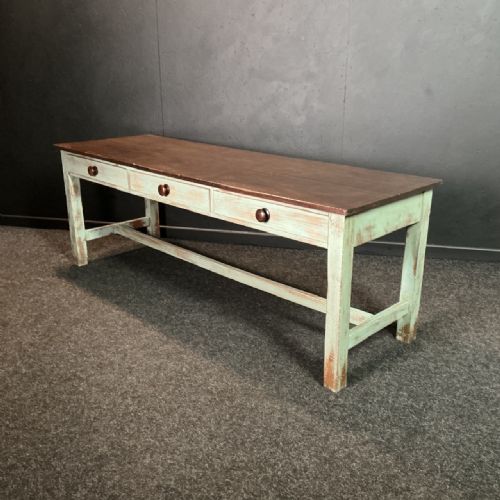
Construction relies heavily on solid pine and painted timber, built to endure heavy daily use in busy domestic or commercial settings. Carpenters utilised sturdy joinery, multi-plank tops, and cleated ends to ensure stability across large dining and prep surfaces.
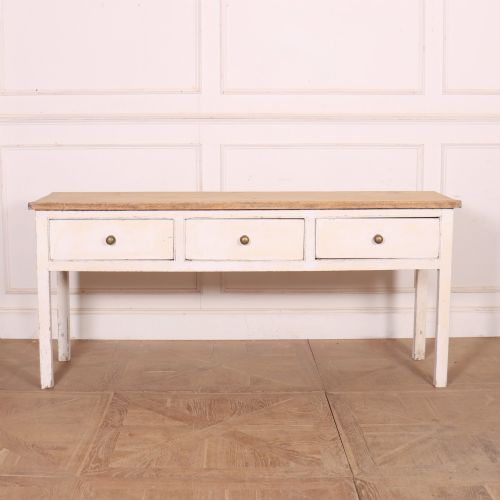
Surfaces display layers of historic paint, ranging from original white finishes to traditional regional treatments like Swedish Falu red or applied gilding. Brass and iron hardware frequently appears on drawers, while marble tops feature on specific charcuterie and prep tables.
Vintage Painted Kitchen Table Retail Price Guide 2026
Typical asking prices for vintage painted kitchen table among the pieces listed under this phrase on Sellingantiques today, from the lower quarter to the upper quarter. They describe what is for sale here now, not the wider market.
What varies in quality
The distinction between ordinary utility items and superior examples often rests on the survival of original surface finishes. Tables retaining genuine, untouched layers of old paint command greater interest than those stripped down or repeatedly repainted in modern times.
Structural integrity and proportion also separate the range, with well-balanced proportions and untouched period timber showing superior craftsmanship. Original maker details, vernacular regional variations, and uncompromised structural hardware elevate certain pieces above standard workshop builds.
The Vintage Painted Kitchen Table Glossary
- Potboard dresser base
- A low sideboard featuring an open lower shelf used historically for storing pots and heavy kitchen equipment. These timber units typically provide substantial storage beneath a long work surface.
- Scrub-top
- A solid wooden tabletop left bare and frequently washed with water and sand to maintain cleanliness. This treatment leaves the grain raised and pale.
- Falu paint
- A traditional deep red or reddish-brown earth paint originating in Sweden. It contains copper tailings and provides durable protection for exterior and interior timber.
- Butchers block
- A thick, heavy wooden block designed for meat preparation. These dense timber surfaces often stand on sturdy painted pine frames.
Vintage Painted Kitchen Table: Frequently Asked Questions
How do I clean a painted table?
Wipe surfaces gently using a soft, damp cloth without harsh chemical detergents. Avoid soaking old timber or scrubbing painted areas to protect historic finishes.
Allow the wood to dry naturally after cleaning. Regular dusting helps maintain the condition of the original paint layers.
Are these tables suitable for daily dining?
Most of these pieces were constructed as hardworking kitchen or work tables, making them durable for everyday use. Their robust pine frames and solid tops handle regular family meals easily.
Protect vulnerable scrubbed timber tops with placemats to prevent moisture rings or stubborn stains. Enjoying them daily adds to their ongoing history.
How do I date a pine table?
Examine the construction methods, tool marks, and hardware types used in the assembly. Hand-cut joints and original timber patination provide clues to the period of origin.
Layered paint analysis and regional stylistic traits also help determine whether a piece originates from the Georgian, Victorian, or later periods.