


Vintage Painted Footstools
These vintage painted footstools bring practical character and colour to a room through centuries of traditional craftsmanship.
Vintage Painted Footstools
Vintage painted footstools encompass low seating pieces created across diverse European and Asian traditions, including French provincial designs and Swedish Gustavian styles. These low stools and benches range from simple milking stools to ornate boudoir seats and window seats.
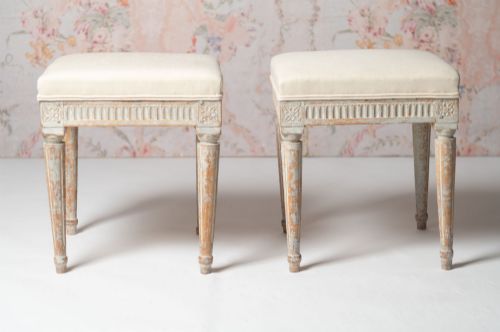
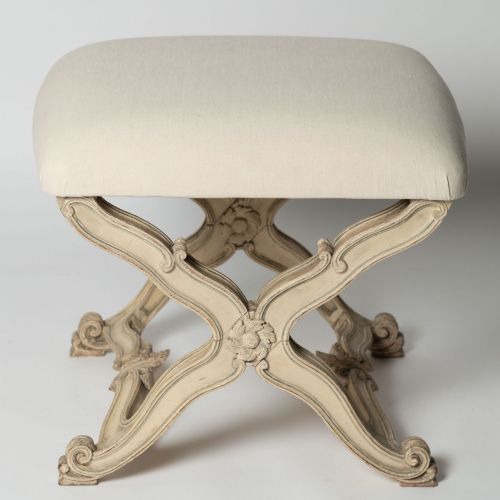
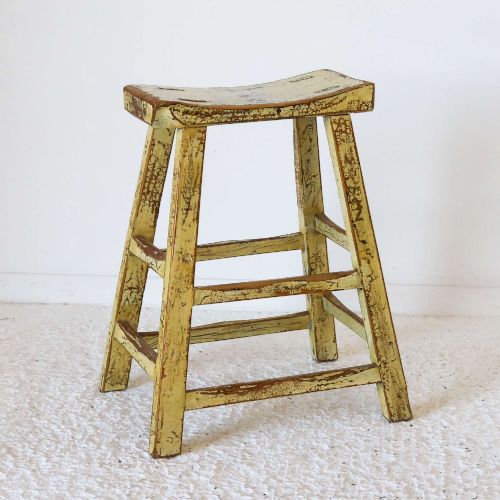
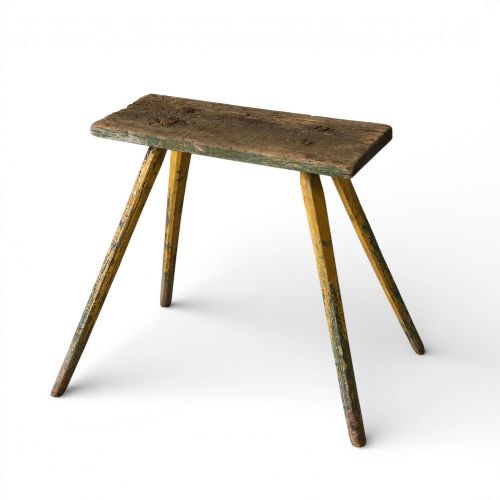
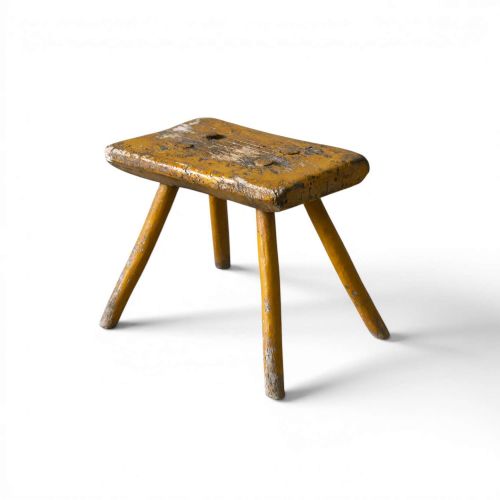
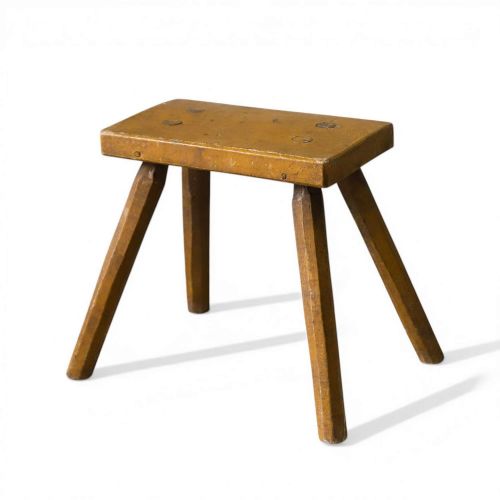
Buyers encountering this selection will frequently find rustic wooden examples alongside refined period seating. The forms extend from small milking stools in original ochre or yellow paint to sophisticated X-frame curule footstools and Louis XVI style circular boudoir stools.
Originating from periods spanning the eighteenth century through to the early twentieth century, these pieces showcase regional decorative painting traditions. Swedish Gustavian and French country aesthetics dominate the selection alongside Eastern European and Chinese provincial variants.
Materials and construction
Makers constructed these stools using timber and wood such as elm, pine, and carved hardwoods. Artisans applied original paint finishes, including ochre, yellow, and green pigments, sometimes embellishing surfaces with gold leaf.
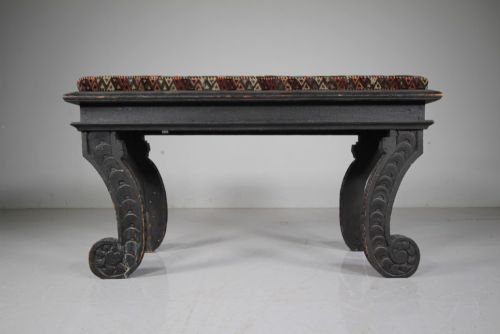
Upholstery techniques incorporate textiles like linen, velvet, and needlework padding. Certain pieces utilise complex frames such as X-frame curule structures or hand-carved decorative wooden bodies.
Several modest milking stools arrive wearing stubborn coats of bright ochre and green paint, having survived farmyards to sit beside modern sofas.
Evaluating quality and character
The distinction between standard utility seating and exceptional pieces rests in the survival of original surface finishes and hand-carved detailing. Stools retaining undisturbed early paint layers command greater interest among collectors.
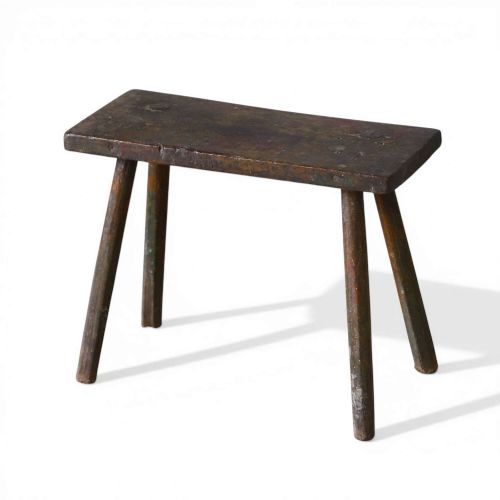
Proportion and structural joinery separate regional vernacular work from formal cabinetmaker production. Refined frames by notable makers contrast with rustic country pieces, where charm lies in simple timber construction and authentic patination.
Miles & Edwards·Whytock and Reid
The Vintage Painted Footstools Glossary
- Gustavian
- The Swedish interpretation of French neoclassical design, characterised by pale painted finishes and restrained classical ornamentation. This style emerged in the late eighteenth century.
- Curule stool
- An ancient Roman magistrate chair design featuring opposing curved legs forming an X-shape. Revival versions appeared in nineteenth-century formal seating.
- Milking stool
- A simple utilitarian three-legged or four-legged wooden seat used by dairy workers. These items often feature humble pine construction and rustic painted surfaces.
- Chinoiserie
- European artistic interpretation of Chinese and East Asian decorative motifs. This style frequently incorporates lacquered surfaces and painted scenic details.
- Needlework
- Stitched textile work using wool or silk yarn on a canvas ground. Such panels frequently furnish the padded tops of nineteenth-century piano and boudoir stools.
Vintage Painted Footstools: Frequently Asked Questions
What distinguishes a footstool from a piano stool?
Footstools are generally lower auxiliary seats designed to support resting feet or provide casual low seating. Piano stools serve a specific seating function at keyboard instruments and often incorporate height adjustment mechanisms.
Traditional piano stools from the nineteenth century display distinct mechanical properties, whereas standard footstools remain fixed in height and lighter in scale.
How do I care for original painted wood?
Preserving historic paint surfaces requires gentle dusting with a soft, dry cloth without modern chemical polishes or abrasive cleaners. Direct sunlight and fluctuating humidity should be avoided to prevent flaking.
Maintaining a stable indoor climate protects fragile nineteenth-century pigments and lacquered elm surfaces from degradation over time.
Where can I use a low stool at home?
These compact seats function effectively as casual footrests beside armchairs, low dressing table seats, or decorative plant stands. Their modest dimensions allow them to tuck easily beneath console tables when not in active use.
Incorporating a painted wooden stool adds an accent of historic colour and texture to both traditional and contemporary interiors.
How do I identify Swedish Gustavian style?
Gustavian pieces display pale grey or cream painted surfaces, fluted legs, and subtle neoclassical carving influenced by French royal courts. The aesthetic prioritises light, symmetry, and understated elegance.
Swedish country interpretations often soften these formal classical lines with simpler rural joinery while maintaining the characteristic light painted palette.