
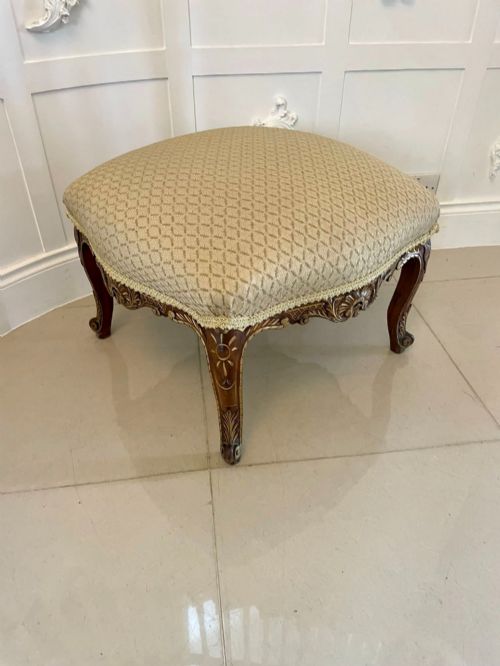
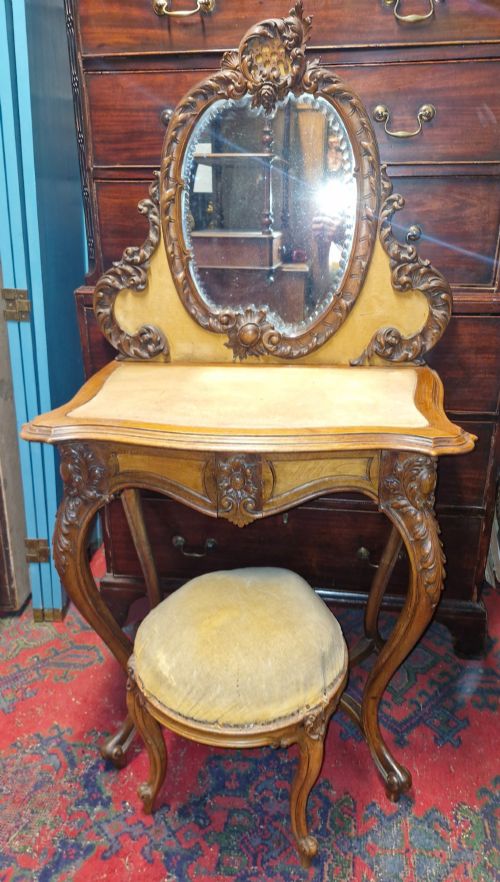
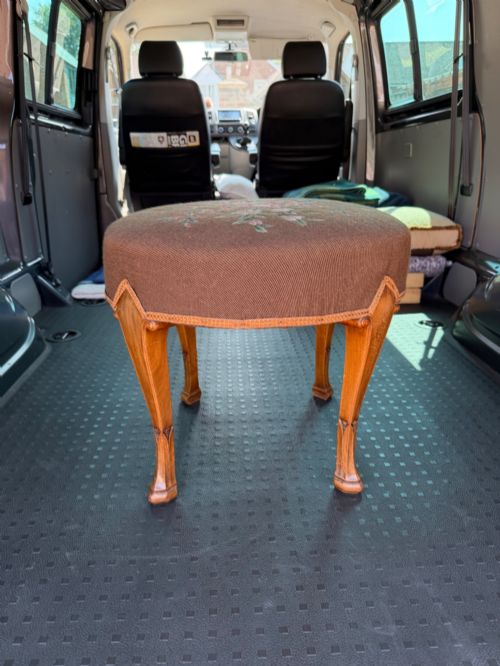
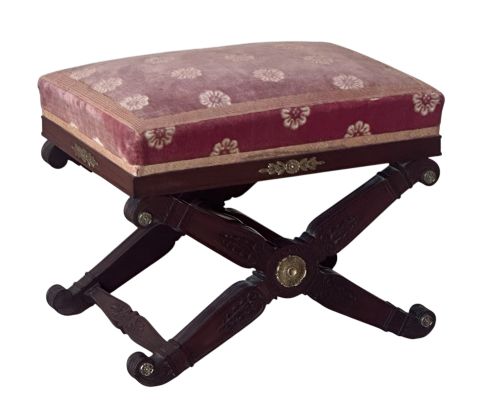




French Style Dressing Stool
These french style dressing stool pieces bring continental elegance to a bedroom, offering low, upholstered seating designed for use beside a mirror.
French Style Dressing Stool
A french style dressing stool serves as a low seat for a vanity or dressing table, drawing on classic continental designs. Buyers searching this phrase typically encounter nineteenth century pieces alongside early twentieth century interpretations.
The form appears across several eras, including Victorian revivals and pieces dated around eighteen eighty or nineteen hundred. Workshops produced these stools in various configurations, from circular boudoir seats to rectangular salon stools and X frame designs.
Originating largely from French and English cabinet makers, these pieces often reflect stylistic influences such as Louis XV, Louis XVI, and Rococo Revival. They function equally well as standalone footstools, window seats, or companion pieces to dressing tables.
How they were made
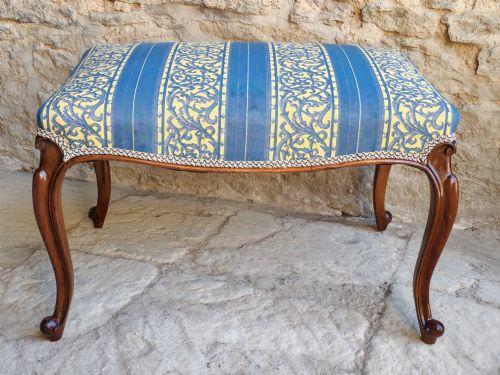
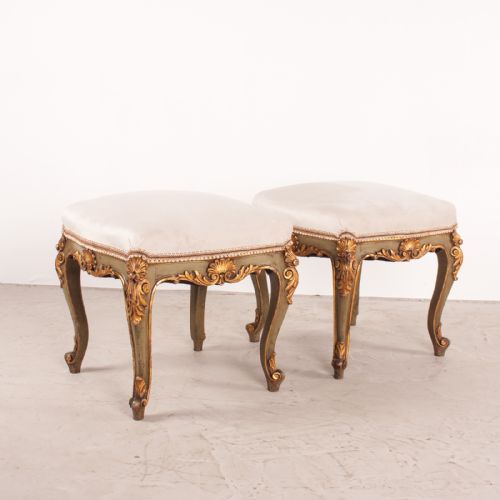
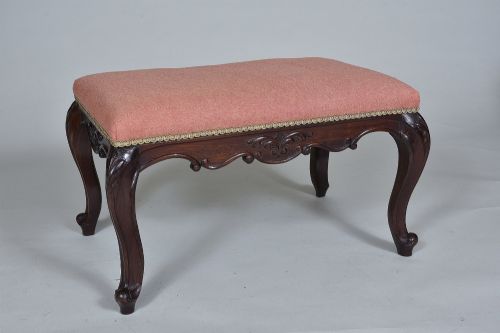
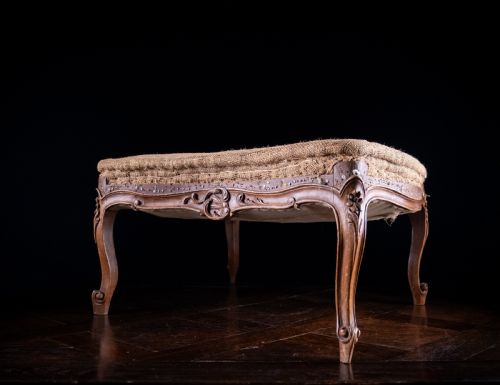
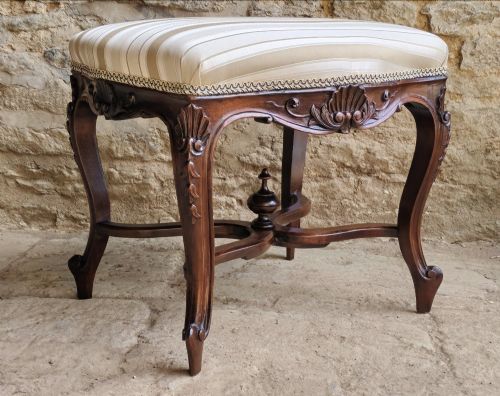
Frame construction relies heavily on traditional timber selection, with walnut, mahogany, beech, and giltwood forming the primary structural supports. Carvers shaped these woods by hand, executing intricate cabriole legs, fluted columns, and gilded surface ornamentation.
Upholstery methods involved padding frames with textile, velvet, fabric, or needlework to ensure comfort. Many pieces incorporate decorative details such as paint finishes, applied gilding, and cane panels integrated into wooden frames.
Revival styles span Louis XV, Louis XVI, Rococo, and French Neoclassical aesthetics applied to compact boudoir seating forms.
What varies in quality
The distinction between ordinary and superior examples lies in the crispness of the wood carving and the depth of the gilding or paint finish. Finer pieces display deeply sculpted cabriole legs and balanced proportions rather than flat, machine-cut details.
Upholstery execution also separates pieces within this range, particularly where hand-stitched needlework or heavy velvet is applied to sturdy walnut or giltwood frames. Maker stamps and documented Parisian origins add further distinction to individual items.
Loidrault Freres Paris
The French Style Dressing Stool Glossary
- Cabriole leg
- A furniture leg that curves outward at the knee and tapers inward to an ankle, typical of eighteenth century and revival designs. This shape mimics animal legs and provides sturdy support without heavy stretchers.
- Giltwood
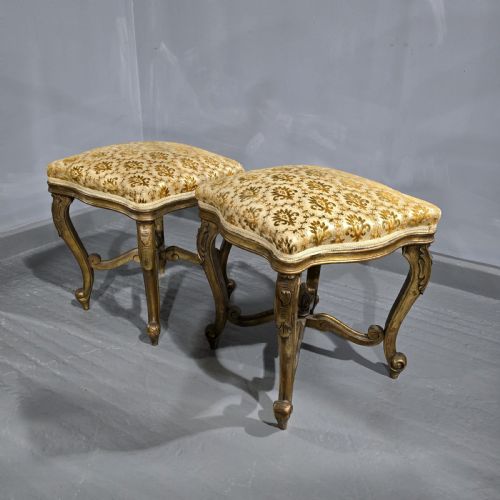
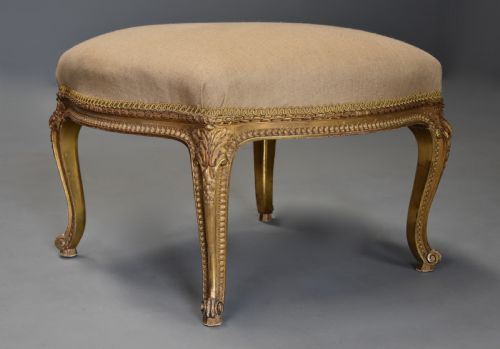
- Timber coated with a thin layer of gold leaf or gilt finish to achieve a metallic sheen. It appears frequently on formal French style seating.
- X frame
- A structural base formed by intersecting diagonal timbers resembling the letter X. This curule design dates back to antiquity and offers robust weight distribution.
- Banquette
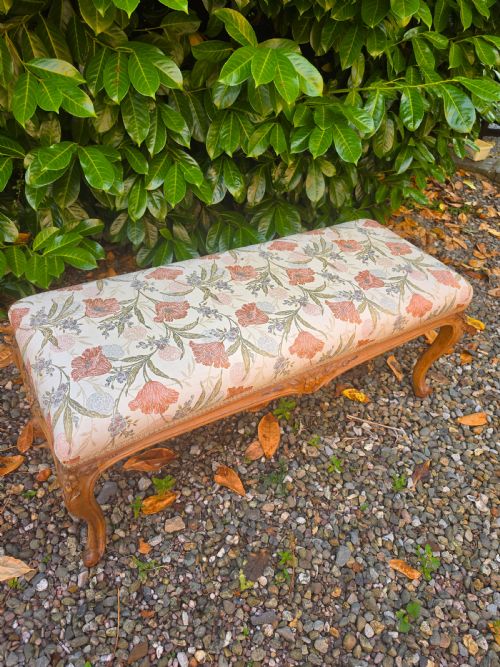
- A long upholstered bench or stool often used as a window seat or footstool. These pieces share similar decorative carving with standard dressing stools.
French Style Dressing Stool: Frequently Asked Questions
How were dressing stools used historically?
These low seats were placed directly in front of dressing tables and vanity desks to provide comfortable seating during morning routines. Owners also positioned them in salons and boudoirs as auxiliary seating for guests.
Beyond vanity use, many of these stools functioned as footstools or short window seats. Their compact size allowed them to be tucked away beneath tables when not in use.
How do I identify a Louis XV style stool?
Louis XV style pieces are characterised by flowing asymmetrical lines, floral carvings, and pronounced cabriole legs. These designs avoid straight edges in favour of organic curves and subtle serpentine contours.
Giltwood, walnut, and beech frames often feature prominently in this style, frequently paired with pastel or patterned upholstery fabrics that echo eighteenth-century aesthetics.
Can these stools be used as footstools?
Many examples listed under this phrase double comfortably as footstools or low ottomans due to their generous proportions and low height. Their padded tops provide ample support for resting feet when placed before armchairs or sofas.
Heavier walnut and mahogany models provide a solid base for this dual purpose, while lighter painted or gilded versions suit placement in sitting rooms as well as bedrooms.
What is the difference between walnut and giltwood frames?
Walnut frames display the natural grain and warm brown tones of the hardwood, often enhanced by clear French polish or wax. They offer a grounded, organic appearance suited to traditional domestic interiors.
Giltwood frames, by contrast, are covered in gold leaf to create a bright, reflective surface associated with formal French chateau decor and royal court aesthetics.