


Vintage Padded Headboard
A vintage padded headboard brings tactile softness and period character to a bedroom, anchoring the space with classic textiles and carved timber frames.
Vintage Padded Headboard
When you search for a vintage padded headboard, you encounter bed frames and headboards originating from the Victorian era up to the nineteen-thirties. These pieces combine wooden frames in walnut, oak, timber, and painted finishes with soft upholstery.
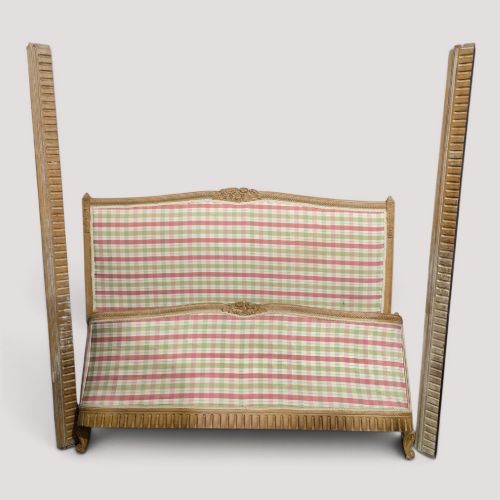
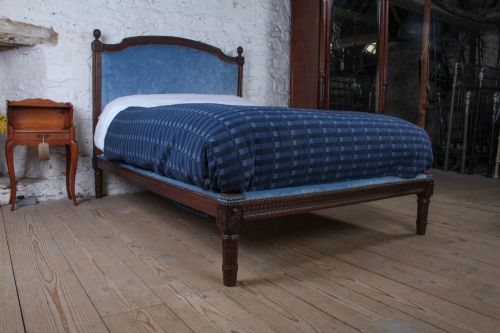
The selection leans heavily toward French provincial and classical styles, including Louis XVI, Louis XV, Empire, and Venetian Rococo designs. Many examples arrive newly upholstered, pairing older wooden frameworks with fresh fabric.
Sizes range from single and double to king and super king dimensions. Some items present as complete bed frames featuring low or high ends, while others exist purely as standalone headboards.
Materials and construction methods
Makers shaped the structural elements from solid timbers such as walnut, oak, and general painted wood, often applying limed finishes or gilt highlights. Carved details define the wooden borders, echoing French chateau and neoclassical aesthetics.
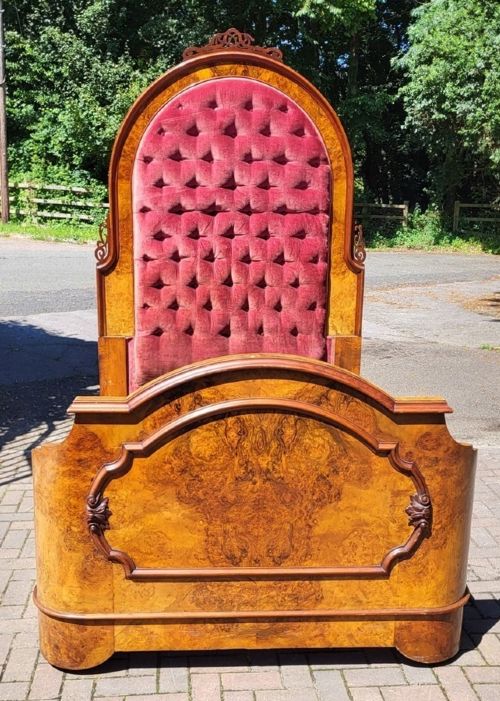
Upholstery techniques involve padding applied directly to wooden panels or frames, secured with textile coverings like velvet, tapestry, and standard fabric upholstery. Button-backing also appears on specific Victorian walnut bedsteads to add depth and structure to the cushioning.
Listings span periods from nineteen-hundred to nineteen-thirty alongside the Victorian era, utilising walnut, oak, painted wood, and limed timber.
Distinctions in craftsmanship and finish
The refinement of the wooden carving dictates much of the visual weight, with hand-chiseled frames and sophisticated neoclassical motifs sitting above simpler turned wood. Timber selection also matters, particularly the grain presentation in burr walnut and oak examples.
Upholstery execution separates standard updates from superior work, seen in the precision of buttoning, the tautness of the fabric across curved surfaces, and the choice of textile. The harmony between the original frame period and any modern fabric replacement defines the overall success of the piece.
The Vintage Padded Headboard Glossary
- Louis XVI Style
- A neoclassical furniture design characterised by straight lines, symmetry, classical motifs, and restrained ornamentation. This style frequently appears in French beds from the early twentieth century.
- Burr Walnut
- Timber featuring intricate, swirling grain patterns derived from walnut tree growths. It provides a highly decorative surface on Victorian and antique bed frames.
- Venetian Rococo
- An exuberant decorative style marked by asymmetrical curves, scrollwork, and rich gilding. Pieces from this tradition often incorporate tapestry and elaborate woodwork.
- Limed Wood
- Timber treated with a specialised finish that leaves a white or pale pigment in the grain. This technique lightens the appearance of oak and other dark woods while preserving their texture.
Vintage Padded Headboard: Frequently Asked Questions
Are these headboards sold attached to beds?
The inventory includes both standalone headboards and complete bed frames with integrated head and footboards. Buyers should examine the specific title to confirm whether side rails and bases are included.
Many listings describe complete double, king, or super king beds rather than loose panels. Check the dimensions and description to understand the complete structure being acquired.
What fabrics are used on these frames?
Upholstery materials range from traditional velvet and tapestry to contemporary fabric selections on newly upholstered frames. Victorian examples often feature high button-backed textile arrangements.
Many older wooden frameworks receive new fabric while retaining their original structural integrity. This combination updates the textile while preserving the antique timber frame.
How do I identify the style?
Styles are determined by the decorative motifs and woodwork carved into the timber frame. French provincial and Louis styles display classical symmetry and curved woodwork, whereas Empire pieces show heavier classical influences.
Venetian Rococo items are distinguished by ornate gilding and tapestry elements. Reviewing the carved details on the headboard usually reveals its stylistic origin.
Do these pieces date to the Victorian era?
Certain items originate from the Victorian period, whilst others date from nineteen-ten, nineteen-twenty, and nineteen-thirty. The construction materials, such as burr walnut, often point toward nineteenth-century origins.
Early twentieth-century pieces frequently emulate French chateau and neoclassical aesthetics. Each listing provides a specific date or period to guide authentication.