



Vintage Ottoman Bench
A vintage ottoman bench offers versatile seating and storage, spanning periods from Regency to Art Deco in rich mahogany, walnut, and leather.
Vintage Ottoman Bench
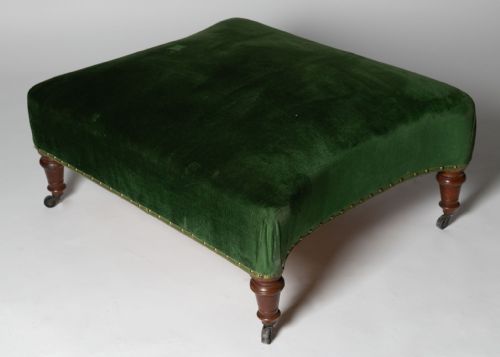
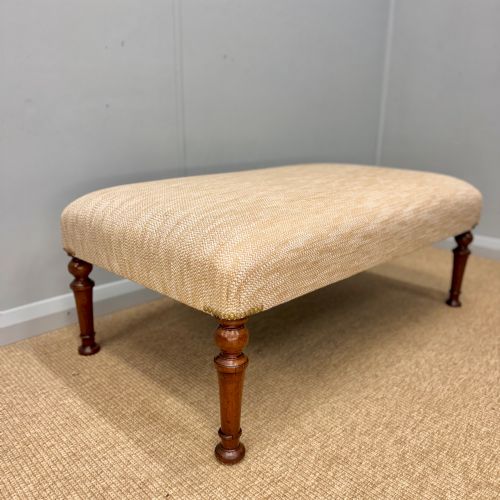
When you search for a vintage ottoman bench, you are looking at a varied group of low seating forms, ranging from compact footstools to large country house ottomans and daybeds. These pieces serve multiple domestic functions, operating as seats, footrests, low tables, and storage chests depending on their original design.
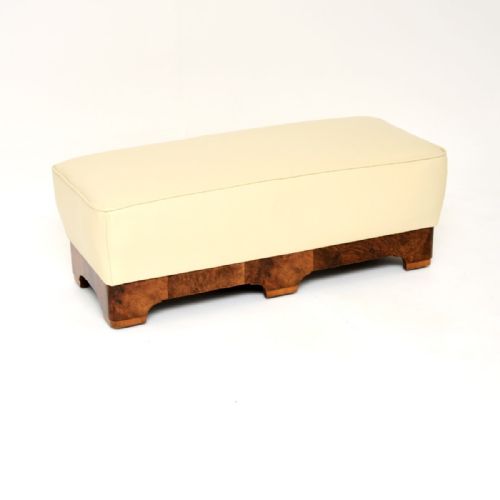
The selections on this page draw heavily from the nineteenth century and the early twentieth century, including Victorian, Edwardian, and Art Deco periods. You will frequently encounter forms upholstered in leather, velvet, and textile alongside solid wood frames in mahogany, walnut, and teak.
Makers utilised diverse regional styles, incorporating Anglo-Indian rosewood items, French revival designs, and Georgian revival interpretations. The resulting assortment provides functional seating options tailored to both period interiors and modern living spaces.
Materials and construction
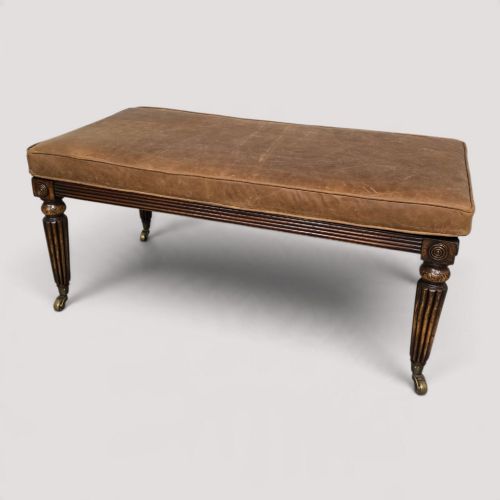
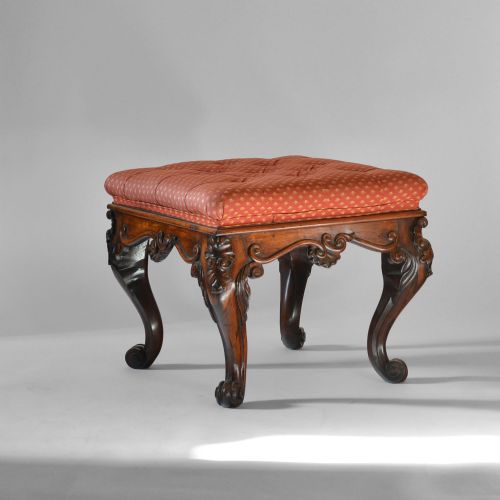
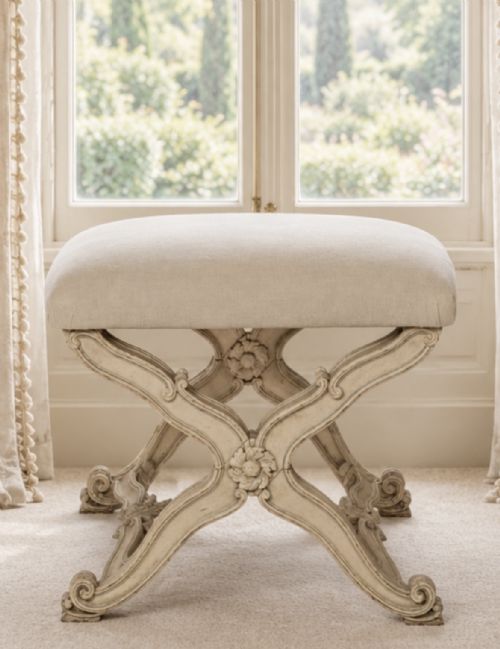
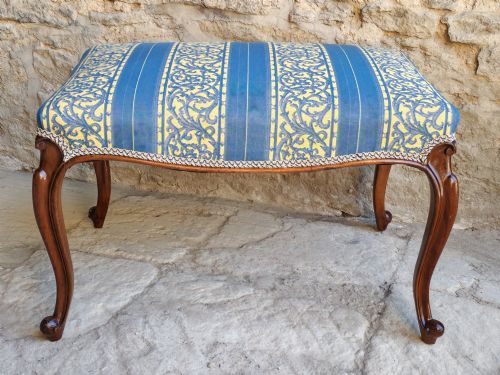
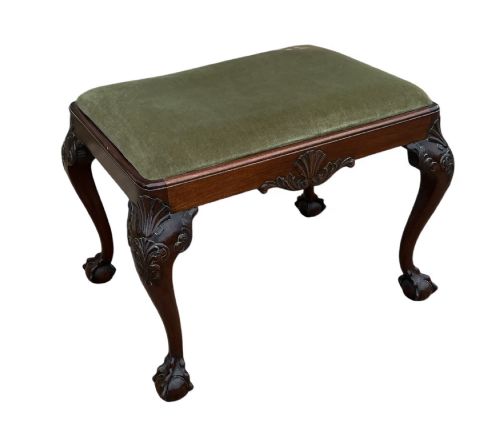
Makers built the structural frameworks of these benches using dense hardwoods such as mahogany, walnut, teak, and rosewood, often shaping the timber into cabriole legs, cross stretchers, or curule frames. Ebonised finishes and burr walnut veneers appear frequently, showcasing the grain of the wood alongside painted surfaces.
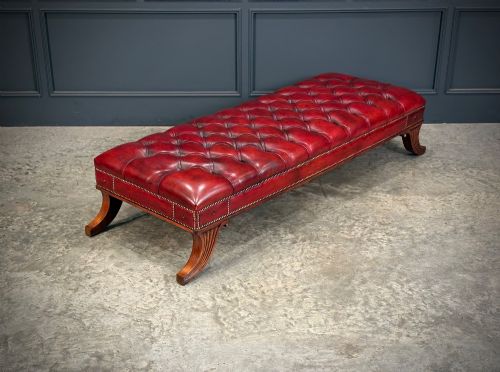
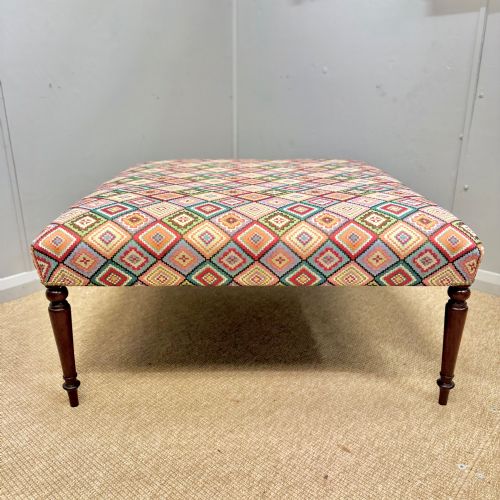
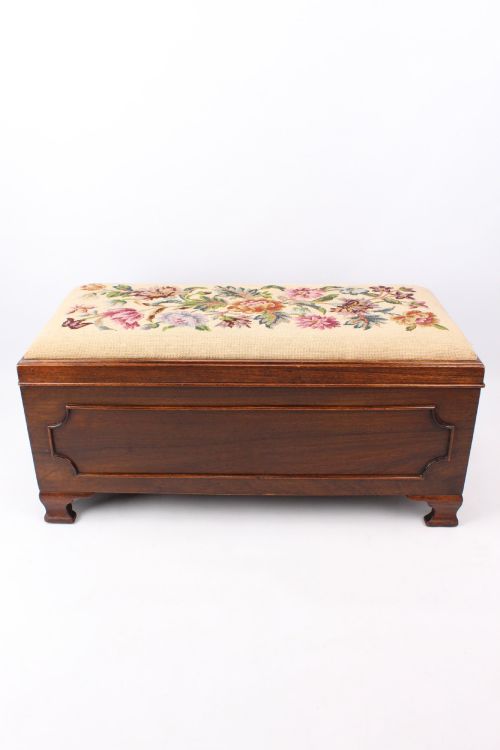
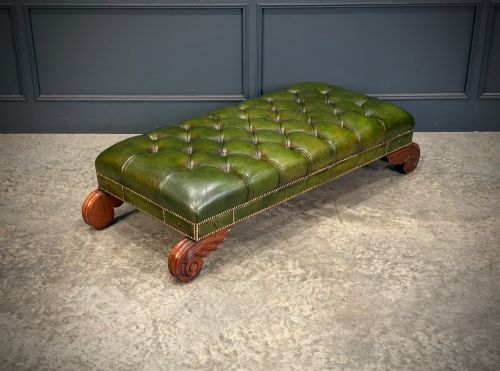
Upholstery forms a major part of construction, utilising traditional textiles including needlework, kilim, velvet, woven rattan, and hand-dyed buttoned leather. Brass accents and detailed studwork often secure these materials to the wooden bases of the larger ottomans and footstools.
Vintage Ottoman Bench Retail Price Guide 2026
Typical asking prices for vintage ottoman bench among the pieces listed under this phrase on Sellingantiques today, from the lower quarter to the upper quarter. They describe what is for sale here now, not the wider market.
Listings feature woods like mahogany and walnut alongside fabrics such as leather, velvet, and kilim across the nineteenth and twentieth centuries.
Assessing quality in construction and material
Quality separates pieces through the density and selection of the timber, observable in the choice of burr walnut veneers or solid mahogany frames rather than secondary woods. Sturdiness in the joinery, particularly around stretcher joints and cabriole legs, distinguishes robust workshop production from lighter output.
The standard of upholstery and the treatment of materials dictate the upper tier of these furnishings. Hand-dyed leathers, intricate needlework covers, and traditional buttoning demonstrate a higher level of artisan skill than standard modern re-coverings.
Harry and Lou Epstein·Hallett and Sons·Miles and Edwards
The Vintage Ottoman Bench Glossary
- Ottoman
- A low upholstered seat or bench without a back or arms, often featuring a hinged lid for interior storage. These pieces function as footrests or centre tables within a room.
- Cabriole leg
- A furniture leg that curves outward in a convex arc and tapers inward in a concave arc, terminating in a foot. This form draws inspiration from animal limbs and appears on eighteenth-century revivals.
- Curule frame
- An X-shaped support structure derived from ancient Roman magistrate seats. This design provides robust cross-braced stability to low stools and footstools.
- Kilim
- A flat-woven carpet or textile of Near Eastern origin. These hard-wearing fabrics often cover the seats of nineteenth-century footstools.
- Ebonised
- Wood treated with a dark finish to imitate ebony. This technique creates a dense, black surface seen on nineteenth-century frames and daybeds.
Vintage Ottoman Bench: Frequently Asked Questions
Where should I place an ottoman bench?
These benches fit well at the foot of a bed, beneath a dressing table, or serving as a low coffee table in a reception room.
Their compact height allows them to tuck away easily while providing accessible surface space or seating.
How do I distinguish Victorian from Art Deco styles?
Victorian pieces typically display carved walnut or mahogany, buttoned leather, and ornate cabriole legs.
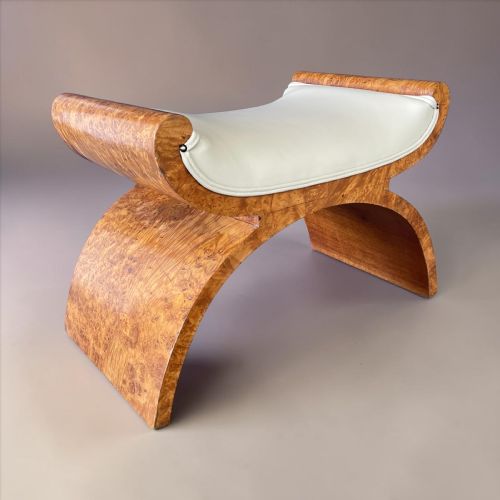
Art Deco examples lean towards geometric lines, burr walnut veneers, and smooth maple surfaces without heavy carving.
Can these benches be used for storage?
Certain forms, particularly box ottomans and daybeds with hinged compartments, were specifically built to hold linens and blankets.
Flat-topped footstools and salon stools generally lack internal storage space and serve purely as seats.
Are these pieces suitable for daily seating?
The sturdy hardwood frames provide reliable structural support for regular use in busy living areas.
Many listings feature updated upholstery while retaining the original antique framework underneath.