


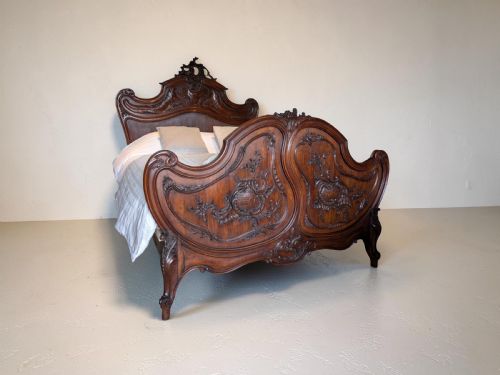


Vintage Ornate Bed
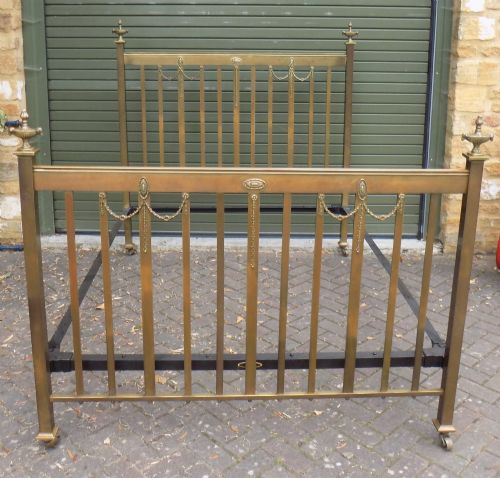
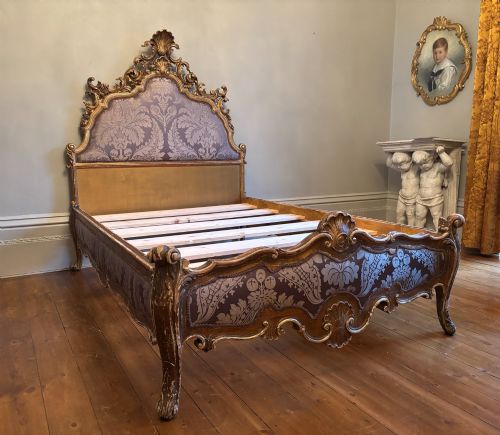
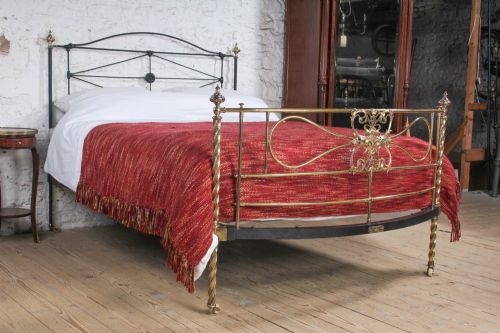
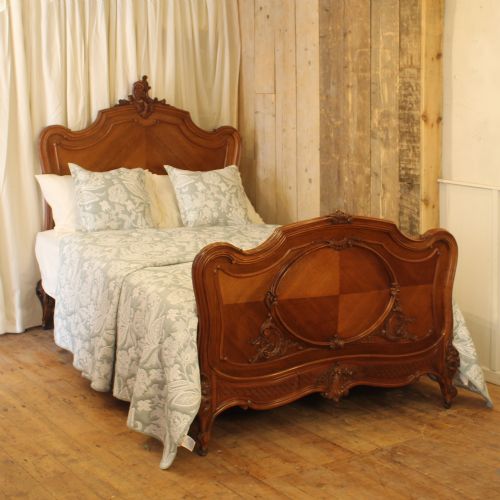
A vintage ornate bed brings heavy brass, iron or carved walnut into a bedroom to anchor the space with period detail.
Vintage Ornate Bed
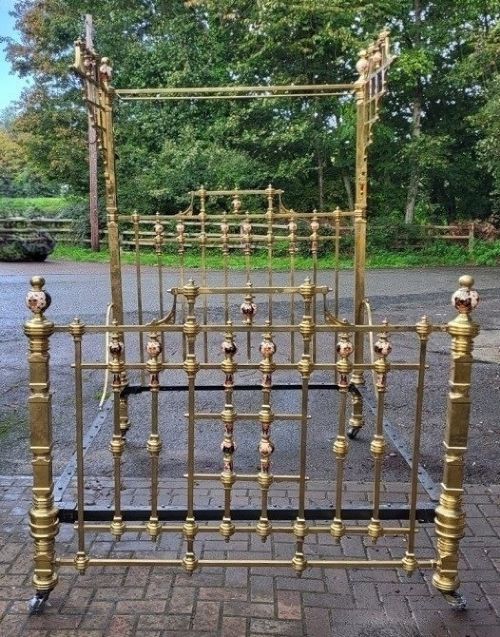
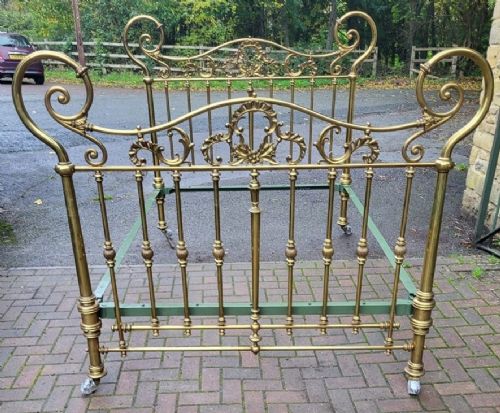
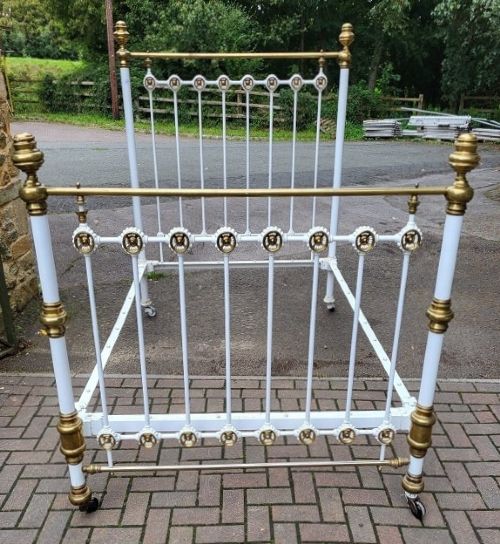
A vintage ornate bed comprises iron, brass, wood and painted frames designed across the nineteenth and early twentieth centuries. Buyers seeking a vintage ornate bed will frequently encounter robust brass and iron bedsteads alongside carved wooden frames from Victorian and Edwardian periods.
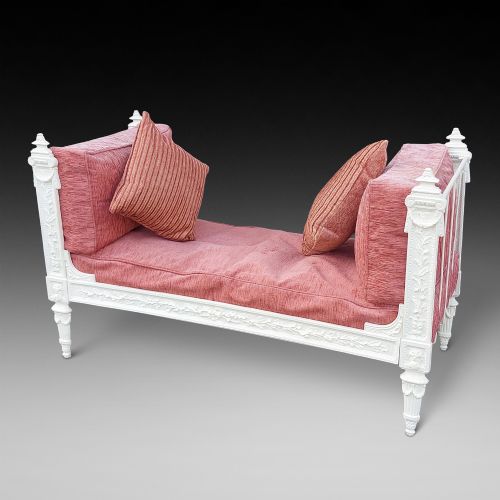
The selection ranges from simple daybeds and single frames up to grand half tester and four poster brass beds. French and Italian stylistic influences appear frequently, alongside English and American variants recorded in the listings.
Makers such as Winfield, Maple and Co and Waring and Gillows contribute specific forms to the available pool. These pieces serve as functional bedroom furniture defined by decorative metalwork or substantial timber carving.
How they were made
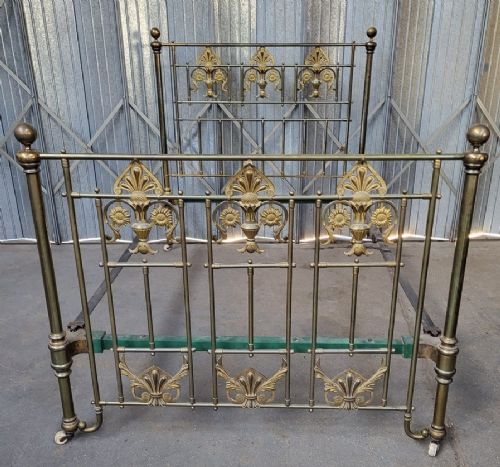
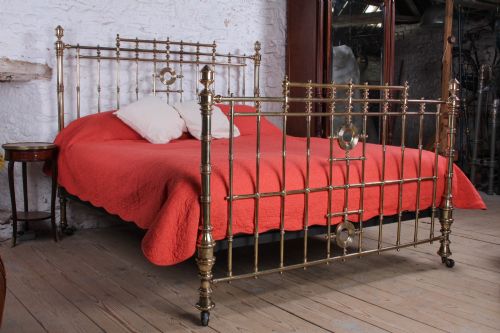
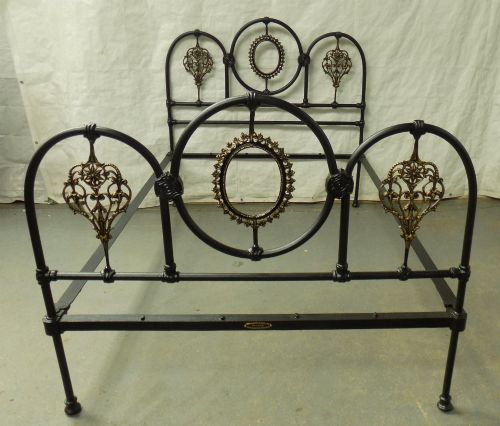
Construction relies heavily on cast iron, wrought iron and brass, often combined within a single frame for structural strength and visual contrast. Metal beds utilise cast components and polished brass tubing to create elaborate headboards and footboards.
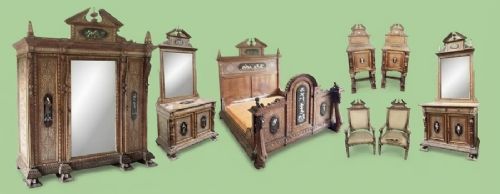
Timber frames employ walnut, oak, maple, mahogany and fruit wood, shaped through traditional carving techniques. Painted finishes and tole ware introduce colour and decorative surface detail to select metal and wooden frames.
Vintage Ornate Bed Retail Price Guide 2026
Typical asking prices for vintage ornate bed among the pieces listed under this phrase on Sellingantiques today, from the lower quarter to the upper quarter. They describe what is for sale here now, not the wider market.
Listings feature frames spanning from the nineteenth century into the twentieth, constructed in brass, cast iron, walnut, oak, and painted wood.
What varies in quality
Quality rests upon the depth and intricacy of the metal casting or the precision of the wood carving. Pieces bearing known maker signatures or exhibition provenance demonstrate superior craftsmanship in their joints and applied ornamentation.
The integrity of original brass work, the preservation of painted surfaces, and the stability of combined iron and brass structures determine the standing of an individual piece.
Winfield·Maple and Co·Waring and Gillows
The Vintage Ornate Bed Glossary
- Bedstead
- The framework of a bed, comprising headboard, footboard and side rails, designed to support a mattress and base.
- Half Tester
- A bed featuring a partial canopy that projects from the wall or headboard over the upper portion of the bed, rather than resting on four full posts.
- Tole Ware
- Lacquered or enamelled metalware, typically tin or iron, painted with decorative scenes or colours.
- Daybed
- A form designed for both lounging and sleeping, functioning as a sofa during the day and a bed at night.
- Aesthetic Movement
- A nineteenth century design current that emphasised visual beauty and artistic expression over strict moral or narrative purpose in decoration.
Vintage Ornate Bed: Frequently Asked Questions
What is a half tester bed?
A half tester bed incorporates a partial overhead canopy attached to the headboard, offering a commanding presence without the full enclosure of a four poster.
This design frames the pillow area while keeping the lower portion of the bed open to the room.
How do I identify a Victorian brass bed?
Victorian brass beds typically display substantial metal tubing, cast decorative finials, and robust joints stamped with period manufacturing details.
They often combine heavy iron internal frames with polished brass components to achieve both structural rigidity and ornate appearance.
Can antique beds take modern mattresses?
Many antique bed frames accommodate standard modern mattress sizes through the use of custom bed bases or adjusted side rails.
Buyers should verify internal frame dimensions against standard sizing before purchasing historical frames.
What styles influence these beds?
Styles draw heavily on French Rococo, Neoclassical and Louis XV revivals, alongside Victorian aesthetic movement and Italian design motifs.
These influences manifest through curvaceous lines, elaborate casting, and carved timber details.