



Vintage Oriental Wall Textile
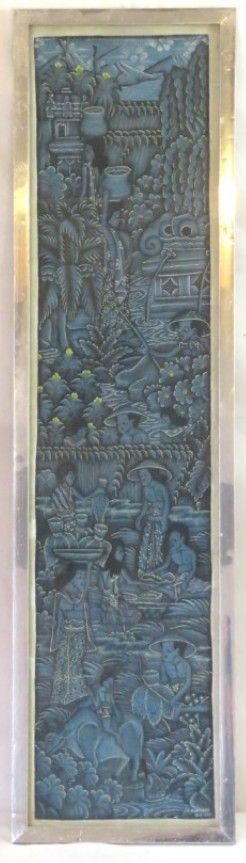
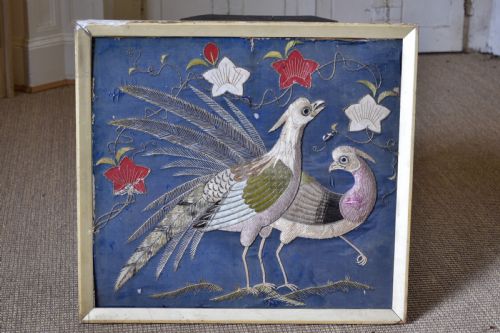
A vintage oriental wall textile brings rich tribal patterns and historical needlework into modern interiors.
Vintage Oriental Wall Textile
A vintage oriental wall textile encompasses a diverse range of tribal weavings, embroideries, and storage bags originating from Persia, Central Asia, and the Caucasus. These objects span from the mid-nineteenth century through the early twentieth century, reflecting the rich nomadic and regional traditions of their makers.
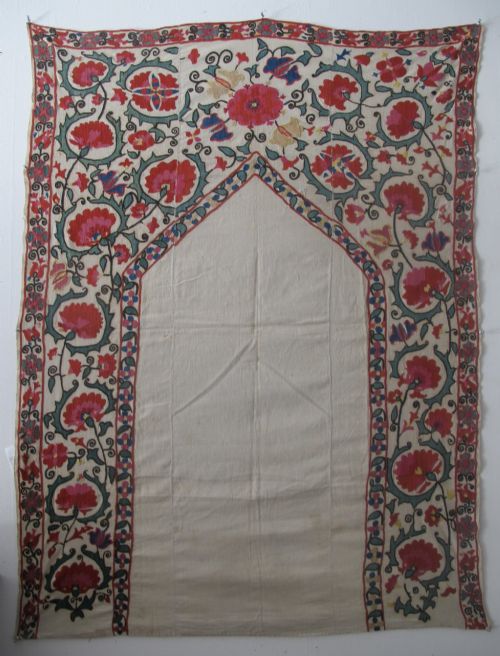
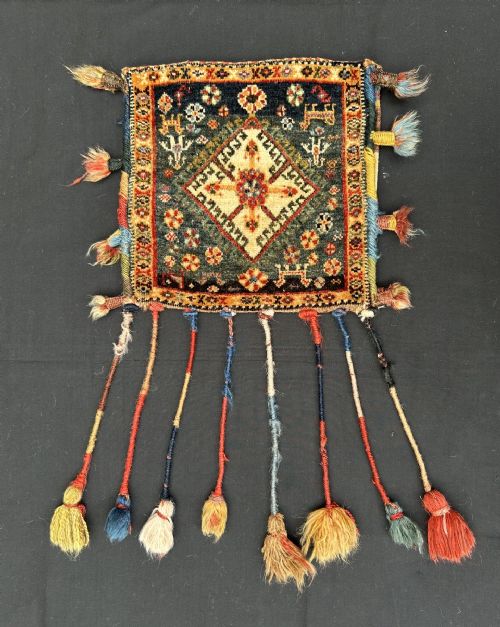
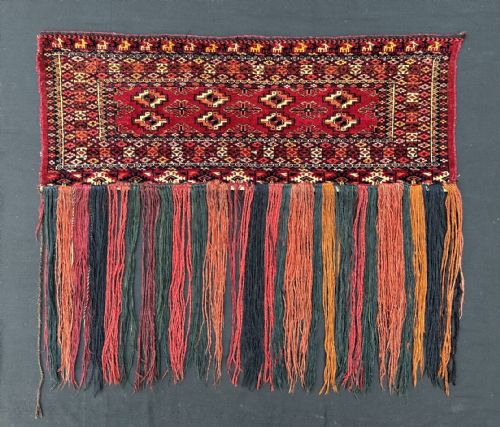
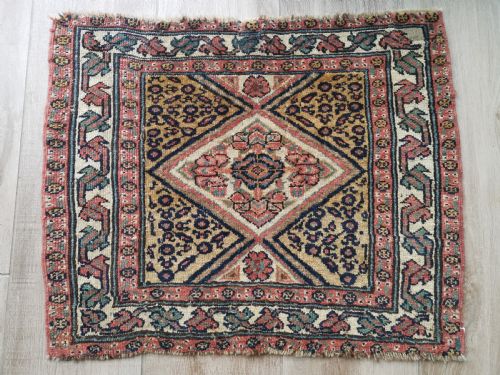
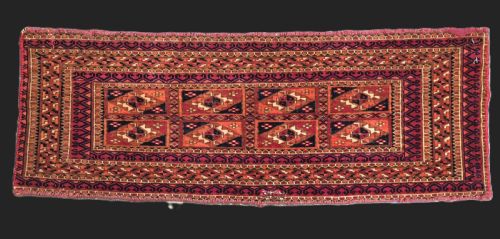
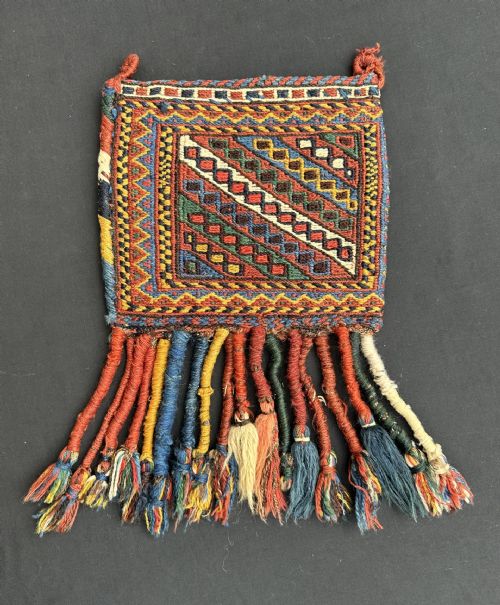
Buyers browsing this selection are most likely to encounter utilitarian items repurposed for display, such as Turkmen torbas, Uzbek suzanis, and Persian bag faces. These pieces frequently exhibit geometric guls, floral motifs, or intricate appliqué work suited for vertical mounting.
The category bridges functional tribal artefacts and decorative wall art, offering structured wool pile weavings alongside delicate silk embroideries on cotton or wool grounds.
Materials and Construction
The construction relies heavily on locally sourced natural materials, predominantly hand-spun wool, silk, and cotton, frequently coloured with natural dyes. Artisans utilised techniques such as silk embroidery on cotton grounds, felt appliqué work, and sumac weave structures.
Many items incorporate metallic thread or specialised flatweave techniques, combining structural durability with intricate surface ornamentation. Textile traditions varied by region, employing specific looms and needlework methods passed down through nomadic tribes and regional workshops.
The selection includes regional forms ranging from Uzbek suzani embroideries to Turkmen torbas and Persian tribal bag faces.
Evaluating the Pieces
Quality in these textiles rests upon the fineness of the needlework, the complexity of the design layout, and the integrity of the ground fabric. Superior examples demonstrate precise execution in traditional motifs such as guls, balanced colour palettes derived from natural dyes, and careful preservation of structural elements like hanging loops or original backs.
The vibrancy of the silk thread and the tightness of the weave further distinguish finer tribal bag faces and embroideries from standard utilitarian pieces. Patination and the retention of original dimensions also influence the standing of an item within the broader scope of nomadic and regional textile art.
The Vintage Oriental Wall Textile Glossary
- Suzani
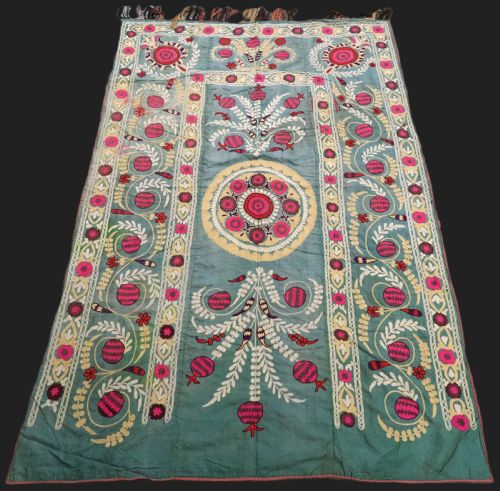
- An embroidered tribal hanging originating from Uzbekistan, typically worked in silk on a cotton or linen ground. These large textiles often feature bold floral and architectural patterns created for ceremonial or domestic use.
- Torba
- A small Turkmen storage bag designed to be hung inside a nomadic tent. They frequently display characteristic guls and fine wool or silk construction.
- Gul
- A repeating medallion or octagonal design motif central to Turkmen and other Central Asian tribal weavings. Each pattern often identifies the specific tribe or sub-tribe that produced the textile.
- Sumac
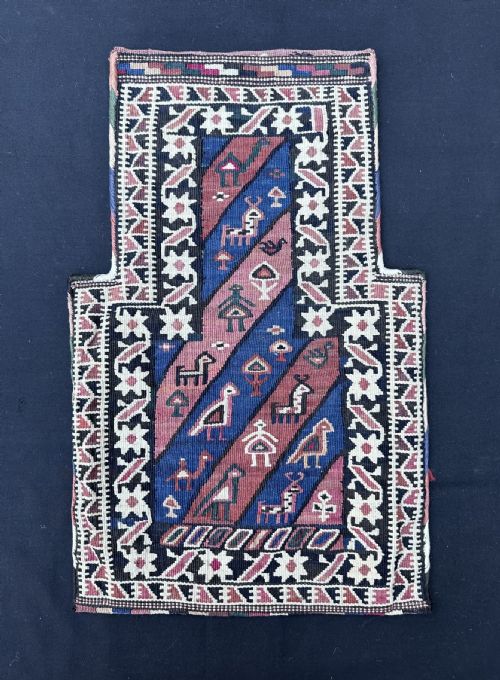
- A flatweave technique involving wrapped weft threads that produce a durable structure resembling embroidery on the face. This method provides added thickness and distinct texture to storage bags and rugs.
- Khorjin
- A traditional pair of saddle bags woven by nomadic and village tribes for transport and storage. Surviving examples often appear as single faces mounted for display on walls.
Vintage Oriental Wall Textile: Frequently Asked Questions
What is a suzani textile?
A suzani is a traditional embroidered textile from Uzbekistan, characterised by bold floral and botanical needlework on a cotton or linen ground. Historically created as dowry items, they were used as wall hangings or bed covers.
These pieces showcase regional needle techniques and vibrant silk threads, making them striking decorative elements for contemporary interiors when mounted securely on a wall.
How were tribal storage bags used?
Nomadic groups in Central Asia and Persia utilised utilitarian bags such as torbas, chuvals, and salt bags to store household possessions inside tents. Their designs and motifs often denoted tribal affiliation and social status.
Today, these bag faces are frequently displayed as textile art, allowing collectors to appreciate their intricate flatweave structures and geometric guls without functional wear.
What distinguishes Turkmen torbas?
Turkmen torbas are small, wide storage bags produced by tribes such as the Tekke, Yomut, and Ersari during the nineteenth century. They are easily identified by their characteristic guls and finely worked wool pile or flatweave faces.
Collectors value them for their precise geometry, rich colour saturation from natural dyes, and direct connection to nineteenth-century nomadic culture.
How do I care for a textile wall hanging?
Displaying a vintage textile requires mounting it away from direct sunlight to prevent the fading of natural silk and wool dyes. Professional framing with UV-filtering glass or a supportive backing sleeve distributes the weight evenly across the fabric.
Regular gentle dusting with a soft brush helps maintain the surface, while avoiding direct moisture preserves the integrity of nineteenth-century fibres and metallic threads.