





Vintage Oriental Pot
A vintage oriental pot brings diverse forms from the nineteenth and early twentieth centuries into a room, spanning bronze, porcelain, soapstone, and cloisonné enamel.
Vintage Oriental Pot
When searching for a vintage oriental pot, buyers encounter a wide variety of vessels including jardinieres, incense burners, ginger jars, brush washers, and teapots. These items originate from periods such as the Qing Dynasty, the Meiji period, and the Edwardian era, reflecting both Chinese and Japanese craftsmanship.
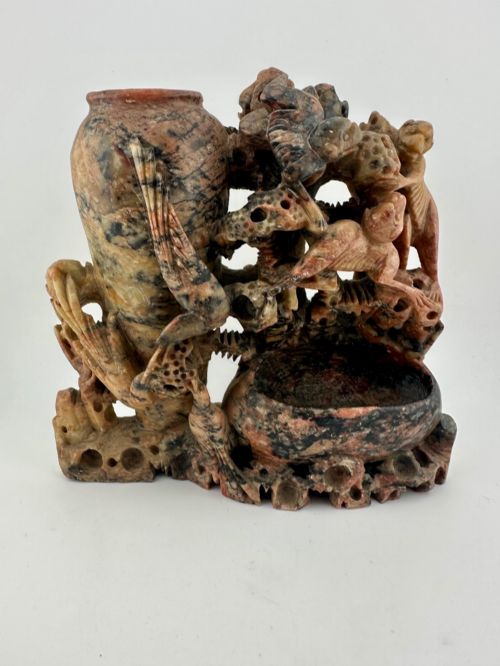
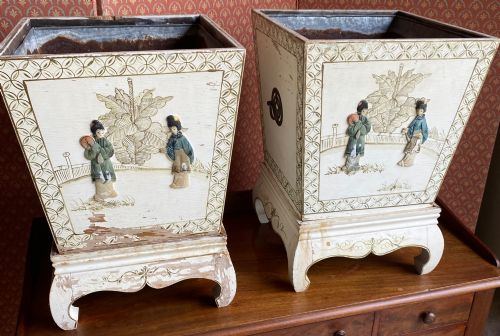
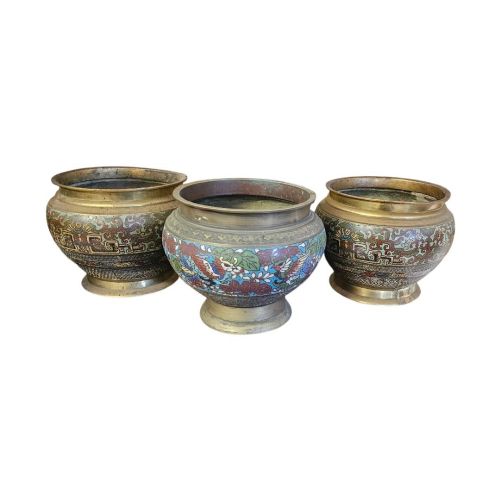
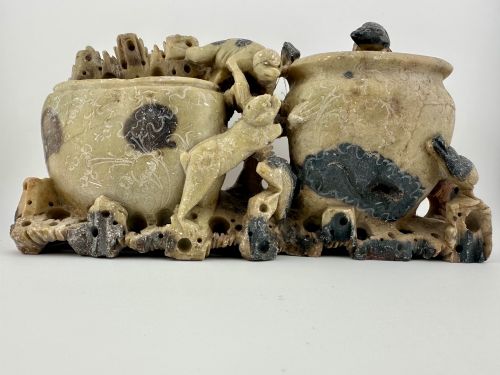
The most common vessels on this page are metal jardinieres and bronze or brass planters, alongside carved soapstone scholar's objects and porcelain jars. Such pieces serve practical functions for plants and desk organisation while functioning as decorative focal points.
How they were made
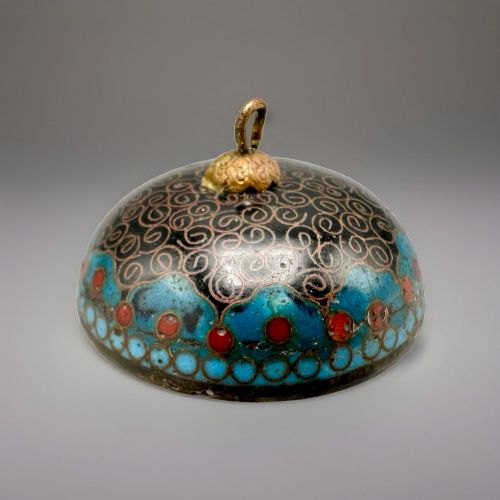
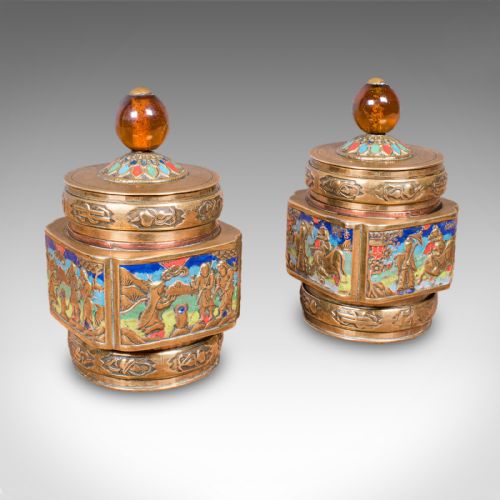
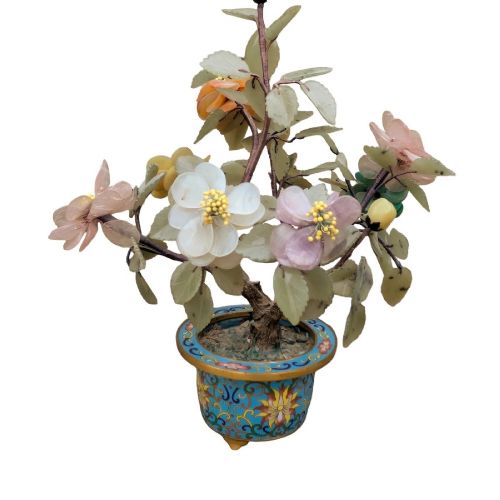
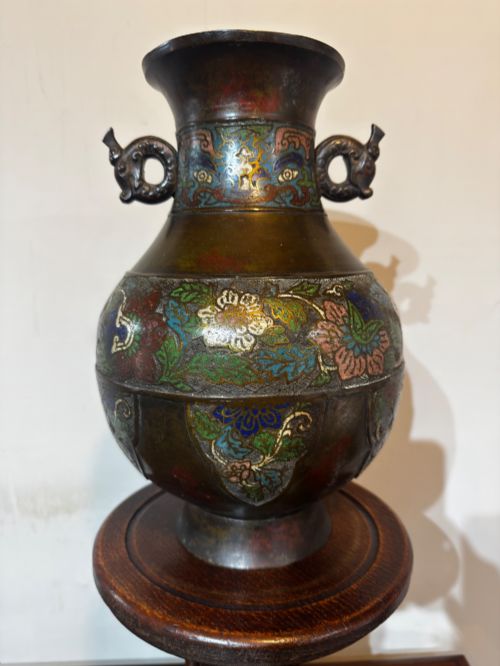
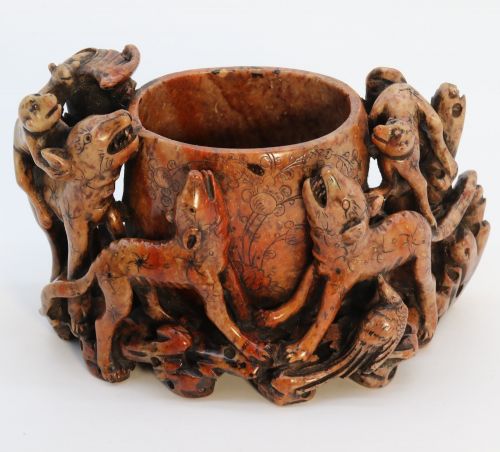
Metals such as bronze, brass, and copper are cast, hammered, and patinated, often incorporating champlevé or cloisonné enamel where wire cells are filled with coloured glass pastes and fired. Soapstone and hardstones are meticulously hand-carved to form detailed scholar's brush pots and decorative bonsai trees with jade and cloisonne elements.
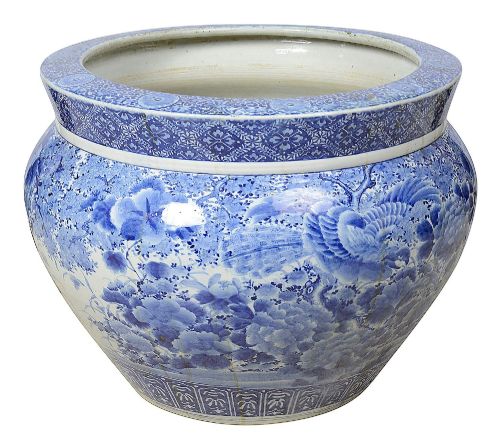
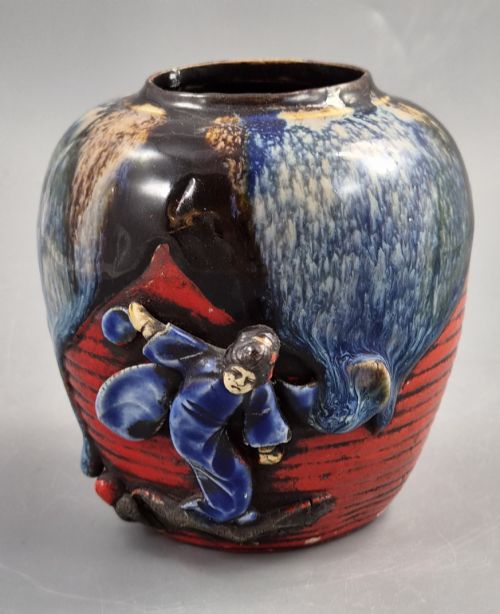
Porcelain and ceramic vessels utilise throwing and moulding techniques, finished with blue and white glazes, famille rose enamel painting, or flambé glazes. Wicker cases and enamel additions provide supplementary textures across tea caddies and decorative jars.
Vintage Oriental Pot Retail Price Guide 2026
Typical asking prices for vintage oriental pot among the pieces listed under this phrase on Sellingantiques today, from the lower quarter to the upper quarter. They describe what is for sale here now, not the wider market.
Materials represented across the inventory include bronze, brass, copper, porcelain, soapstone, jade, and cloisonné enamel.
What varies in quality
The distinction between standard items and superior examples lies in the crispness of the hand-carving on soapstone and the precision of the wirework in cloisonné enamel pieces. Heavy cast-bronze vessels with rich original patination demonstrate greater substance and durability than lighter counterparts.
Painted details on porcelain and enamel surfaces show varying degrees of artistic control, where finer brushwork and balanced compositions elevate the overall execution of the piece.
The Vintage Oriental Pot Glossary
- Jardiniere
- A large ornamental pot or planter designed to hold plants or flowers. These are frequently found in heavy bronze, brass, or ceramic formats.
- Cloisonne
- An enamelling technique where metal wires are soldered to a metal base to create compartments filled with enamel paste. These compartments are then fired and polished.
- Champleve
- An enamelling method where troughs or cells are carved directly into the metal surface to receive enamel colours before firing.
- Brush Washer
- A scholar's vessel used for cleaning ink brushes in traditional East Asian studies. They are commonly carved from soapstone or shaped from porcelain.
- Imari
- A style of Japanese porcelain decorated in underglaze blue and overglaze red, gold, and green. This palette gained popularity during the Edo period and later European export markets.
Vintage Oriental Pot: Frequently Asked Questions
What is a vintage oriental pot used for?
These vessels serve numerous decorative and practical roles within a home, functioning as planters for foliage, holders for desk brushes, or standalone display objects.
Many heavier bronze and brass items operate effectively as indoor jardinieres, while smaller soapstone and ceramic jars suit mantelpieces or shelving.
How do I identify the material?
Close inspection reveals the distinct characteristics of each medium, such as the cold touch and weight of cast bronze or the smooth, soapy texture of carved soapstone.
Enamelled pieces display raised metallic boundary lines between colour fields, whereas porcelain shows a hard, glazed ceramic surface.
Are these pieces from China or Japan?
The inventory encompasses items from both Chinese and Japanese traditions, alongside pieces created for export markets during the nineteenth and early twentieth centuries.
Stylistic cues such as Meiji period motifs or Qing dynasty forms help distinguish the cultural origin of each vessel.
How should I care for bronze and brass pots?
Metal vessels benefit from gentle dusting with a soft cloth to preserve their original patination and prevent the accumulation of surface dirt.
Avoid abrasive cleaners or harsh chemical polishes that can strip away historic patination and damage delicate enamel or inlaid sections.