

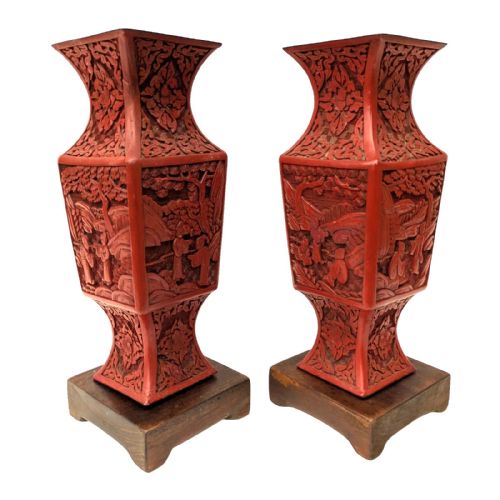


Vintage Oriental Lacquerware
These vintage oriental lacquerware pieces bring rich depth, colour and intricate hand-painted detail straight into your home.
Vintage Oriental Lacquerware
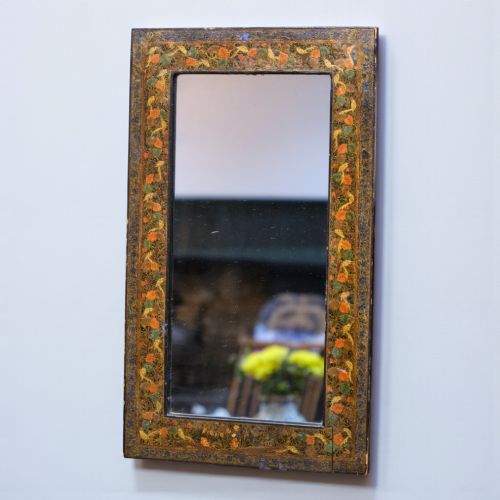
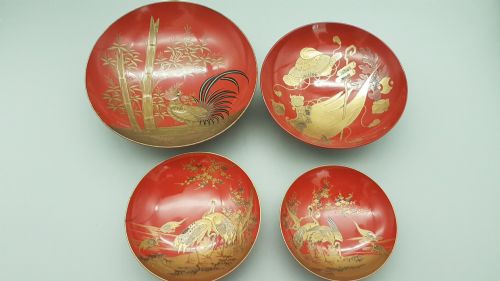
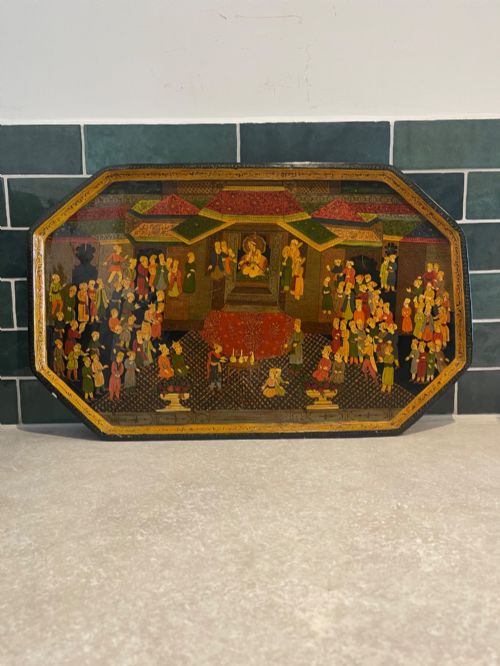
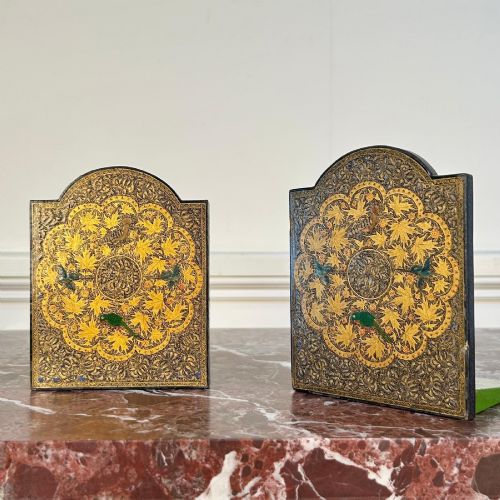
When you search for vintage oriental lacquerware, you enter a diverse field spanning decorative boxes, table lamps, desks accessories, bowls, vases, sake cups, bookends and trays. These objects draw from distinct regional traditions including Japanese Meiji work, Kashmiri folk art, Anglo-Indian craft, Anglo-Burmese pieces and Chinese cinnabar lacquer.
The selections on this page range across the nineteenth century, the Edwardian era and the early decades of the twentieth century, including specific dates such as 1880, 1890, 1900, 1910, 1920 and 1930. You will frequently encounter sets of boxes, painted trays, lidded pots and occasional tables originating from these periods.
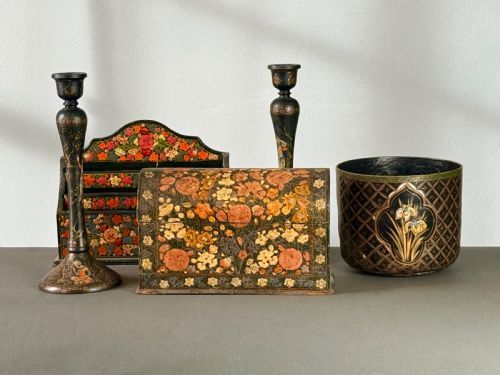
Forms vary from practical desk tidies, letter racks and candlesticks to purely decorative wall plaques, large bowls and intricate sake tables. Each piece reflects the specific material traditions and artistic conventions of its region of manufacture.
How vintage oriental lacquerware was made
Maker's workshops utilised organic lacquer, urushi lacquer, wood and papier-mache as the primary foundational bodies for these items. Artisans built up durable structures before applying successive coats of lacquer to achieve a smooth, resilient surface.
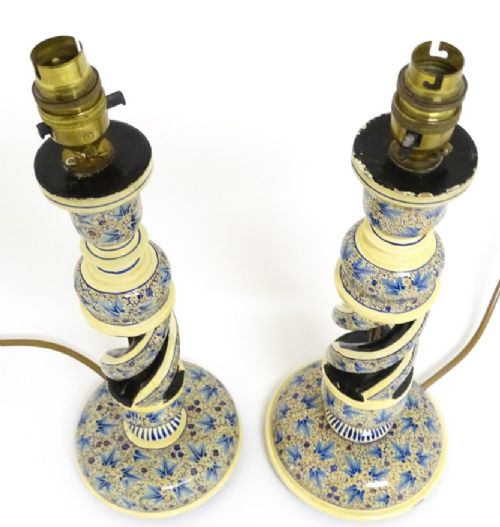
Decoration relied heavily on applied gold leaf, fine paintwork and intricate surface carving, as seen on cinnabar pieces. Some objects combine materials, such as porcelain bases finished with lacquer over-paint, or incorporate cane and brass elements for structural support and trim.
Listings feature items spanning the nineteenth century, the Edwardian period and the 1930s, utilising materials including wood, papier-mache, brass, gold leaf and urushi lacquer.
What varies in quality
Quality rests upon the crispness of the hand-painted details, the depth and stability of the lacquer coats, and the preservation of any gold leaf or surface carving. Pieces with intact, deep finishes and precise pictorial motifs demonstrate superior workshop execution.
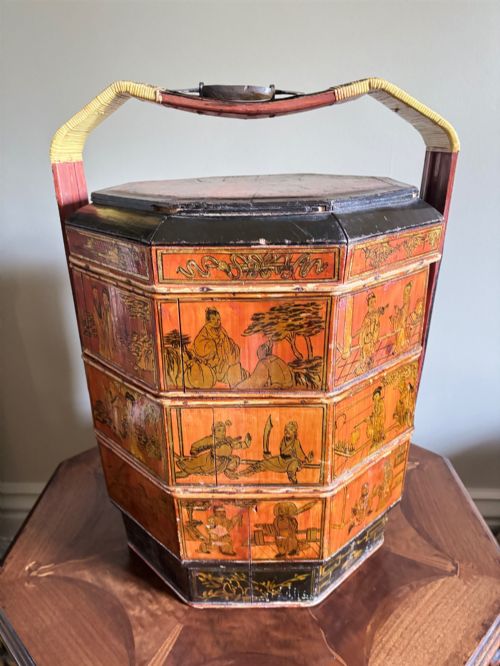
The structural integrity of the underlying wood, papier-mache or porcelain base also dictates standard, alongside the complexity of form, such as multi-tiered dowry baskets versus simpler round boxes.
The Vintage Oriental Lacquerware Glossary
- Urushi lacquer
- A natural resin harvested from trees of the Toxicodendron genus, applied in multiple layers to create a durable, glossy protective finish. It hardens through a curing process that requires precise humidity and temperature control.
- Cinnabar lacquer
- Carved lacquer created by applying numerous thin layers of red pigmented resin over a core before carving intricate designs into the thick stratum. This technique requires considerable patience and skill from the artisan.
- Papier-mache
- A composite material consisting of paper pieces or pulp reinforced with binding agents, moulded into shapes such as trays, bowls and lamps before being lacquered and painted. It provides a lightweight yet sturdy base for Kashmiri folk art.
- Chinoiserie
- European decorative style reflecting Chinese artistic influences, frequently applied to furniture, desk accessories and decorative objects during various historical periods. It employs painted or lacquered motifs to evoke Eastern aesthetics.
Vintage Oriental Lacquerware: Frequently Asked Questions
How do I clean vintage lacquerware?
Dust these items gently with a soft, dry microfibre cloth to protect the delicate surface layers and any applied gold leaf.
Avoid using water, chemical solvents or modern polishes, as moisture and harsh agents damage traditional lacquer and paint.
Can I use lacquer table lamps daily?
Yes, table lamps and desk accessories are suitable for daily interior use provided they are handled with care and kept away from direct heat sources.
Position them out of direct sunlight to prevent the pigments and lacquer finishes from fading over time.
How do I date Japanese Meiji pieces?
Japanese Meiji items align with the Meiji period running from 1868 to 1912, encompassing specific dates like 1890 and 1910 found in the evidence.
Examine the style of decoration, the type of signature or seal if present, and the specific finishing techniques characteristic of late nineteenth and early twentieth-century Japanese workshops.
What is Kashmiri papier-mache?
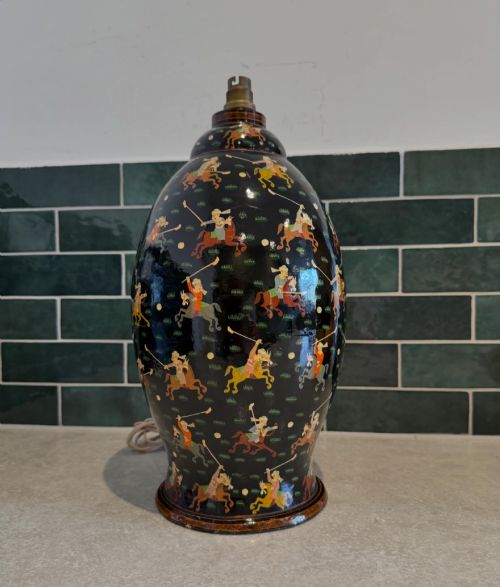
Kashmiri papier-mache involves moulding paper pulp over a wooden or clay form, drying it, and smoothing the surface before applying elaborate hand-painted floral or bird motifs.
artisans then seal the decorated object with a protective varnish or lacquer coating, producing items such as trays, bowls, lamp bases and bookends.