
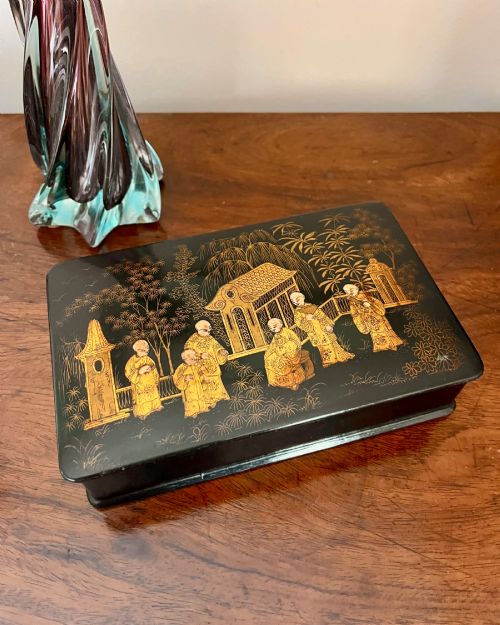


Vintage Oriental Jewellery Box
These vintage oriental jewellery box examples span the nineteenth century to the early twentieth century, offering decorative storage for keepsakes and trinkets.
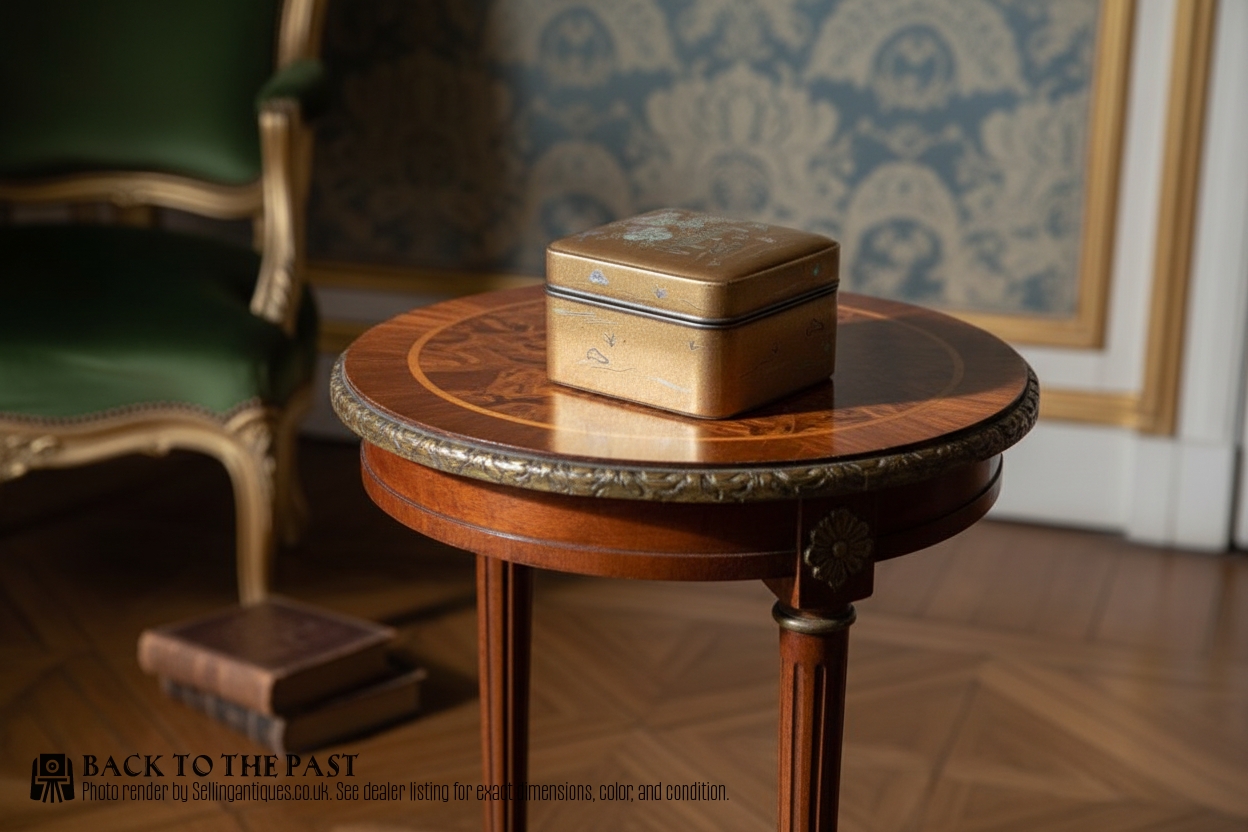
Vintage Oriental Jewellery Box
A vintage oriental jewellery box encompasses various decorative vessels, tabletop cabinets, chests, and trinket boxes originating from Eastern traditions and regions. These items serve to hold small valuables, keepsakes, and personal ornaments safely within domestic spaces.
The selections available here lean heavily toward nineteenth century and early twentieth century pieces, including Chinese hardwood boxes, Japanese table cabinets, and Ottoman chests. Buyers encounter styles ranging from Chinoiserie and Chinese Export to Japanese Meiji and Taisho periods.
Materials and construction
Wood serves as the primary structural material, utilising hardwoods such as teak, rosewood, elm, and walnut to ensure durability and a stable frame for decorative surfaces. Artisans shape these timbers into solid trunks, chests, and compartmentalised tabletop cabinets.
Surface decoration relies heavily on black lacquer, gold leaf, and mother of pearl inlay, which create striking visual contrasts against the dark wood foundations. Brass hardware, including hinges, straps, and decorative clasp plates, reinforces corners and adds functional metallic detail.
Some travel chests secretly hid tiny compartments for gold coins beneath layers of scented camphor wood.
Assessing quality
Quality rests upon the precision of the joinery and the intricacy of surface decoration, distinguishing standard utility items from finer decorative works. Superior examples display meticulous mother of pearl inlay work and deeply carved wooden panels without loose components.
The application of lacquer and gold leaf determines visual depth and endurance, where smoother finishes and well-preserved metallic mounts indicate higher standard craftsmanship. Material selection also plays a role, with dense hardwoods and specialised regional woods commanding greater appreciation.
The Vintage Oriental Jewellery Box Glossary
- Kodansu
- A small Japanese tabletop cabinet with multiple drawers and compartments, traditionally used for storing documents, medicines, or personal valuables. These miniature pieces mirror the construction of larger tansu cabinetry.
- Chinoiserie
- European artistic interpretation and imitation of Chinese and East Asian artistic traditions, popular across furniture and decorative objects. This style often incorporates motifs of landscapes, figures, and pavilions.
- Mother of Pearl
- An iridescent nacre layer sourced from the inner shell lining of certain molluscs, utilised for flat or relief inlay work on wooden boxes. Artisans cut this material into delicate geometric or pictorial shapes.
- Zanzibar Chest
- A heavy timber travel trunk reinforced with brass studs, straps, and intricate hardware, originating from East African coastal trade routes. These sturdy chests often incorporate secret compartments and storage tills.
Vintage Oriental Jewellery Box: Frequently Asked Questions
What is a kodansu?
A kodansu is a traditional Japanese small tabletop cabinet designed for storing personal items, letters, or seals. They typically feature several small internal drawers behind a hinged door or open front.
These compact cabinets showcase fine woodwork and hardware, making them suitable for display on desks or side tables in modern rooms.
How are these boxes dated?
Dating relies on stylistic markers, construction methods, and materials recorded within the piece, such as nineteenth century lacquer techniques or early twentieth century hardware. Specific eras like the Meiji period or Qing dynasty provide historical context for design motifs.
Examining the type of wood, such as teak or rosewood, alongside the style of brass mounts helps establish the likely period of origin.
Where were these boxes used?
These boxes originated across various Eastern regions, including China, Japan, Ottoman territories, and India, serving domestic or travel storage needs. Many pieces were subsequently exported to Western markets during the Victorian and Edwardian eras.
They functioned as tabletop specimen cases, travel trunks for personal effects, and trinket holders in elite households.
How do I care for lacquer?
Lacquer surfaces require gentle handling to preserve the finish, avoiding direct sunlight and excessive humidity fluctuations that can cause timber movement beneath the coating. Dusting with a soft, dry cloth maintains the surface without abrasive chemical cleaners.
Keeping the environment stable ensures that mother of pearl inlay and delicate wooden joints remain secure over time.