






Vintage Oriental Floor Screen
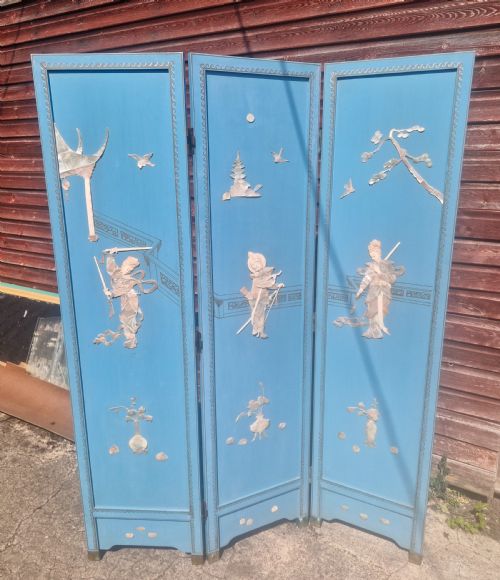
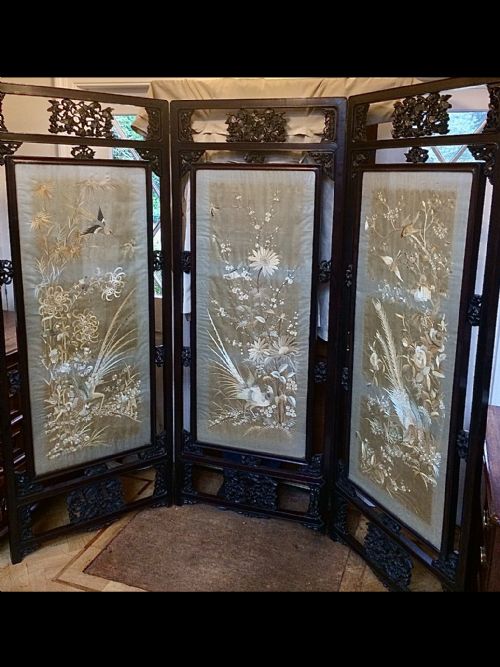
A vintage oriental floor screen divides a room with hand-worked panels of lacquer, silk, and carved wood.
Vintage Oriental Floor Screen
When you search for a vintage oriental floor screen, you encounter folding panels designed to partition rooms and catch the light. The pieces available here span from the mid-nineteenth century to the mid-twentieth century, encompassing Chinese, Japanese, Burmese, and Anglo-Indian origins.
You meet folding screens configured in three, four, six, and eight panels. The forms range from low dressing screens to tall room dividers built to shape an interior space.
The decorative vocabulary draws on Chinoiserie, Meiji, Arts and Crafts, and Art Deco traditions. Wood, lacquer, and textile panels dominate the selection, often carrying elaborate carvings or painted surfaces.
How they were made
Maker-joiners built the structural frames from hardwoods including teak, applying successive coats of lacquer to create smooth, dark ground surfaces. Artisans then added pictorial depth through inlaid hardstone, mother-of-pearl, and carved relief details.
Textile panels utilise hand-woven silk stretched across internal frames, sometimes paired with painted or embroidered imagery. Brass hinges join the folding leaves, allowing the multi-panel compositions to articulate smoothly.
Vintage Oriental Floor Screen Retail Price Guide 2026
Typical asking prices for vintage oriental floor screen among the pieces listed under this phrase on Sellingantiques today, from the lower quarter to the upper quarter. They describe what is for sale here now, not the wider market.
Dragons carved into nineteenth-century wood panels ensure your room divider keeps a watchful eye on proceedings.
What varies in quality
The distinction between standard execution and superior craftsmanship lies in the depth and precision of the surface work. Carved wooden dragons and inlaid hardstone elements show greater animation and relief on finer examples.
The integrity of the lacquer and the weight of the timber frame determine the structural longevity of each divider. Thicker panels with stable hinge fixings maintain their alignment better across multiple folds.
The Vintage Oriental Floor Screen Glossary
- Chinoiserie
- European interpretation and imitation of Chinese artistic traditions and motifs. This style heavily influences many decorative folding panels.
- Hardstone
- Semi-precious stones such as jade or soapstone carved and applied in relief to panels. These elements provide raised texture and colour variation.
- Lacquer
- A durable finish applied in multiple layers to wooden substrates. It creates a glossy, protective surface often decorated with paint or inlay.
- Meiji
- The period of Japanese history spanning from 1868 to 1912, known for distinct decorative arts produced for export. Screens from this era often feature detailed painted or textile work.
Vintage Oriental Floor Screen: Frequently Asked Questions
How do I use a floor screen at home?
Position a folding screen to break up a large room, create a private dressing area, or simply place it flat against a wall as a decorative backdrop. The hinged panels allow you to angle the sections to fit the available floor space.
Ensure the screen stands on level ground and avoid placing it in areas of direct, harsh sunlight to protect the lacquer and silk elements over time.
How do I date a vintage screen?
Examine the materials, construction methods, and stylistic cues such as Arts and Crafts framing or Art Deco geometry. Dates often range from the nineteenth century into the mid-twentieth century.
Look closely at the joinery, hinge types, and the wear patterns on the lacquer or textile surfaces to help determine the age of the piece.
Are these screens fragile?
These folding screens are functional furniture pieces, but they require careful handling due to delicate lacquer, hardstone inlay, and silk panels. Move them with two people to avoid straining the hinges.
Dust the surfaces gently with a dry, soft cloth and keep them away from excessive moisture and extreme temperature fluctuations to preserve the materials.
What is the difference between Chinese and Japanese screens?
Chinese pieces often feature heavy carved wood, black lacquer, and inlaid hardstone or mother-of-pearl. Japanese examples frequently showcase painted surfaces, textile panels, and lighter framing.
Both traditions utilise folding panel construction, but the decorative techniques and motifs reflect their distinct regional craftsmanship.