


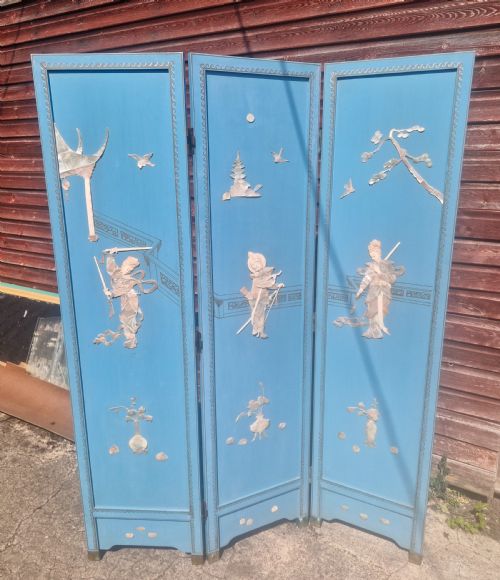


Antique Lacquered Room Partition
An antique lacquered room partition defines a space with layered depth and painted narrative.
Antique Lacquered Room Partition
An antique lacquered room partition comprises folding panels designed to divide spaces or dress rooms. The selections encountered here span the nineteenth century through the mid-twentieth century, capturing diverse regional traditions.
The most frequent examples found on this page are Chinese folding screens with multiple leaves, often featuring black lacquer and intricate painted detail. Japanese export panels and Burmese variations also appear within the listings.
Makers utilised various traditional formats including large coromandel screens with incised decoration and smaller freestanding dressing screens. These architectural dividers function as both practical partitions and striking wall art.
Materials and construction methods
Makers built the structural framework from wood, preparing timber panels to receive multiple coats of lacquer that created a deep, lustrous surface. Artisans then applied pigment, gold leaf, and occasionally mother-of-pearl to build intricate pictorial scenes.
Coromandel pieces required an incised technique where the wooden base was carved through the lacquer layers before being filled with colour and gold leaf. Brass hardware frequently connected the individual leaves, allowing the screens to fold smoothly.
Antique Lacquered Room Partition Retail Price Guide 2026
Typical asking prices for lacquered room partition among the pieces listed under this phrase on Sellingantiques today, from the lower quarter to the upper quarter. They describe what is for sale here now, not the wider market.
Listings on this page span several decades, featuring pieces originating from the nineteenth century up through the nineteen-fifties.
Assessing quality and craftsmanship
Superior examples distinguish themselves through the depth of the lacquer layers and the precision of the hand-painted or incised details. Finer panels exhibit complex narratives with expressive figures and botanical motifs rendered by skilled hands.
The weight and stability of the wooden framework, alongside the quality of the original brass hinges, indicate the standard of construction. Greater panel counts and well-preserved gilt work also elevate the standing of a piece.
The Antique Lacquered Room Partition Glossary
- Coromandel lacquer
- A Chinese incised lacquer technique where designs are carved into the surface and filled with pigments or gold. This method creates a distinctive textured relief across the panel.
- Chinoiserie
- European decorative style reflecting Chinese artistic influences, frequently seen in lacquered furnishings. It employs imaginative motifs of landscapes, pavilions, and figures.
- Folding screen
- A piece of furniture consisting of two or more panels hinged together. They stand upright and fold to alter room layouts or provide privacy.
- Mother-of-pearl
- The iridescent inner layer of certain mollusc shells embedded into lacquer surfaces. Artisans cut thin pieces to form shimmering highlights within floral or avian designs.
- Leaf
- An individual panel making up a folding screen. Screens on this page commonly comprise three to eight leaves connected by hinges.
Antique Lacquered Room Partition: Frequently Asked Questions
How do I care for lacquered wood?
Keep screens away from direct sunlight and radiators to prevent the lacquer from drying and cracking. Dust gently with a soft, dry cloth without applying modern liquid polishes.
Maintain a stable room humidity where possible, as dramatic environmental shifts can stress the wooden core and affect the finish.
Where should I place a room partition?
Position your screen against a neutral wall to showcase the painted or incised panels as art. They also work effectively to zone open-plan living areas or create intimate dressing corners.
Ensure the panels rest on a level surface so the hinges bear the weight evenly when the screen is angled.
How many panels do these screens have?
The pieces on this page range from three-fold dressing screens up to substantial eight-fold partitions. Larger screens require adequate wall space or floor clearance to angle the leaves for stability.
Fewer panels suit narrower corners, while grander multifold versions anchor larger rooms.
How do I distinguish regional styles?
Chinese screens often feature deep coromandel carving or dark black lacquer adorned with court scenes and gilt foliage. Japanese export examples tend towards painted paper or lacquer compositions depicting natural flora and fauna.
Burmese screens display distinct regional pigments and decorative motifs characteristic of Southeast Asian craftsmanship.