



Vintage Open Salts
These vintage open salts are small tabletop vessels designed to hold loose salt before modern shakers took over, bringing period character to any dining table.
Vintage Open Salts
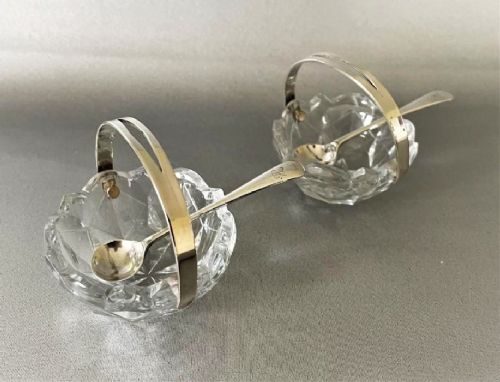
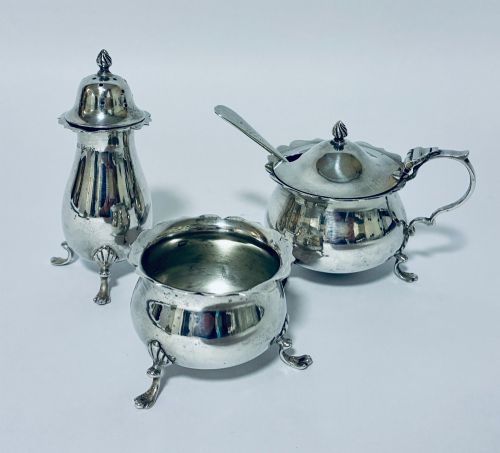
Vintage open salts are small dishes or cellars intended for individual or communal table service, designed to hold grains of salt for pinching or spooning. When searching for vintage open salts, buyers encounter a diverse range of forms spanning from the eighteenth century through to the mid-twentieth century. The selection includes individual pieces and matched sets, often accompanied by small spoons or liners.
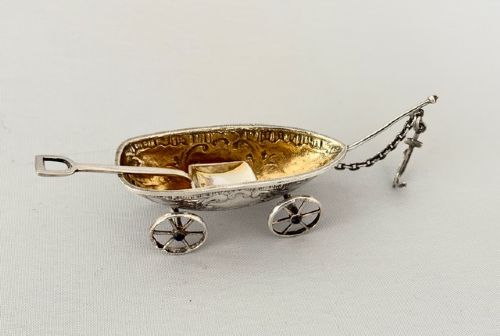
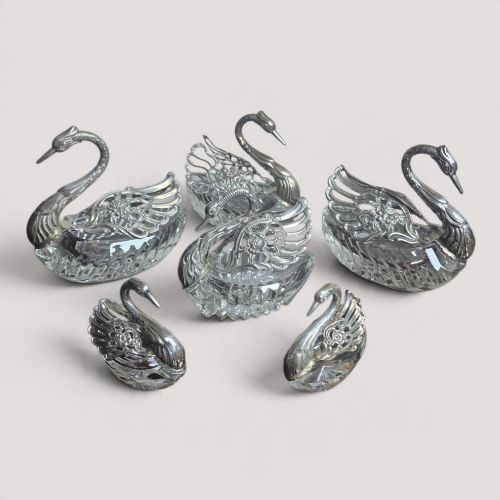
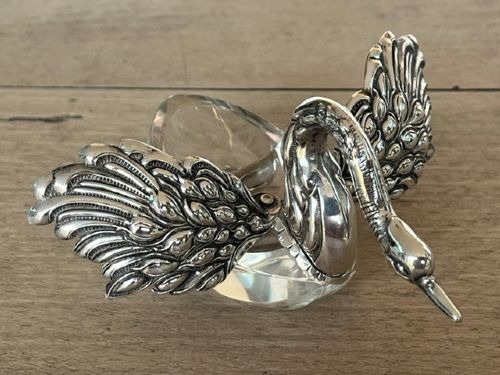
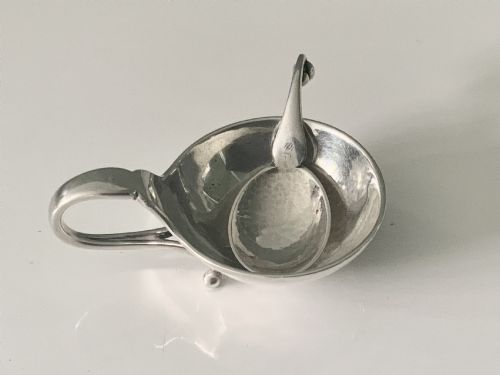
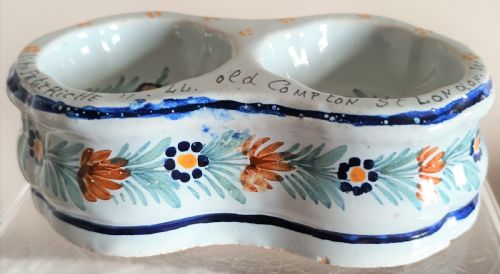
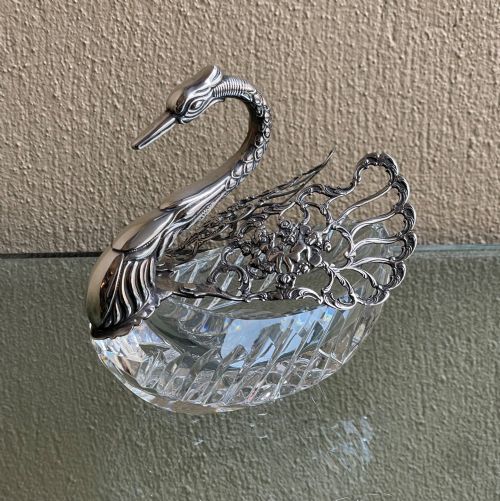
The objects appear in various traditional shapes, including circular bowls, novelty animal forms like swans, and double salt cellars. Materials range from solid silver and sterling silver to cut glass, earthenware, ceramic, and French faience. Origin points span British, French, Chinese, and Spanish workshops, reflecting broad historical dining customs.
How they were made
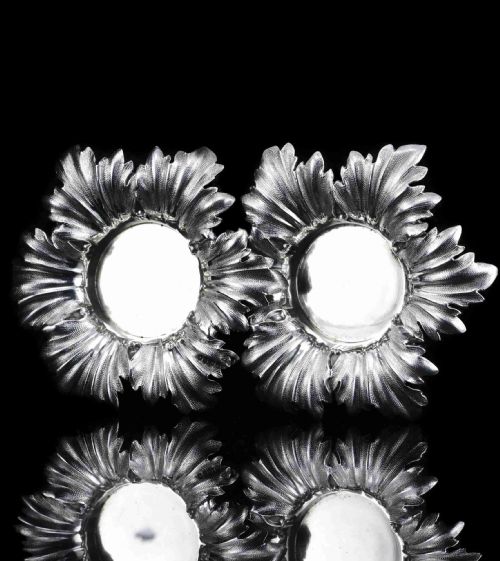
Silversmiths shaped precious metals using techniques such as casting, piercing, and chased ornamentation to create detailed foliage and decorative borders on sterling silver and silver plate. Glass cellars relied on moulding, cutting, and polishing to achieve heavy, refractive bowls designed to catch the light on the dining table.
Ceramic and earthenware pieces utilised traditional pottery methods, employing tin glazes and hand-painted motifs as seen in French faience and ironstone productions. Enamel works involved fusing powdered glass to metal bases under high heat, producing smooth, coloured surfaces on small bowls.
Vintage Open Salts Retail Price Guide 2026
Typical asking prices for vintage open salts among the pieces listed under this phrase on Sellingantiques today, from the lower quarter to the upper quarter. They describe what is for sale here now, not the wider market.
Several charming bird-form salts feature hinged movable wings, allowing the swan's back to open up and hold your salt.
What varies in quality
Quality in these table vessels rests upon the crispness of execution in metal chasing, the clarity and weight of cut glass, and the precision of painted ceramic decoration. Superior examples demonstrate a balance between utility and ornament, maintaining clear hallmarks or maker marks that verify their origin.
The presence of original matching spoons, fitted presentation cases, and intact glass liners elevates the standing of a set. Finer pieces show careful attention to internal gilding and secure joins on applied elements like handles or decorative wings.
Georg Jensen·Barnards·HB Quimper·Josiah Williams & Co·Mason’s
The Vintage Open Salts Glossary
- Open salt
- A small vessel designed to hold salt open to the air rather than enclosed in a shaker. Guests used fingers or a small salt spoon to take a pinch.
- Salt cellar
- An alternative term for a salt dish, used interchangeably to describe these tabletop containers. They sit individually at each place setting or centrally on the board.
- Chasing
- A metalworking technique where the artisan pushes metal from the front using hammer and punches to raise low-relief surface decoration. It creates texture without removing material.
Vintage Open Salts: Frequently Asked Questions
How were open salts used at the dining table?
Dinners used open salts to hold coarse table salt within reach of guests before the invention of table shakers. Diners took a small pinch using their fingers or a dedicated miniature spoon.
Master salts sat centrally for communal use, while smaller individual cellars were placed beside each plate. Wealthy households often provided a matching spoon for every guest.
What materials are common in vintage open salts?
Silversmiths commonly worked in sterling silver, silver plate, and occasionally Spanish or Chinese silver. Glass was another popular choice, particularly heavy cut glass and pressed crystal.
Ceramics also appear frequently, including earthenware, ironstone china, and painted French faience. Enamel on metal provided colourful alternatives for decorative table settings.
Do vintage salts require glass liners?
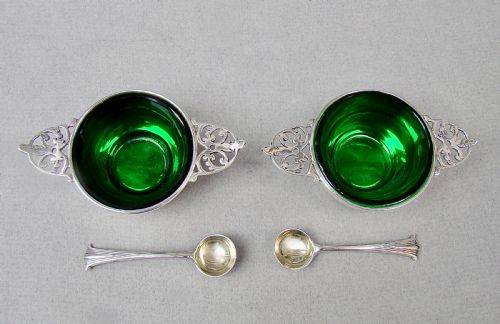
Many silver and metal salt cellars incorporate removable glass liners to protect the metal from corrosion caused by salt exposure. Cobalt blue glass liners are particularly typical in twentieth-century sets.
While liners are helpful for preservation, pieces without them often relied on interior gilding to protect the silver base metal from tarnishing and pitting.
How do I care for antique silver and glass salts?
Silver components require occasional gentle cleaning with appropriate polish to maintain their finish without removing fine chasing or hallmarks. Glass and ceramic bowls wash safely in warm soapy water.
Avoid leaving salt sitting inside metal vessels for extended periods when not in use, as prolonged contact can pit silver and corrode unprotected surfaces.