




Vintage Opal Cabochon Ring
A vintage opal cabochon ring brings together smooth, domed stones and precious metal in forms spanning the Victorian era to the mid-century.
Vintage Opal Cabochon Ring
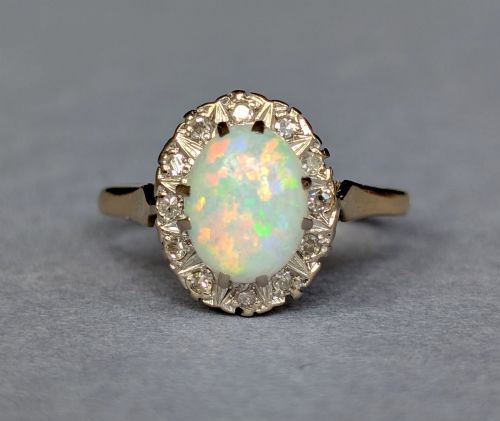
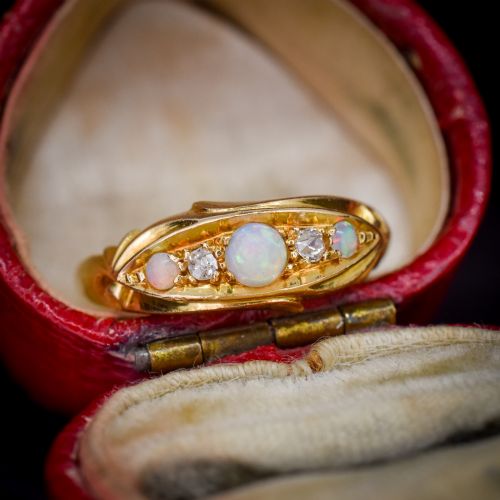
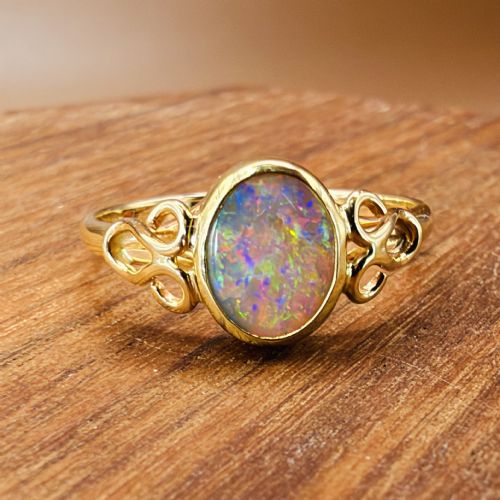
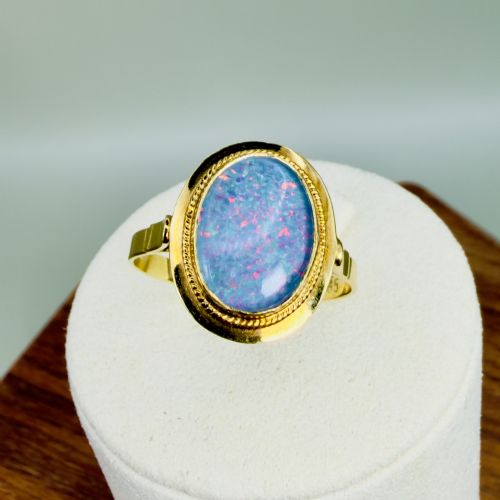
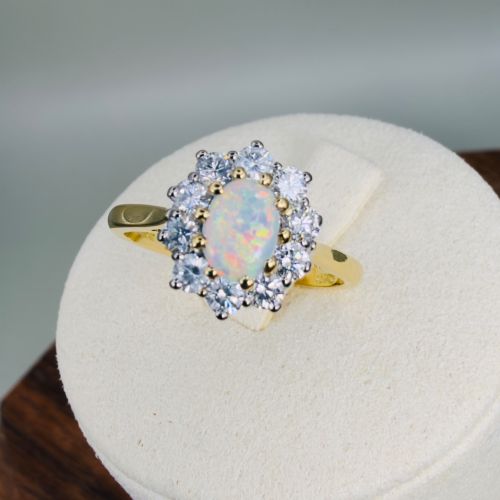
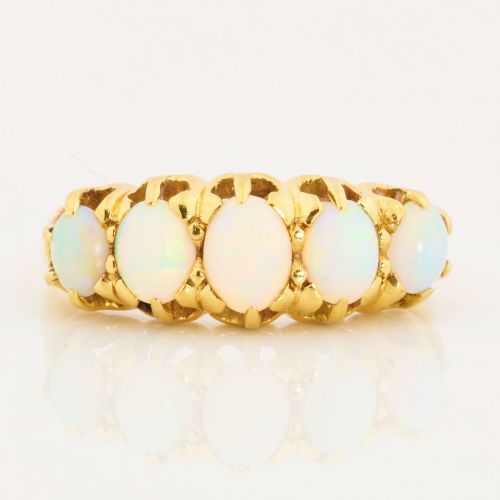
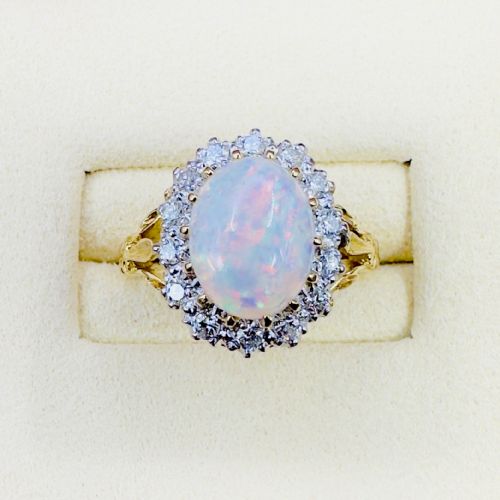
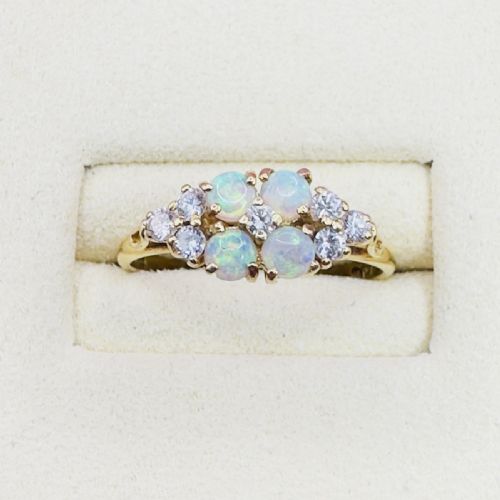
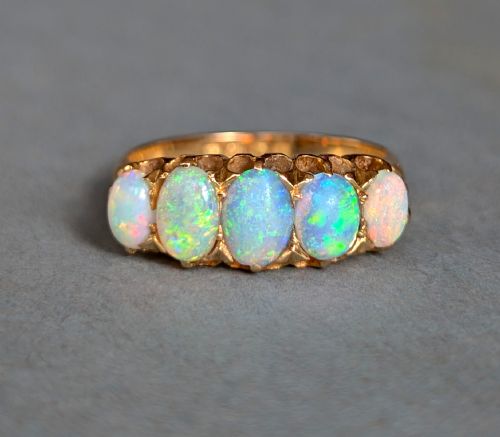
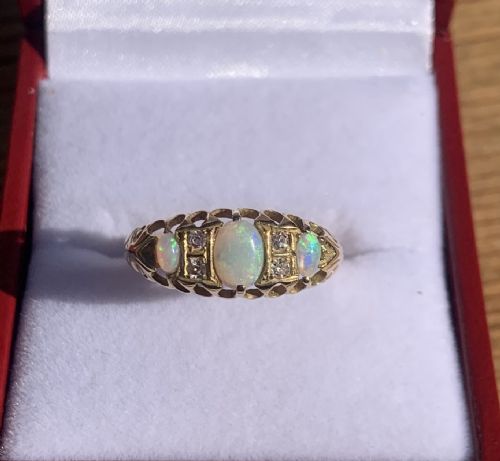
When you search for a vintage opal cabochon ring, you encounter pieces that range from Victorian and Edwardian cluster designs to mid-century cocktail rings. The most common forms on this page include simple solitaire rings, five stone arrangements, and diamond-bordered clusters.
The selection draws on decades from the nineteenth century through the 1960s, featuring styles such as Art Deco, Retro, and traditional settings. These pieces showcase natural opals, black opals, and water opals mounted in yellow gold, white gold, and platinum.
Makers and jewellers of the past shaped these gems into boat rings, twist designs, and multi-gem configurations alongside straightforward dress rings. Each piece reflects the aesthetic preferences of its period, from intricate Edwardian work to bolder mid-century silhouettes.
Materials and construction
Goldsmiths utilised 9ct gold, 14ct gold, 18ct yellow gold, and 18ct white gold to form the bands and settings for these rings. Platinum also appears in the construction of mid-century pieces, providing a strong framework for complex cluster designs.
The central opals are shaped into smooth cabochons rather than faceted cuts, allowing the play of colour within the stone to dominate. Jewellers secured these polished gems using claw settings, bezels, and raised mountings.
Diamonds frequently accompany the primary opal, set as brilliant cut accents or rose cut borders around the centre stone. Other accompanying stones include emeralds, sapphires, rubies, garnets, and bloodstones, integrated into multi-gem clusters and trilogy layouts.
Listings span periods from the sixteenth century to the 1960s, uniting gold, white gold, and platinum materials with diverse gem combinations.
Distinctions in quality
Quality in these rings rests upon the optical play of the opal and the balance of its setting. Stones displaying vibrant flashes of colour across the surface elevate a piece above those with muted or flat appearance.
The standard of metalwork and the integration of secondary stones dictate the sophistication of the ring. Heavier gold gauges, secure claw or bezel retention of the cabochon, and well-matched diamond accents distinguish finer examples from standard production.
The Vintage Opal Cabochon Ring Glossary
- Cabochon
- A gemstone shaped with a smooth, rounded surface rather than faceted edges. This cut highlights the internal play of colour characteristic of opals.
- Solitaire
- A ring featuring a single prominent gemstone set centrally on the band. In this collection, solitaire rings typically showcase large white or black opals.
- Cluster ring
- A ring design where a central stone is surrounded by a group of smaller gems, usually diamonds. This arrangement maximises visual impact on the hand.
- Trilogy ring
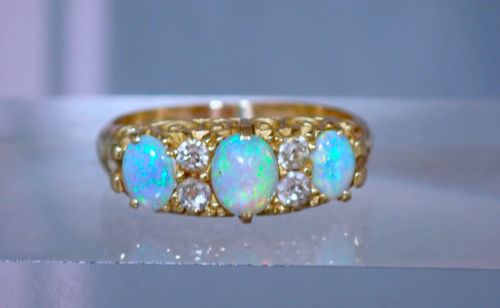
- A setting that incorporates three stones in a row, often representing past, present, and future. Opals in these rings are frequently flanked by diamonds.
- Boat ring
- A boat-shaped setting that tapers towards the ends, popular in antique and Edwardian jewellery. The elongated form accommodates multiple stones horizontally across the finger.
Vintage Opal Cabochon Ring: Frequently Asked Questions
What is a cabochon opal?
A cabochon opal is a stone cut with a convex, polished dome instead of flat facets. This traditional shaping method allows light to penetrate the curved surface and release the internal play of colour.
Jewellers have utilised this cut for centuries because it suits the optical properties of opals better than geometric faceting. It displays the shifting hues of the stone to maximum effect.
How do I care for my ring?
Opals contain water within their structure and require gentle handling to maintain their appearance. Avoid exposing them to harsh chemicals, sudden temperature changes, and ultrasonic cleaning methods.
Clean the metal and stone gently with a soft, damp cloth after wearing. Store the ring separately from harder gemstones to prevent surface scratching on the softer opal cabochon.
How do I date these rings?
Dating relies on hallmarks stamped inside the band, the style of the setting, and the accompanying gemstones. Victorian and Edwardian pieces often feature intricate claw work and yellow gold, while mid-century examples lean towards structured clusters and white gold.
Assay office marks and maker stamps provide specific geographical and chronological clues. Stylistic shifts from Edwardian delicacy to Art Deco geometry further define the era of manufacture.
Can I wear an opal daily?
Opals measure lower on the Mohs hardness scale than diamonds or sapphires, making them sensitive to heavy impact. Daily wear is common, provided you remove the ring during manual tasks, gardening, or sports.
Bezel settings offer greater protection for everyday use compared to high claw mountings. Checking the security of the stones periodically ensures the cabochon remains firm in its mount.