


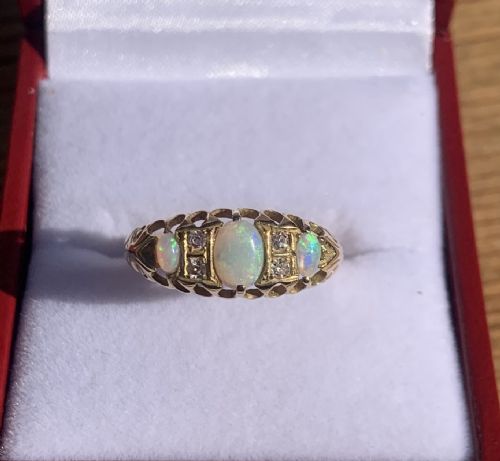

Gold Opal Diamond Ring
A gold opal diamond ring combines the iridescent play of colour in natural opals with the bright flash of diamonds set in precious metal.
Gold Opal Diamond Ring
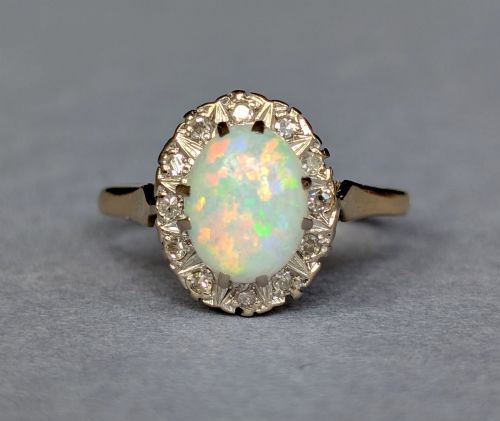
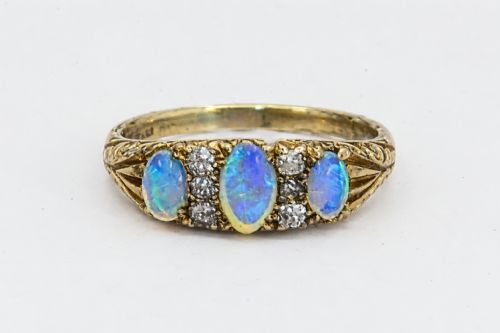
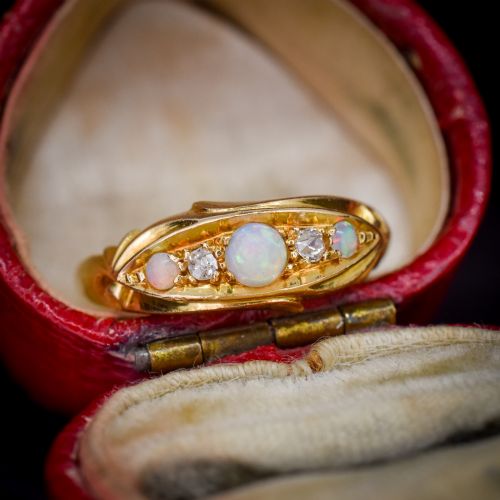
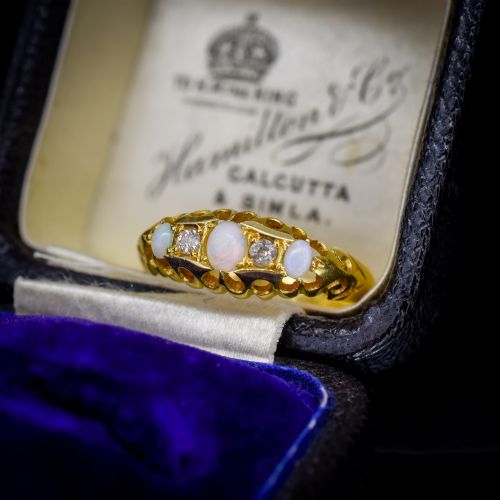
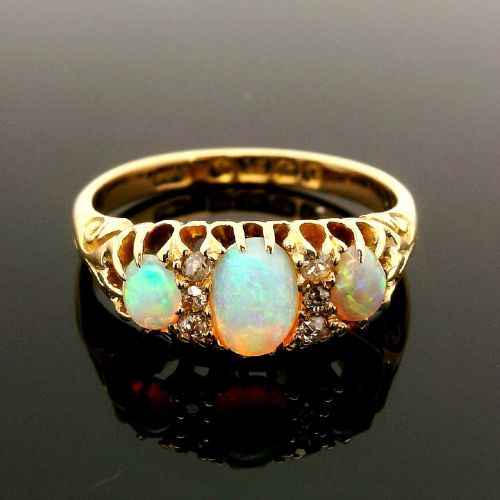
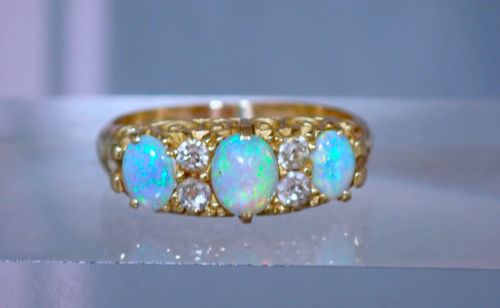
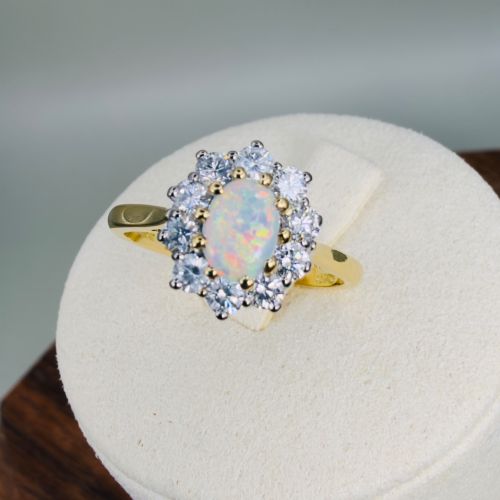
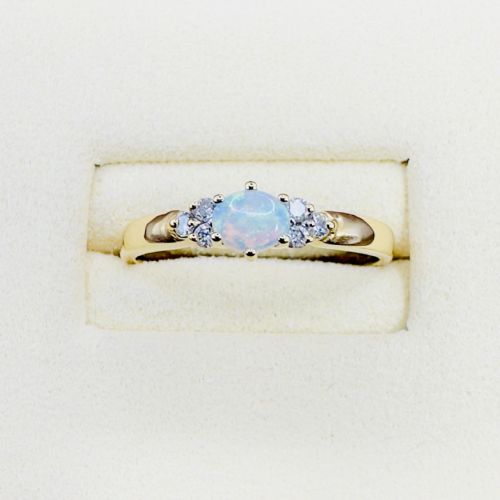
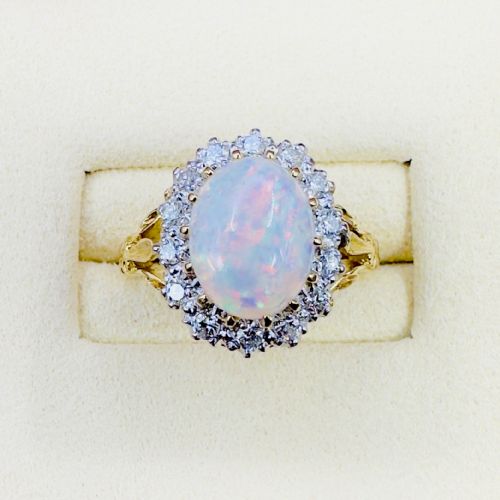
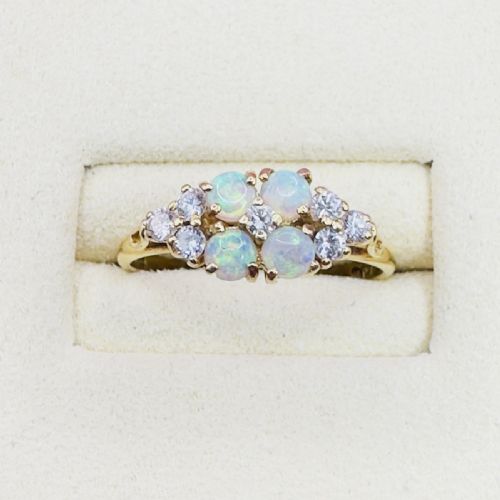
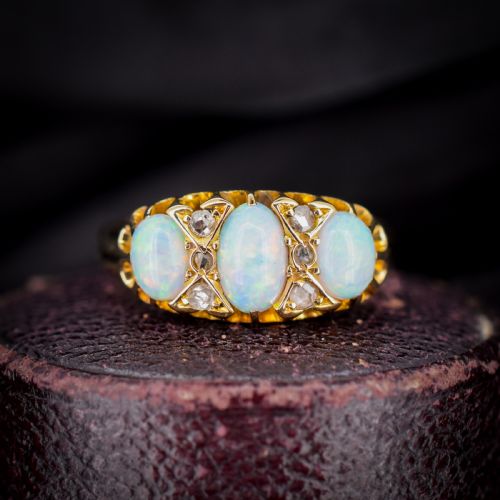
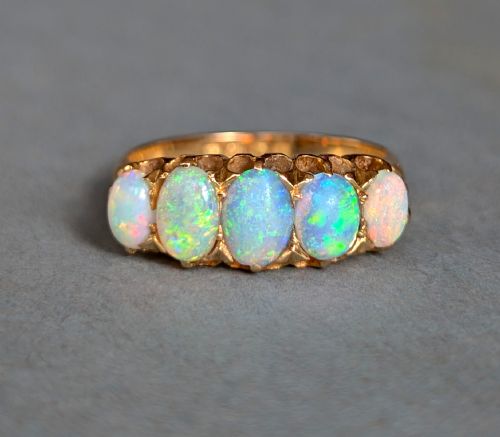
A gold opal diamond ring brings together two distinct gemstones in traditional mounts that span the Victorian, Edwardian, and mid-twentieth-century periods. Buyers searching for a gold opal diamond ring will encounter cluster formats, boat settings, and multi-stone trilogy layouts. Most examples rely on yellow gold bands paired with white metal settings to hold the stones securely.
The dominant forms on this page include antique boat rings and Edwardian cluster designs featuring natural opals alongside old-cut diamonds. Pieces from the later periods introduce white gold and platinum alongside traditional yellow gold mountings. These jewels function equally well as engagement rings or dress rings for daily wear.
What Varies in Quality
Quality rests upon the optical vitality of the opal, determined by the intensity and spread of its colour play across the stone. Master selection ensures the cabochon possesses sufficient depth without sacrificing structural stability.
The precision of the diamond cutting and the integrity of the metalwork further separate standard production from finer examples. Heavy gold shanks that retain their original gauge and clear hallmarks indicate superior initial manufacture and careful preservation.
Materials recorded on this page include platinum, eighteen-carat white gold, eighteen-carat yellow gold, nine-carat gold, diamonds, and natural opals.
The Gold Opal Diamond Ring Glossary
- Cabochon
- A gemstone shaped and polished with a rounded, convex surface rather than faceted. This style is standard for opals to display their internal play of colour.
- Boat ring
- A specific navette or boat-shaped mounting popular in the Georgian and Victorian periods. The setting curves along the finger to house a central stone flanked by smaller gems.
- Trilogy ring
- A ring featuring three principal stones arranged in a row, often symbolising the past, present, and future. In these listings, they pair a central opal with flanking diamonds.
- Old cut
- A hand-faceted diamond style preceding the modern brilliant cut. These stones exhibit smaller tables and higher crowns suited to antique mountings.
- Cluster ring
- A design layout where a central gemstone is surrounded by a tight border of smaller stones. This configuration maximises surface sparkle and presence on the hand.
Gold Opal Diamond Ring: Frequently Asked Questions
How do I care for my opal ring?
Opals contain water within their structure and require gentle handling to prevent drying out or cracking. Avoid exposing them to harsh chemicals, ultrasonic cleaners, or sudden temperature changes.
Remove the ring when washing hands, gardening, or engaging in strenuous physical activity. Store it safely in a fabric-lined box away from direct sunlight and harder gems that might scratch the surface.
Are these opals natural?
The pieces recorded across these periods utilise natural solid opals rather than modern synthetics. Each stone displays a unique internal play of colour formed through geological processes over millions of years.
Examination under magnification reveals the irregular natural patterns characteristic of genuine mined specimens. Assay marks and period mountings further corroborate the historical authenticity of the stones.
Can I wear an antique ring daily?
Historic jewellery can withstand regular wear provided the owner exercises appropriate care and respects the age of the metalwork. Eighteen-carat and nine-carat gold bands provide durable foundations for daily use.
Routine inspection by a professional jeweller ensures that claws remain tight and secure around the opals and diamonds. Prompt attention to minor wear preserves the structural integrity of the mounting for decades to come.