


Vintage Onyx Lighting
Vintage onyx lighting brings the rich mineral depth of natural stone and polished metal into domestic interiors, spanning Victorian grandeur to Art Deco design.

Vintage Onyx Lighting
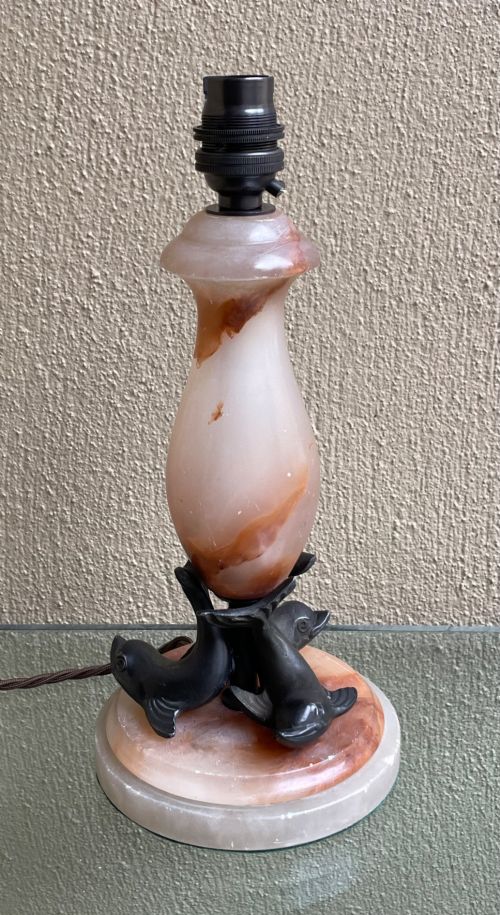
Vintage onyx lighting encompasses functional and decorative pieces designed to illuminate interior spaces using natural stone elements. When searching for vintage onyx lighting, buyers encounter items ranging from Victorian and Edwardian examples to Art Deco creations from the nineteen-thirties.
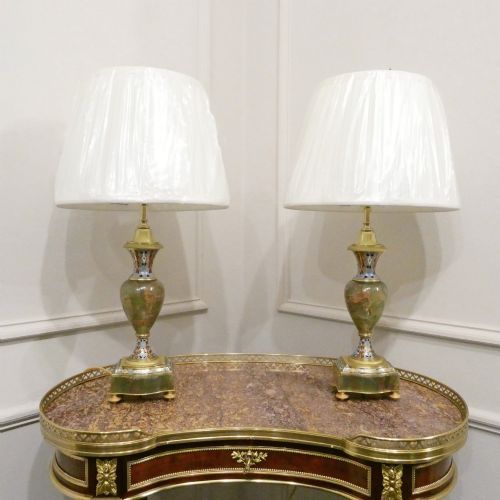
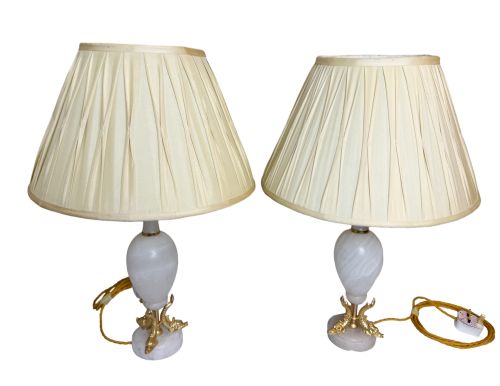
The selections on this page concentrate heavily on table lamps, floor lamps, and standard lamps, alongside oil lamps, candlesticks, and candelabras. Many pieces incorporate paired formations, such as matching pairs of table lamps or cassolettes repurposed for electrical illumination.
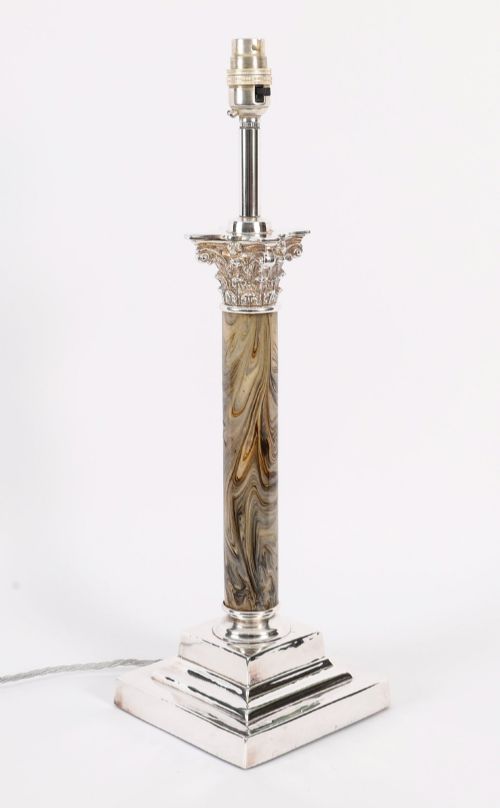
Origins span British and continental European workshops, with French designs appearing frequently. The physical forms draw upon classical architecture and sculptural motifs, integrating columns, amphora shapes, and figural ornaments directly into the stone composition.
What varies in quality
Quality differences emerge in the selection and geological patterning of the onyx itself, where uniform translucency and rich natural banding command greater appreciation. Superior pieces display carefully matched stone sections that maintain consistent colour across the entire body.
The refinement of the metal mounts heavily influences the overall standard of the object. Finely chased ormolu, detailed gilt bronze castings, and substantial brass mounts demonstrate superior workshop output compared to simpler pressed metal components.
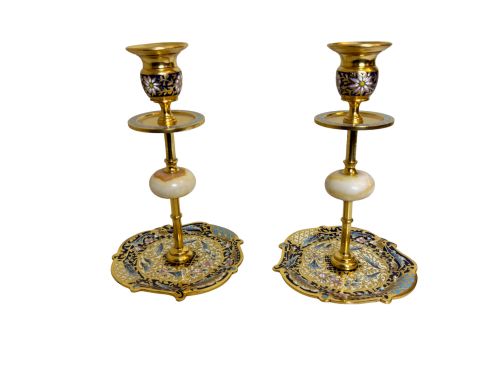
Materials appearing across the inventory include onyx, marble, ormolu, gilt bronze, and champleve enamel, reflecting diverse manufacturing origins.
The Vintage Onyx Lighting Glossary
- Onyx
- A translucent banded variety of chalcedony or calcite used extensively for lamp bases and columns. Its natural strata catch ambient light, providing a warm visual glow.
- Ormolu
- Gilded bronze produced by applying a mercury and gold amalgam to a bronze casting. This technique creates a durable, rich golden surface finish seen on nineteenth-century mounts.
- Champleve
- An enamelling technique where troughs or cells are hollowed out of a metal surface and filled with vitreous enamel. It frequently decorates the metal collars and bases of French lamps.
- Cassolette
- A decorative vase or vessel, often featuring a removable lid that transforms the piece between an urn and a candlestick. Pairs of these are frequently converted into table lamps.
- Corinthian Column
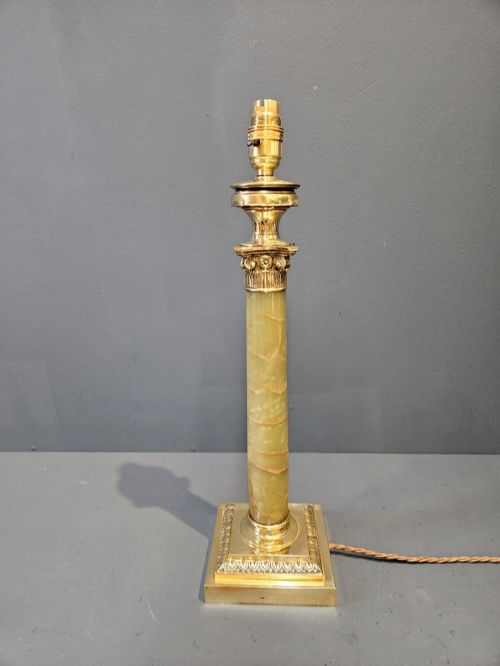
- A classical architectural column style featuring an ornate capital decorated with acanthus leaves. This motif appears frequently on nineteenth-century and Edwardian lamp standards.
Vintage Onyx Lighting: Frequently Asked Questions
How do I date vintage onyx lighting?
Dating relies on stylistic clues, manufacturing techniques, and material combinations found across different eras. Victorian and Edwardian pieces often favour classical revival motifs like Corinthian columns, while nineteen-thirties examples lean towards streamlined Art Deco geometry.
Examining the internal wiring methods, switch types, and metal casting styles provides additional chronological context. Comparing the piece against documented periods helps establish its approximate decade of origin.
Are these lamps converted from oil lamps?
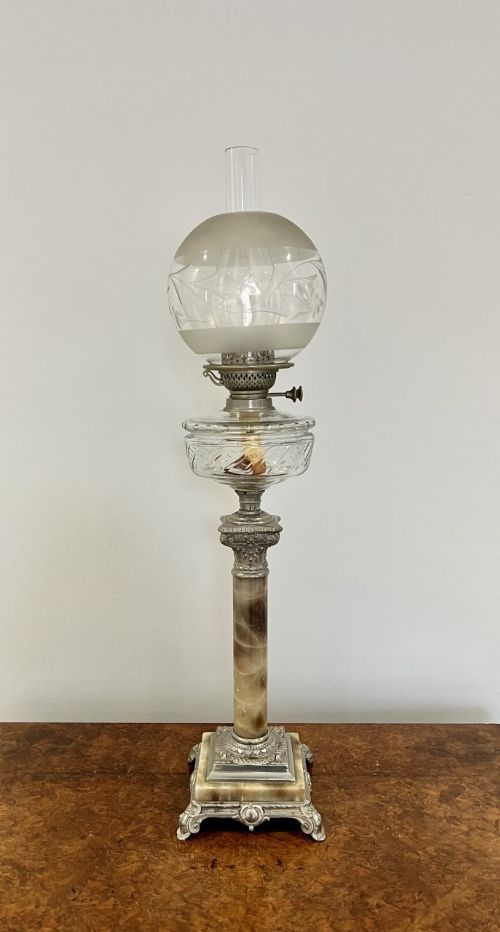
Many vintage lamps from the Victorian and Edwardian periods began life as oil lamps or fluid burners before receiving later electrical conversions. These conversions typically retain their original brass burners, fonts, and stone reservoirs while updating the internal wiring for modern use.
Buyers often encounter standard lamps and table lamps that preserve their original nineteenth-century height and proportions despite the addition of electrical fittings. This conversion process allowed practical retention of decorative antique household objects.
How should I clean onyx lamps?
Onyx is a relatively soft and porous stone that requires gentle maintenance to preserve its polished surface. Cleaning should involve only a soft, dry microfiber cloth to remove dust without scratching the delicate mineral structure.
Harsh chemical cleaners, abrasive scouring pads, and excessive water must be avoided entirely to prevent permanent damage to both the stone and the surrounding metal mounts. Treating the stone with care ensures the natural polish remains intact.
Can I replace the fabric shade safely?
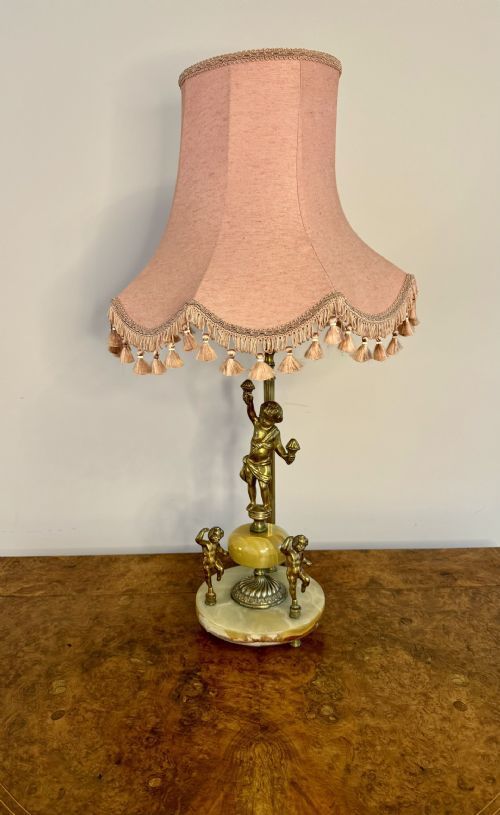
Replacing fabric shades is a straightforward process that allows adaptation to modern interior colour schemes and proportions. Ensuring the shade fitter matches the harp or shade carrier system of the specific lamp is the primary technical consideration.
Original shades are uncommon on pieces from the nineteenth and early twentieth centuries, meaning most surviving examples have been re-shaded over time. Selecting a shade that respects the visual weight of the stone base maintains proper aesthetic balance.