





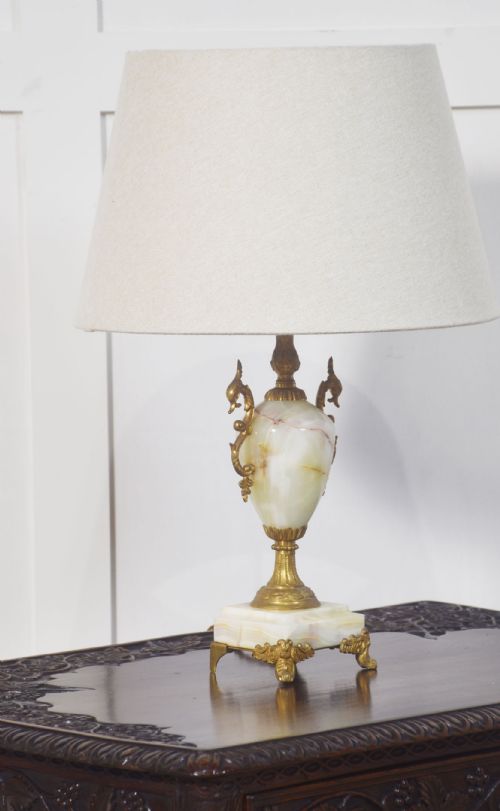


French Onyx Lamp
A french onyx lamp brings distinct continental weight and warm mineral grain into a room, combining carved stone with gilt mounts.

French Onyx Lamp
A french onyx lamp stands as a decorative object that combines carved stone with metal mounts, appearing primarily as table lamps alongside occasional pieces like wine tables and floor lamps. These items date from the late nineteenth century through the early decades of the twentieth century, reflecting periods such as the Edwardian era and the 1920s.
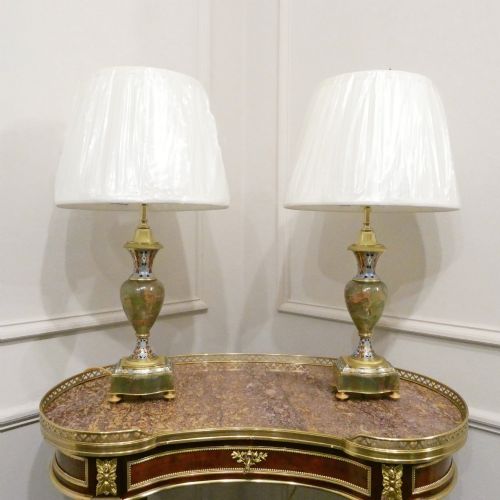
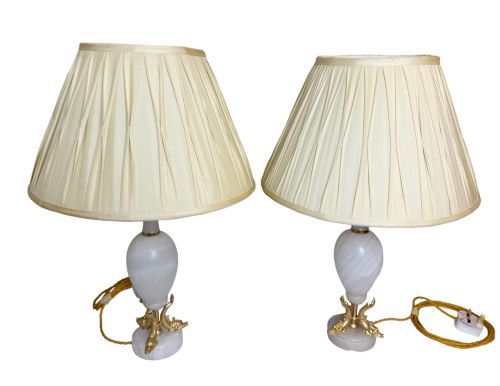
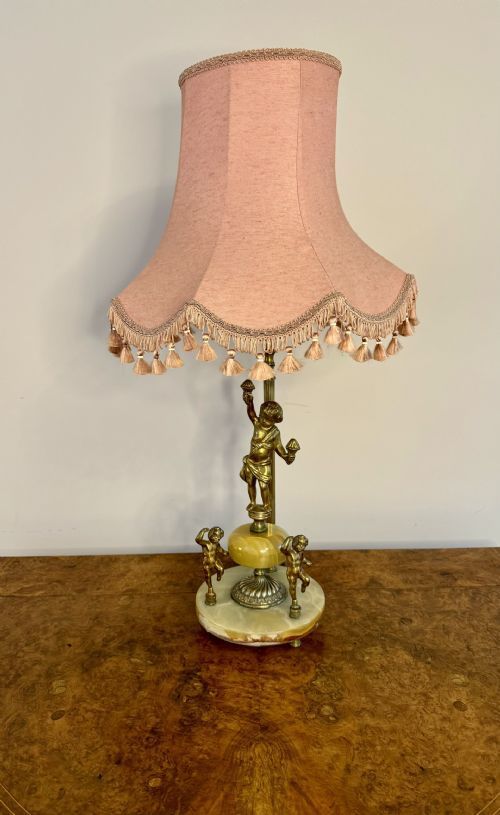
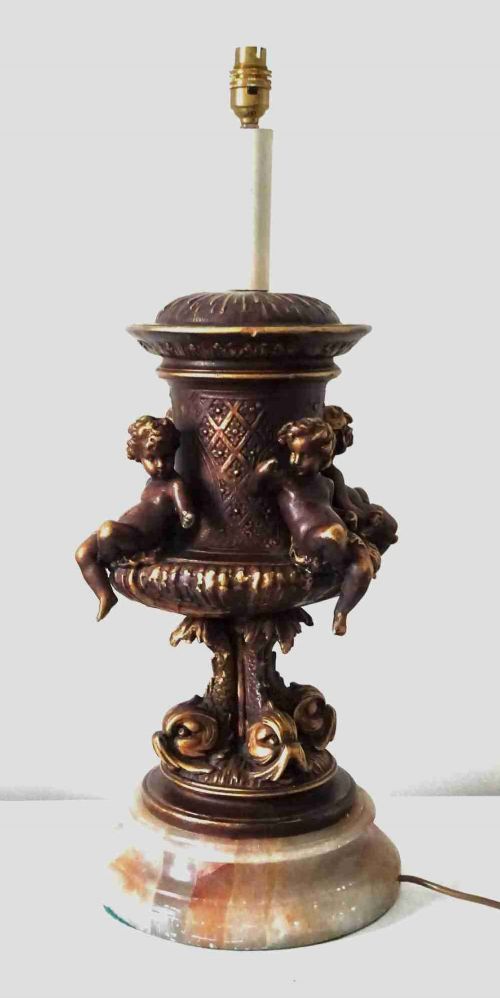
The forms span simple columns, amphora shapes, and figural designs incorporating cherubs or dolphins, often found as matched pairs or substantial single pieces. Makers utilised cream and white onyx alongside brown varieties, setting the stone into heavy metal frameworks.
Buyers seek these pieces to anchor a room with classical revival styles including Louis XVI and French Neoclassical aesthetics. The combination of translucent stone and gilded metal creates a layered visual texture that suits traditional and eclectic interiors alike.
Standards of craftsmanship
The distinction between standard production and superior examples lies in the crispness of the metal casting and the complexity of the mounts. Finer pieces display finely chased ormolu, detailed figural work such as cherubs, and complex champleve enamel rather than simple stamped brass rings.
The quality of the stone itself dictates value, with deeply coloured or evenly grained onyx commanding attention over uniform or heavily flawed mineral blocks. Heavier gauge metalwork and robust column architecture ensure structural stability in taller floor models and extending designs.
French Onyx Lamp Retail Price Guide 2026
Typical asking prices for french onyx lamp among the pieces listed under this phrase on Sellingantiques today, from the lower quarter to the upper quarter. They describe what is for sale here now, not the wider market.
Cast bronze cherubs occasionally cling to the columns, appearing as though they hoisted the lamp upright themselves.
The French Onyx Lamp Glossary
- Onyx
- A banded variety of chalcedony quartz used for lamp bodies and table tops, valued for its translucency and natural patterning.
- Ormolu
- Gilded bronze or brass applied to mounts, feet, and capitals, providing a bright metallic contrast to the stone.
- Champleve
- An enamelling technique where troughs are dug into metal and filled with coloured vitreous paste before firing.
- Cassolette
- A decorative ornamental vase or urn, sometimes adapted to house lamp fittings.
- Corinthian column
- An architectural column style featuring an ornate capital decorated with acanthus leaves, frequently replicated in lamp shafts.
French Onyx Lamp: Frequently Asked Questions
How do I date a french onyx lamp?
Dating relies on the combination of styles and metalwork techniques visible in the piece. Late nineteenth-century examples often feature heavy ormolu mounts and Corinthian column designs, while 1920s pieces lean towards amphora shapes and stylised gilt metal bases.
Examining the wiring channels and the construction of the brass fittings also helps establish the period of manufacture, as older pieces show hand-finished components distinct from later mass production.
Are these lamps sturdy enough for daily use?
Natural onyx provides a heavy and stable base for lighting, especially in larger table models and floor lamp formats. The substantial weight of the stone prevents tipping during normal operation.
Care should be taken when moving them, as the joined metal mounts and decorative trim require gentle handling to avoid loosening over time.
Can I find matching pairs easily?
Matched pairs appear frequently among surviving examples, particularly in neoclassical styles and columnar forms intended for mantelpieces or sideboards. These pairs often share identical cast ormolu mounts and stone coloration.
Single lamps are equally common, originating from larger suites or surviving independently as accent pieces in domestic settings.
How do I clean the stone and metal?
Maintenance requires a soft, dry cloth to remove dust from the polished stone surfaces without scratching the mineral grain. A gentle duster also preserves the delicate gilt metal and ormolu mounts.
Avoid chemical cleaners and harsh liquids, as moisture and solvents can damage the gilded surfaces and discolour the natural onyx.