


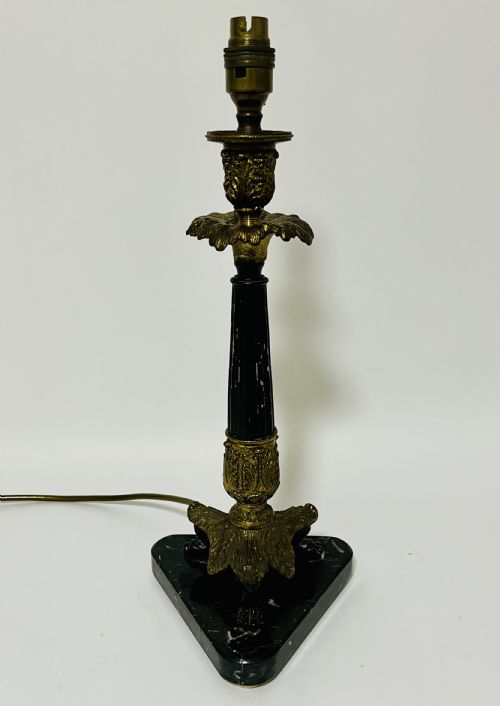


Ormolu Reading Light
An ormolu reading light brings gilt warmth and focused illumination to a desk or reading corner, combining metalwork and form from the nineteenth century.

Ormolu Reading Light
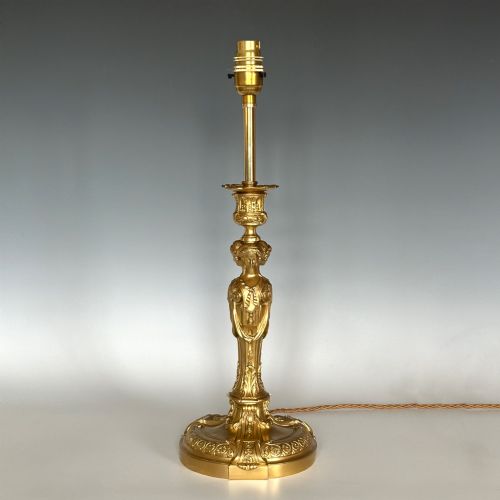
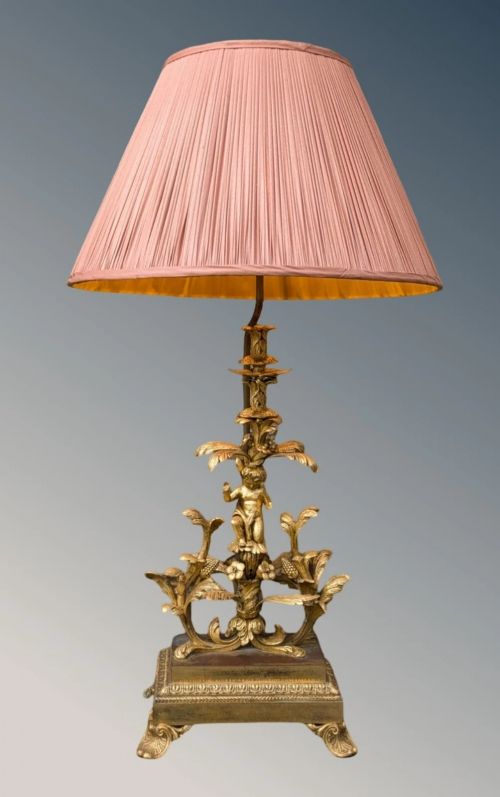
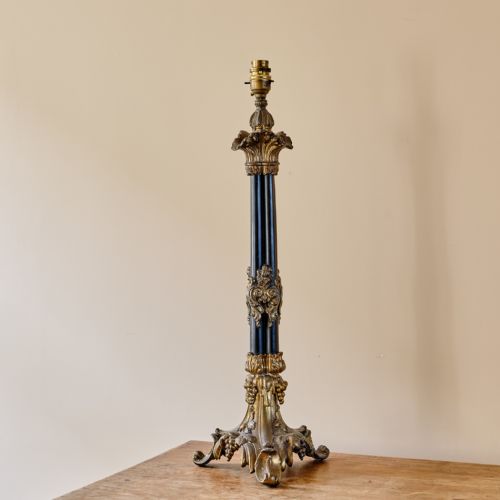
An ormolu reading light stands as a functional object shaped by nineteenth-century design, appearing chiefly as table lamps alongside occasional floor lamps. These pieces draw on French Empire, Rococo Revival, Louis XVI, and Neoclassical styles, incorporating columns, figural elements, and ram's heads.
The materials span gilt bronze, ormolu, brass, patinated bronze, and marble, often paired with fabric or silk shades. Examples range from petite floral designs to large column lamps and extending floor versions.
How these lights were made
Maker's workshops combined cast bronze and brass components, applying fire gilding or gold plating to create the characteristic ormolu surface alongside patinated dark bronze. Onyx and marble served as substantial bases for column and figural lamp forms.
Metal chasing defined the decorative details, from floral motifs and ram's heads to classical architectural columns. Fabric and silk elements completed the shades for table and floor standing pieces.
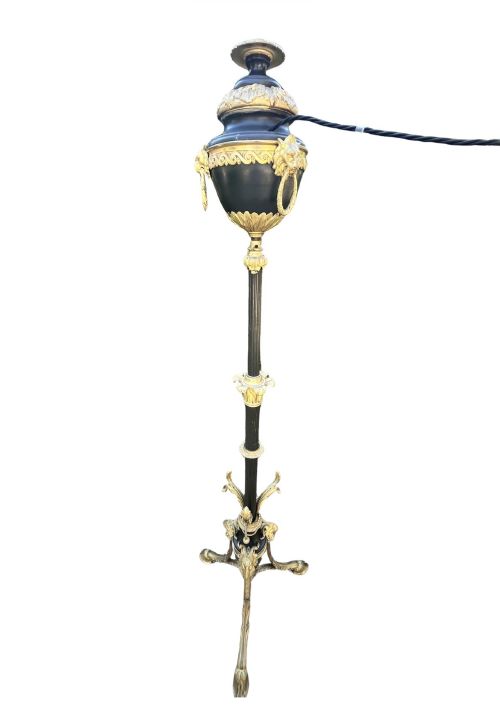
A Victorian extending floor lamp managed to combine French styling with an adjustable height for late-night nineteenth-century reading.
What varies in quality
The refinement of the bronze casting and the crispness of the hand-chased surface details separate standard production from superior work. Superior examples show depth in the gilding and precise assembly of multiple cast sections.
The choice of secondary materials, such as marble or onyx bases and patinated bronze contrasts, dictates the presence and balance of the object. Heavier, more substantial metal gauges distinguish the upper tier of nineteenth-century production.
Dugourc
The Ormolu Reading Light Glossary
- Ormolu
- Gilded bronze produced by applying a mercury and gold amalgam to a bronze object and heating it. This technique creates a durable, luminous golden finish characteristic of French decorative arts.
- Patinated bronze
- Bronze treated with chemical solutions to darken the surface and create tonal contrast against bright ormolu mountings. It highlights the modelled details of figures and columns.
- Neoclassical
- A revival style drawing on classical Greek and Roman architecture and ornament. It manifests in clean column forms, symmetrical designs, and restrained classical motifs.
- Louis XVI style
- A French decorative aesthetic defined by straight lines, classical symmetry, and architectural elements such as fluted columns and ribbon twists. It experienced major revivals throughout the nineteenth century.
- Gilt bronze
- Metal cast in bronze and coated with a thin layer of gold leaf or gold paint. It provides a rich surface sheen on nineteenth-century lighting.
Ormolu Reading Light: Frequently Asked Questions
How do I identify a French Empire ormolu lamp?
French Empire lamps typically feature strict classical geometries, column forms, and contrasting patinated bronze with bright ormolu mountings. These pieces often incorporate marble bases and references to ancient Roman or Greek design.
Look closely at the cast details for military motifs, swans, or classical foliage which are standard markers of the Empire style seen across nineteenth-century examples.
What is the difference between ormolu and gilt bronze?
Ormolu specifically refers to a historical mercury gilding process applied to bronze during the eighteenth and nineteenth centuries, yielding a deep, matte gold surface. Gilt bronze is a broader term that can include various methods of applying gold to a bronze base.
In practical antique terms, the two phrases are often used interchangeably to describe gilded metal components on nineteenth-century lighting.
Where should I place an ormolu reading light?
These lights suit study desks, library tables, or side tables where their concentrated illumination and decorative metalwork can be appreciated up close. Tall floor versions function well beside reading armchairs in traditional interiors.
Ensure the placement allows the contrasting patinated bronze and gilt surfaces to catch natural or lamp light effectively.
How do I care for nineteenth-century ormolu surfaces?
Dust the metal gently with a dry, soft microfibre cloth to prevent the accumulation of grit in the chased recesses. Avoid chemical polishes, modern cleaning agents, or water, as these can strip or damage the historic gilt surface.
Maintaining a stable room humidity prevents oxidation on the exposed patinated bronze and marble sections of the lamp base.