
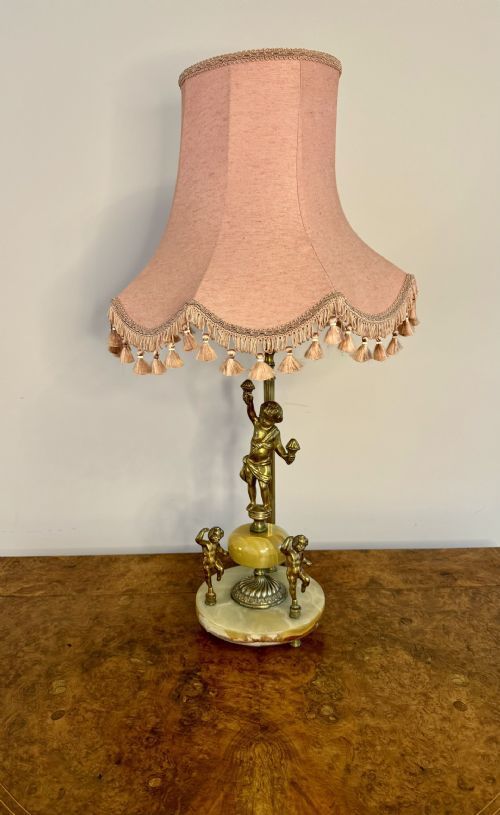


Vintage Onyx Light
A vintage onyx light brings solid stone presence and polished metal warmth into a room, spanning periods from Victorian mass to Art Deco geometry.
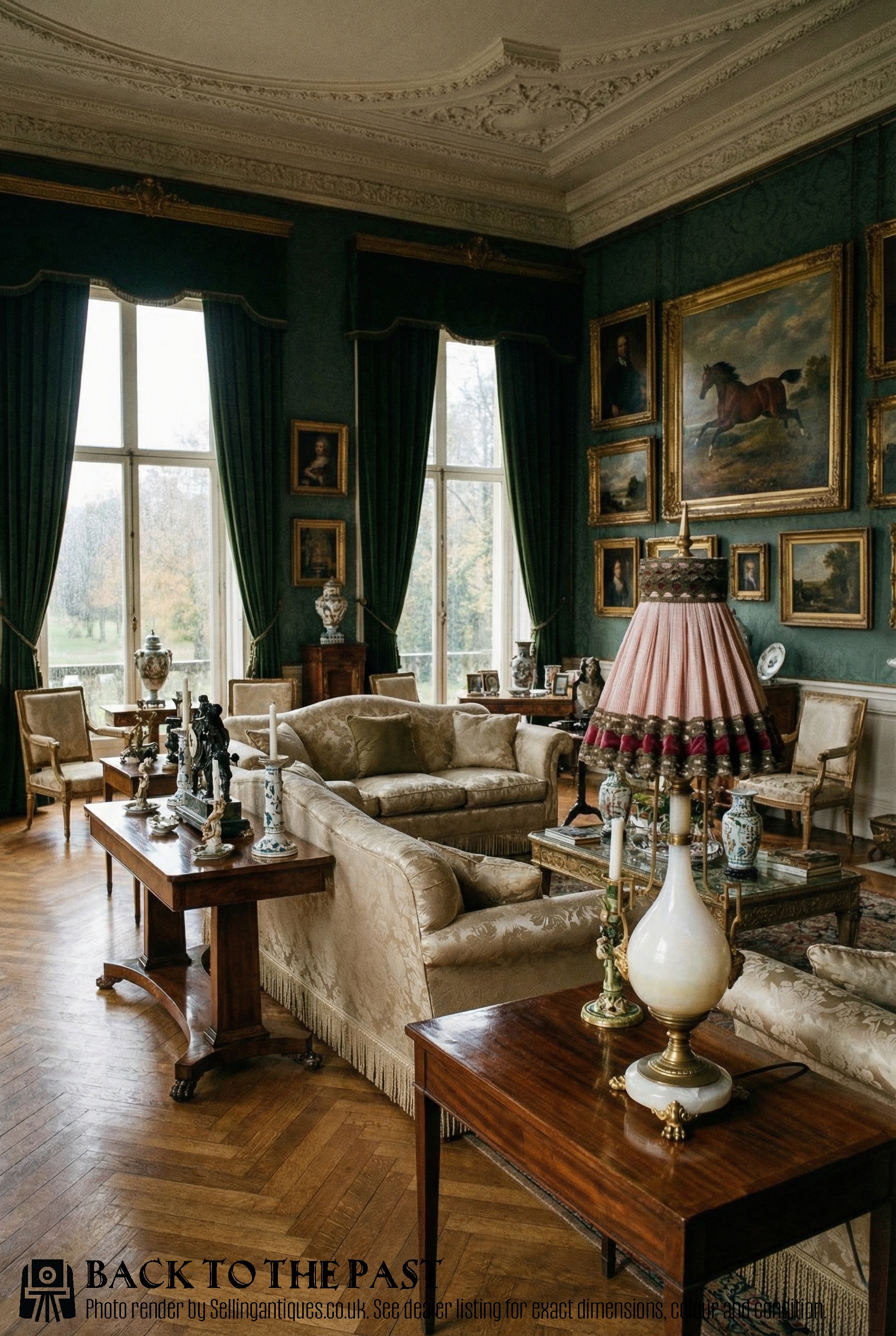
Vintage Onyx Light
When you search for a vintage onyx light, you encounter a variety of functional domestic fixtures rooted mainly in the late nineteenth and early twentieth centuries. These objects range from compact table lamps and desk lamps to tall standard or floor lamps, alongside converted oil lamps and candelabras.
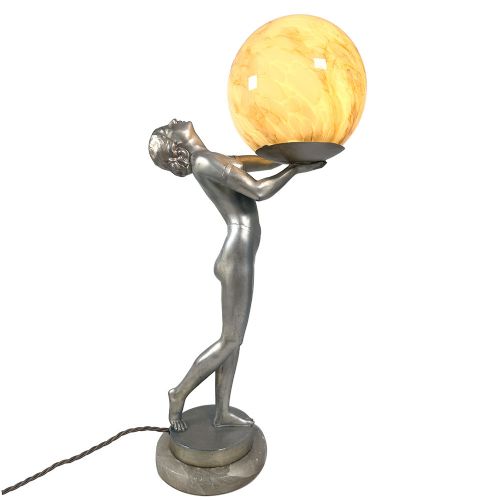
The dominant forms on this page pair carved stone shafts with metal mounts, frequently appearing as matched pairs or single statement pieces. You will find styles moving from ornate Victorian and Edwardian revivals to clean-lined Art Deco configurations.
Origins stretch across British, French, and Italian workshops, reflecting shifts in interior taste from heavy architectural revivalism toward streamlined modern forms. The stone itself provides a dense, natural foundation that anchors the surrounding brass, ormolu, and bronze detailing.
Materials and construction methods
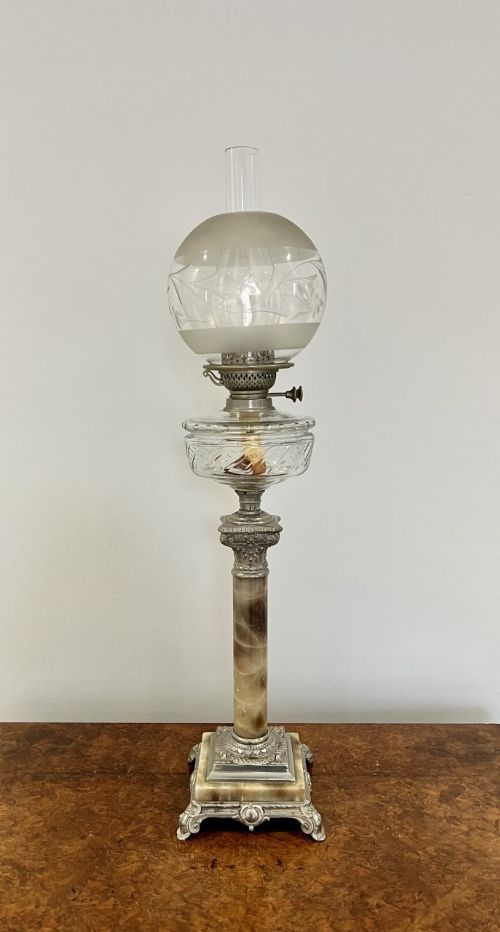
Makers constructed these fixtures by turning and carving natural onyx and marble into columns, urns, and stepped bases. This stone work is typically combined with cast brass, gilt bronze, or ormolu mounts that secure the central shaft and support the electrical fittings or oil burners.
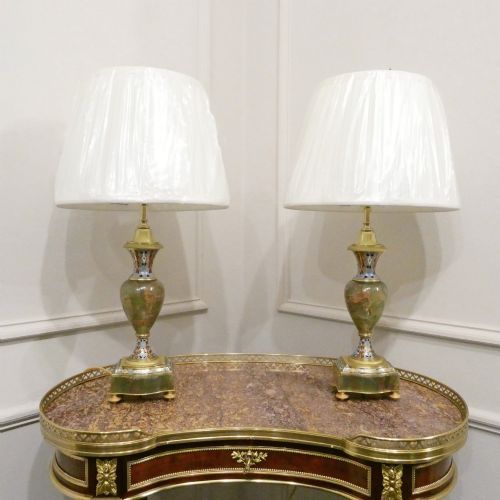
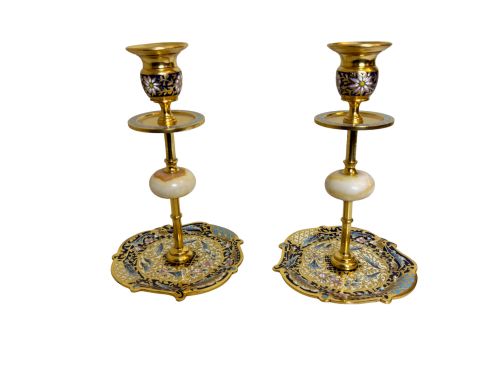
Metal components often feature chased ornamentation, champleve enamel panels, or gilded surfaces that contrast with the banded patterns of the stone. Fabric shades and glass elements complete the assemblies, held together by threaded metal rods running through the core of the lamp.
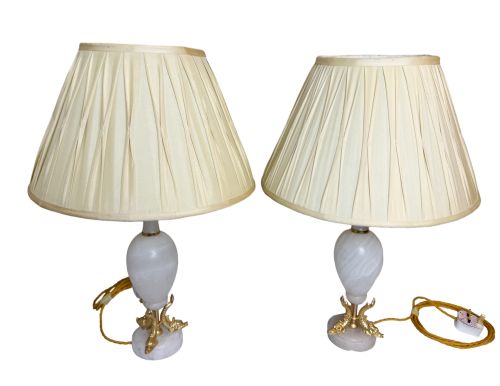
Current listings demonstrate a prevalence of French Neoclassical and Art Deco styles, using brass, gilt bronze, and white onyx.
Distinctions in execution and materials
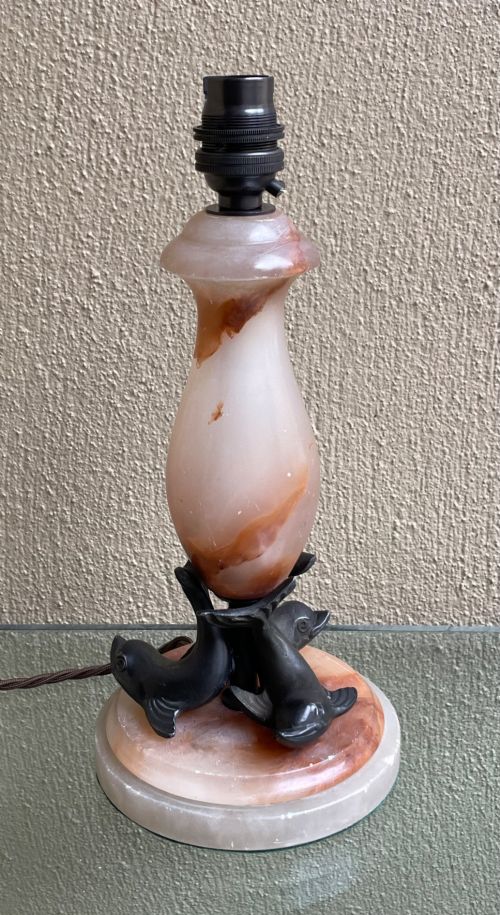
The upper tier of pieces is distinguished by the depth of hand-chasing on the ormolu and bronze mounts, alongside the rich natural banding and translucency of the onyx. Superior examples feature integrated cast figures, such as cherubs or dolphins, executed with fine anatomical detail rather than routine casting.
Simpler productions rely on standard turned stone columns paired with plain spun brass fittings. The weight and stability of the base, the precision of the stone joints, and the crispness of the gilt metal ornamentation separate standard domestic items from exhibition-grade commissions.
The Vintage Onyx Light Glossary
- Onyx
- A banded variety of chalcedony quartz, though in antique lamp production the term often describes banded calcites and alabaster with translucent qualities. This stone accepts a high polish and displays natural linear striations.
- Ormolu
- Gilded bronze produced by applying a mercury and gold amalgam to a bronze casting and firing it to drive off the mercury. This technique creates a durable, matte gold surface finish typical of fine French mounts.
- Champleve
- An enamelling technique where troughs or cells are hollowed out of a metal surface and filled with vitreous enamel powder before firing. These colourful enamel sections frequently accent the metal collars of nineteenth-century lamps.
- Corinthian column
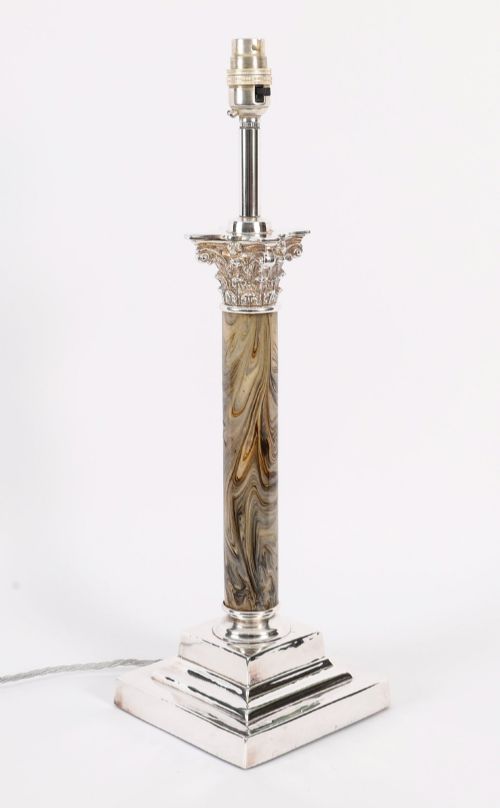
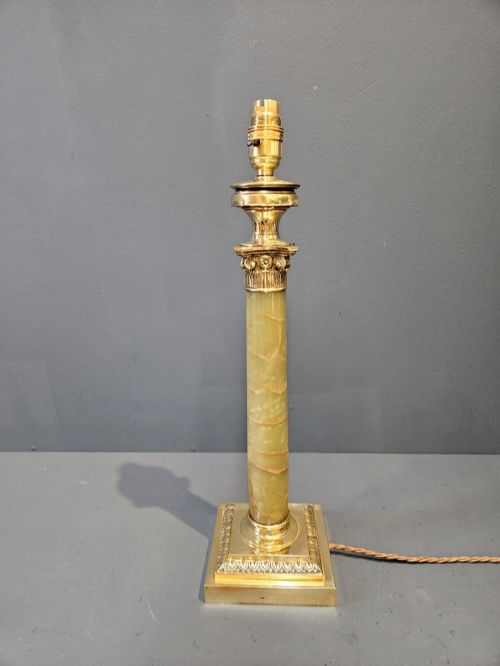
- An architectural order featuring an ornate capital decorated with acanthus leaves, adapted frequently as the main shaft for nineteenth and twentieth-century table lamps.
- Cassolette
- A decorative vessel, often mounted with metal fittings, designed to function as an ornament or perfume burner before conversion into a lamp base.
Vintage Onyx Light: Frequently Asked Questions
How do I date a vintage onyx light?
Dating relies on stylistic clues, manufacturing techniques, and the transition from oil to electricity. Victorian and Edwardian pieces lean toward classical revival motifs like Corinthian columns, while 1930s examples embrace geometric Art Deco lines.
Hardware components also help establish age. Thread types, switch mechanisms, and the presence of converted oil fonts point directly to the original period of manufacture.
Are standard lamps original to their height?
Many floor and standard lamps were manufactured with adjustable mechanisms allowing the height to be raised or lowered. Others retain their fixed columnar proportions from the workshop floor.
Examine the junction points where the metal meets the stone to ensure the upright column has not been shortened or altered during a later rewiring.
What is the difference between onyx and marble?
Onyx is a translucent, banded stone formed by groundwater precipitation in caves, whereas marble is a metamorphic rock with granular crystalline structures and veining. In historical lighting catalogues, the terms were sometimes used interchangeably for similar decorative stones.
Onyx generally allows more light to pass through its polished surface when illuminated from nearby sources.
How should I care for vintage stone and metal?
Maintain the stone using a soft, dry microfibre cloth to remove dust without scratching the polished surface. Avoid commercial chemical cleaners that can strip patinated finishes on surrounding brass or ormolu.
Metal mounts require gentle dusting, as aggressive polishing will wear away the original gilding on bronze and brass elements.