
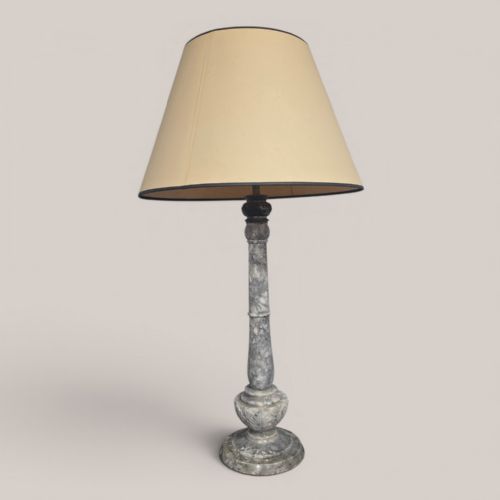
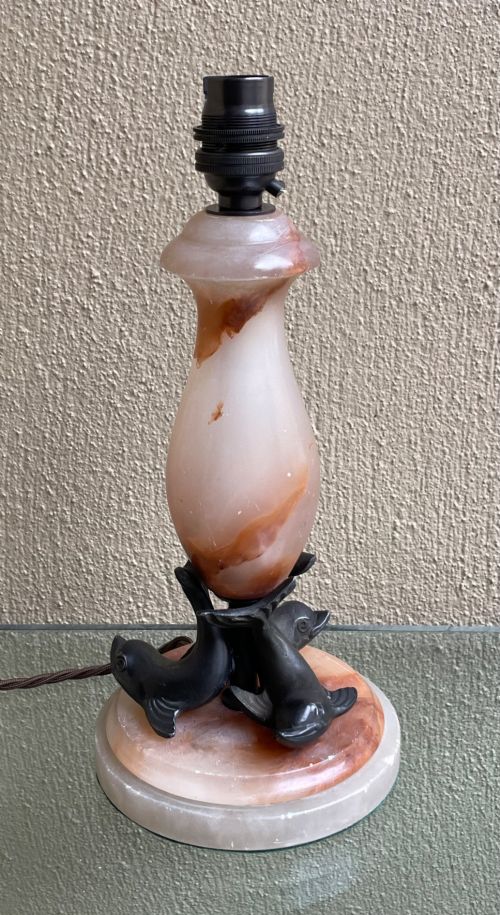
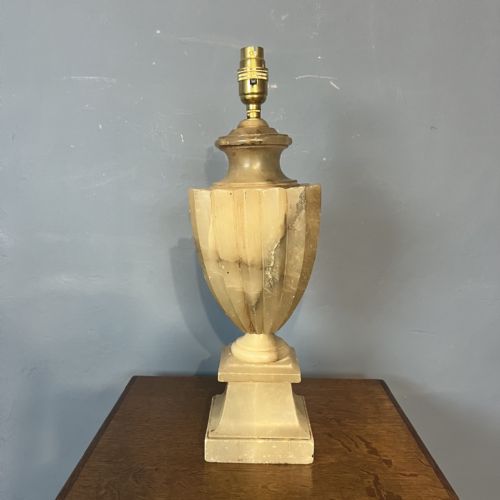
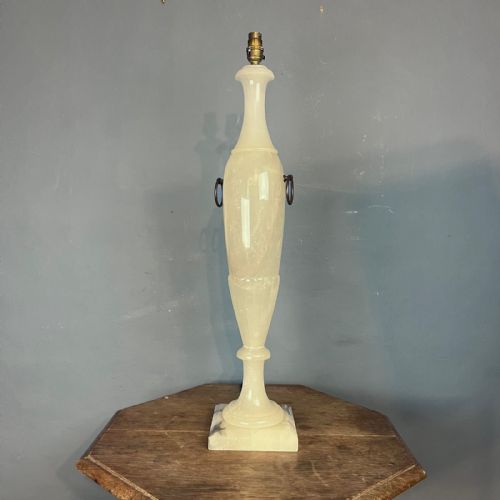

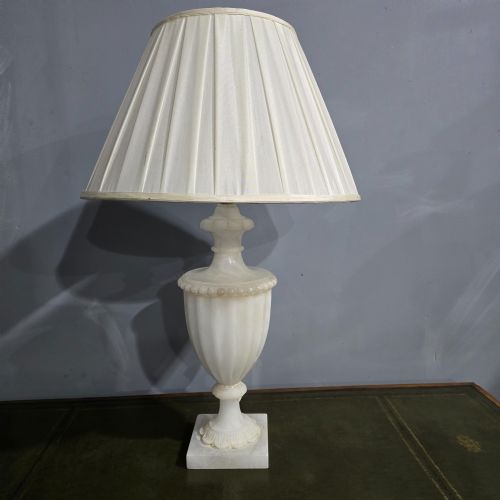


Stone Table Lamp
A stone table lamp brings weight and natural grain to a room, offering a solid architectural presence that ceramic or timber rarely achieves.
Stone Table Lamp
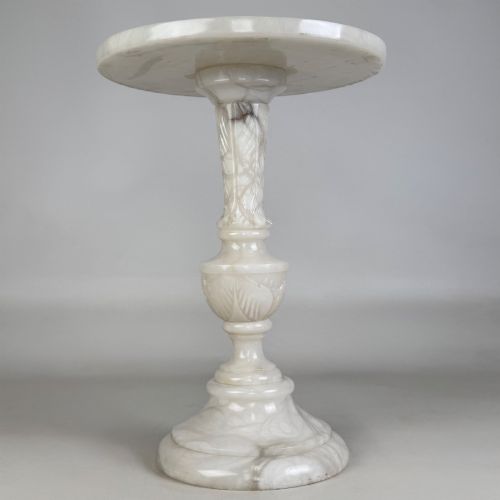
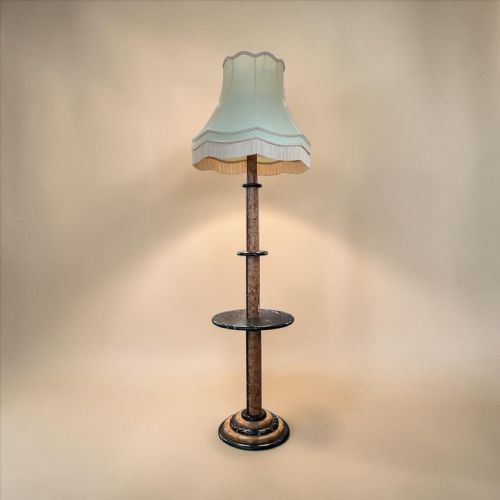
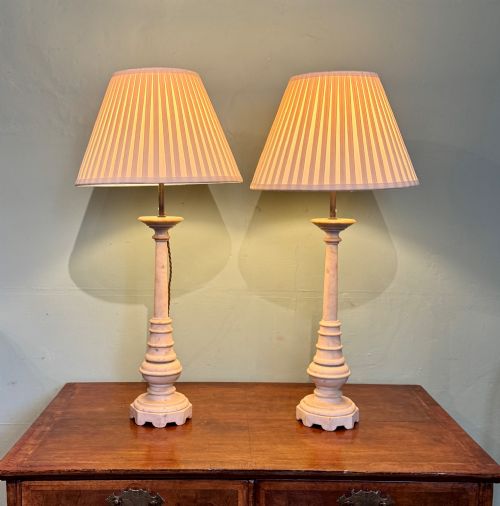
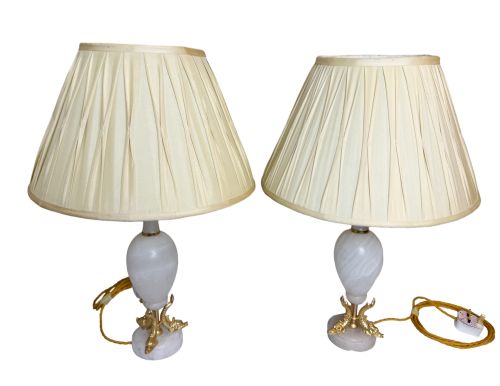
A stone table lamp draws on heavy natural materials like marble, onyx, and alabaster, shaped into columns, urns, and amphora forms. These pieces span from the late nineteenth century through the Art Deco era, encompassing Victorian, Edwardian, and classical revivals.
The selection also includes table forms designed to hold lighting or feature inset marble tops, alongside standard floor lamps in solid marble. Pairs feature frequently alongside substantial single centrepieces meant for heavy sideboard placement.
What varies in quality
Quality rests in the select choice of mineral blocks, where uninterrupted veining and even colouration command higher regard than patched or heavily flawed stone. The crispness of the turning and the depth of the carved detail reveal the hand of the artisan.
Mount quality separates standard utility pieces from high-end commissions, with finely chased gilt bronze or ormolu mounts indicating superior workshop production. Heavier gauge brass and solid, uncompromised alabaster columns distinguish the finest examples from lighter, composite alternatives.
Listings feature materials spanning white marble, onyx, alabaster, Derbyshire fossil marble, brass, gilt bronze, and gilt metal.
Johnstone and Jeanes
The Stone Table Lamp Glossary
- Alabaster
- A fine-grained, translucent stone often carved into lamps and decorative urns. It diffuses light gently through its surface.
- Onyx
- A banded variety of chalcedony quartz prized for its layered, multi-toned appearance. It creates striking, polished lamp bodies.
- Ormolu
- Gilded bronze mounts applied to furniture and lighting. It provides a bright metallic contrast against dark or veined stone.
- Cassolette
- A decorative vessel shaped with a removable lid, frequently adapted into a lamp base. French makers utilised this form during the nineteenth century.
- Derbyshire Fossil marble
- A specialised limestone containing ancient crinoid fragments. It provides a dark, patterned surface with organic fossil inclusions.
Stone Table Lamp: Frequently Asked Questions
How do I clean an alabaster lamp?
Dust alabaster gently with a dry, soft cloth, avoiding water or harsh chemical cleaners that can damage the porous surface.
Because the stone absorbs moisture readily, any liquid contact risks leaving permanent stains or dulling the natural polish.
Are these lamps newly wired?
Many antique lamps arrive with modern wiring for household safety, though standards vary between individual dealers.
It is wise to have a qualified electrician inspect older fittings before regular daily use.
What periods do these lamps represent?
The selection spans from the late nineteenth century through the Victorian, Edwardian, and Art Deco periods.
Italian and French workshops produced the majority of these carved stone designs between eighteen-eighty and nineteen-thirty.