




Vintage Officers Box
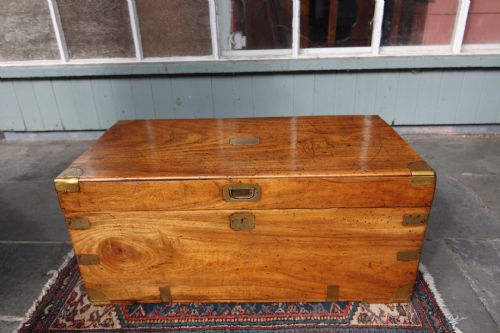
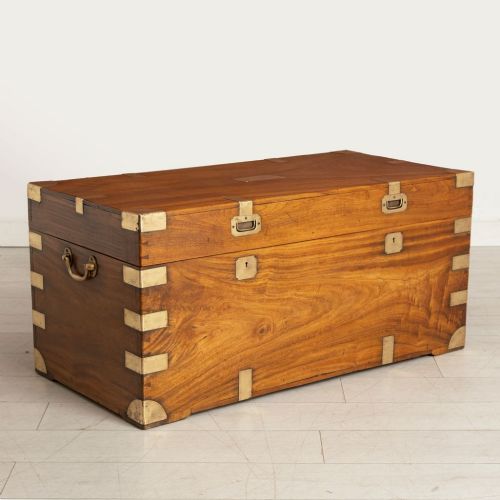
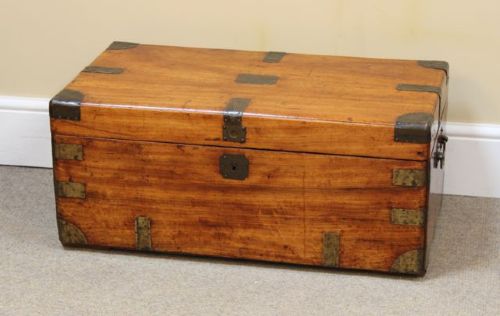
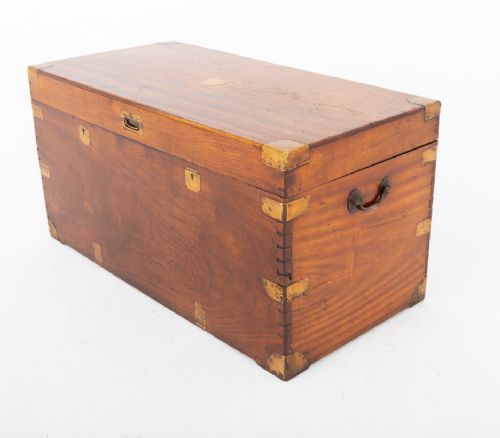
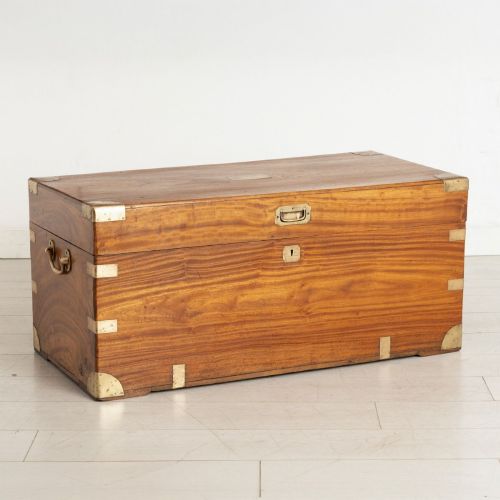
A vintage officers box brings robust mobility into a room, fashioned for travel during the nineteenth century using sturdy timbers and metal mounts.
Vintage Officers Box
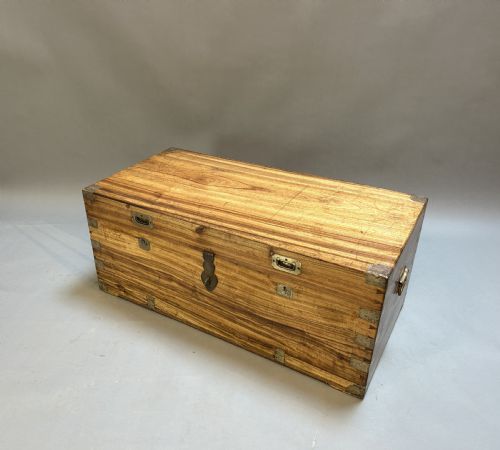
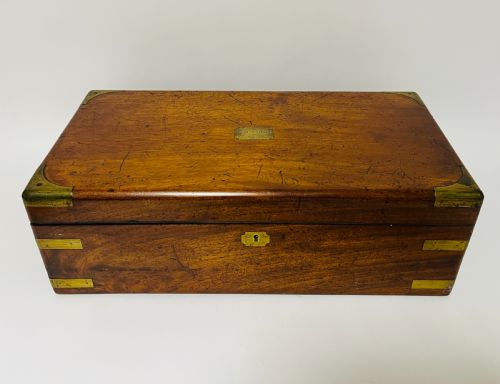
A vintage officers box serves as a portable container designed for transport during military service, encompassing items like campaign chests, writing slopes, hat boxes, and travel trunks. Buyers encounter numerous examples in camphor wood and teak, frequently featuring structural brass bindings made to endure rough journeys.
The selection ranges from large split chests intended for officers on campaign to smaller writing slopes and correspondence boxes fitted for field administration. Most pieces date from the nineteenth century, spanning Georgian, Victorian, and later military styles.
Trunks and chests dominate the forms, offering deep storage for blankets, uniforms, or personal effects alongside hinged writing boxes with fitted compartments. These objects carry the utilitarian marks of their original purpose while functioning as durable furniture in domestic spaces.
How they were made
Cabinetmakers utilised dense timbers such as camphor wood, teak, and mahogany to resist warping and tropical humidity during military deployment. These woods were joined with flush brass corners, strapwork, and recessed carrying handles designed to protect edges from impact during transit.
Linings of zinc or iron appear alongside iron and leather elements, while toleware tin forms the basis of painted hat and cap boxes. Chests were typically built in two stacked sections for easier loading onto pack animals or wagons.
The listings span the nineteenth and early twentieth centuries, recording campaign chests, writing slopes, and toleware hat boxes in teak, camphor wood, and mahogany.
What varies in quality
The precision of the brass work and the grade of the timber set finer examples apart from standard utilitarian issues. Boxes bearing maker marks or regiment inscriptions demonstrate documented provenance that elevates their standing.
Original interior fittings, such as secret drawers in writing slopes or intact glass decanter sets, indicate careful preservation compared to pieces that have undergone extensive replacement of hardware.
Drew & Sons·Allen of London
The Vintage Officers Box Glossary
- Campaign chest
- A sectional chest built in two or more stacking parts designed for military transport. These units often feature inset brass handles and corner brackets.
- Writing slope
- A portable slant-topped desk that opens to reveal a writing surface, inkwells, and storage compartments. Many examples fold flat for travel.
- Toleware
- Enamelled or lacquered metalware, typically tin, painted to resemble fine japanned finishes. It frequently appears on military hat and cap boxes.
- Camphor wood
- An aromatic hardwood valued for its insect-repellent properties and durability in damp climates. It forms the primary material for many travel trunks.
- Brass binding
- Metal reinforcement strips fitted flush along the edges and corners of campaign furniture to withstand heavy handling.
Vintage Officers Box: Frequently Asked Questions
How were officers boxes used?
These boxes served as portable storage and workspaces for military personnel on active service abroad or during domestic relocation. Officers packed uniforms, documents, and personal possessions inside robust trunks that could be rapidly loaded onto transport.
Smaller variants like writing slopes provided a stable surface for correspondence and record-keeping in field tents or temporary quarters.
How do I clean camphor wood?
Clean camphor wood gently using a soft, dry cloth to remove dust without disturbing the grain. Avoid harsh chemical polishes that can damage the natural finish and dull the timber.
Applying a modest amount of beeswax preserves the moisture in the wood and maintains its characteristic aromatic quality.
Can I use a campaign chest daily?
Campaign chests function well as bedside tables, coffee tables, or bedroom storage units in modern homes. Their sturdy construction and deep drawers handle everyday use comfortably.
Ensure placement avoids direct sunlight or strong heat sources to protect the polished wood surfaces and brass fittings.
How to date a campaign chest?
Examine the construction methods, materials, and hardware styles to determine the approximate period of manufacture. Mid-nineteenth-century examples frequently employ camphor wood with heavy flush brass binding and split-carcass designs.
Maker stamps, regimental inscriptions, or stamps from firms like Allen of London offer more precise chronological markers.