





Vintage Ocean Watercolours
These vintage ocean watercolours capture shifting coastal light and maritime movement across the nineteenth and twentieth centuries.
Vintage Ocean Watercolours
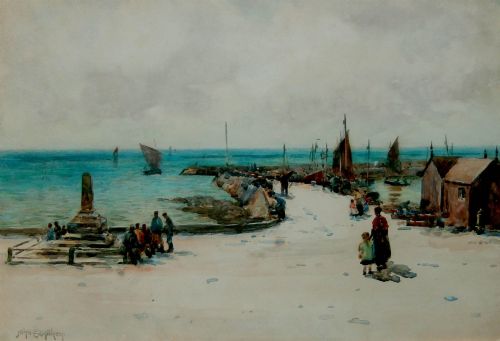
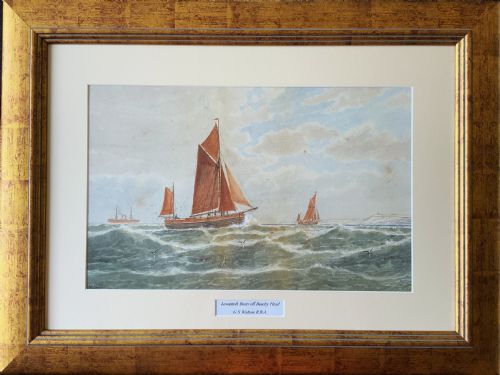
Vintage ocean watercolours depict coastal harbours, open seas and sailing vessels executed on paper. Buyers seeking vintage ocean watercolours encounter works spanning the Victorian, Edwardian and mid-century periods, capturing maritime subjects from British shores and international waters.
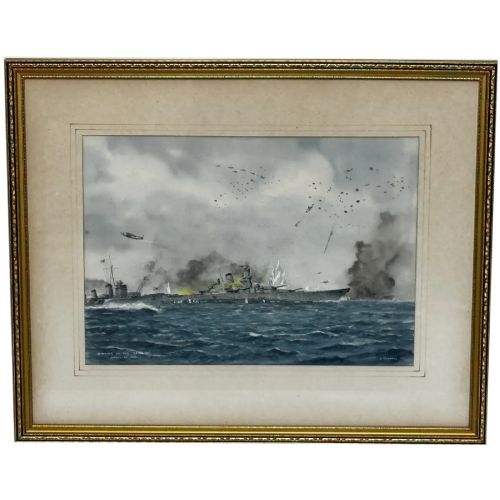
The selection ranges from detailed nineteenth-century depictions of tall-masted ships to early twentieth-century harbour scenes and later impressionistic coastal studies. These paintings document maritime history, fishing fleets and coastal communities through varied artistic interpretations.
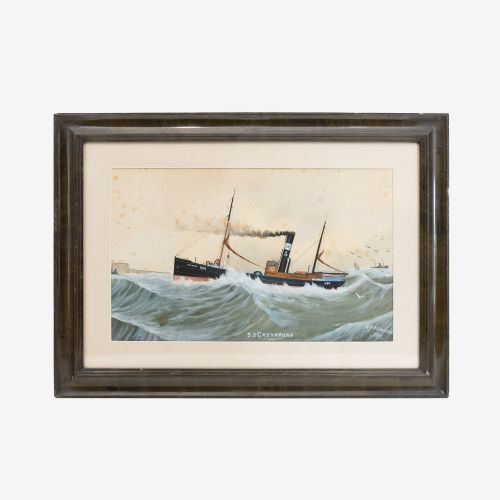
Framed watercolours and gouache works dominate the selection, often housed behind glass within wooden or ebonised frames. Works scale from intimate local shoreline views to larger documentary representations of naval vessels and commercial shipping.
Materials and technique
Artists executed these works primarily using watercolour pigment and gouache applied to paper surfaces. Gouache provided opacity for highlights on churning seas and vessel sails, whilst transparent washes rendered atmospheric skies and deep water.
Framing materials reflect the period of production, incorporating glass protection alongside wood and gilt wood mouldings. Ebonised frames appear on specific early twentieth-century pieces, matching the aesthetic presentation preferred for maritime subjects.
Vintage Ocean Watercolours Retail Price Guide 2026
Typical asking prices for vintage ocean watercolours among the pieces listed under this phrase on Sellingantiques today, from the lower quarter to the upper quarter. They describe what is for sale here now, not the wider market.
Listings span works from the Victorian era through the Edwardian period and into the mid-twentieth century, executed on paper using watercolour and gouache.
Judging quality
Quality rests upon the artist's handling of pigment and atmospheric perspective, distinguishing deft maritime observation from rigid illustration. Superior works capture the weight of water and movement of air with economy and precision.
Condition of the paper and stability of the pigment determine the longevity and visual integrity of each piece. Tonal depth and preservation of the original framing elements further distinguish exceptional examples from standard works.
John E Aitken·Eric Tufnell·William Banks Fortescue·George Stanfield Walters·Frank H Mason·Sir William Russell Flint·Frederick Stuart Richardson·Percy Brooke·John McDougal·Frank Wood·Joseph Newington Carter·William Boyce·S J Lamorna Birch·Samuel Edward Kelly·Montagu Barstow·Edmund Gouldsmith·Fred Stead·James Aitken·Thomas Bush Hardy
The Vintage Ocean Watercolours Glossary
- Gouache
- An opaque water-based medium containing pigment, water and a binding agent such as gum, often used alongside watercolour to add highlights.
- Maritime
- Pertaining to the sea, navigation, shipping and coastal environments, forming the primary subject matter of these paintings.
- Ebonised
- Wood finished to resemble ebony, frequently used for dark, polished period picture frames.
- Wash
- A thin, fluid layer of diluted watercolour pigment applied to paper to create smooth areas of tone or colour.
Vintage Ocean Watercolours: Frequently Asked Questions
How should I hang vintage watercolours?
Position these framed paintings away from direct sunlight to prevent the watercolour pigments from fading over time. Maintain stable room humidity to protect both the paper support and the wooden framing.
Ensure wall fixings securely support the weight of the glass and wooden frame combination. Professional framing with acid-free backing materials helps preserve the paper during long-term display.
What subjects appear in these paintings?
The works portray coastal harbours, fishing boats, lighthouses and deep-water sailing vessels in varied sea conditions. Scenes range from calm Cornish inlets to choppy northern seas and naval encounters.
Many pieces record specific working vessels, from four-masted barques to regional fishing luggers. Coastal landscapes without vessels also feature, focusing on beaches and rocky shorelines.
How do I identify the period of a watercolour?
Examine the framing style, artist signatures and subject matter alongside any visible dates inscribed on the paper. Victorian and Edwardian works often display distinct framing materials and detailed vessel rigging characteristic of the era.
Mid-century pieces shift towards looser brushwork and impressionistic handling of sea and sky. Comparing the artistic style to documented working dates of the named painter provides a reliable chronological guide.
Are these paintings original works?
The selection consists of original hand-painted watercolours and gouache works created directly by the artists. Each piece represents a unique execution rather than a mass-produced print or reproduction.
Signatures, brushstroke textures and paper characteristics confirm the hand-painted nature of the individual artworks. Original artist inscriptions and titles on the front or reverse further authenticate the pieces.