




Vintage Occasional Armchair
A vintage occasional armchair brings compact seating and distinct period character to a room, ranging from Edwardian inlaid mahogany to Art Deco curved forms.
Vintage Occasional Armchair
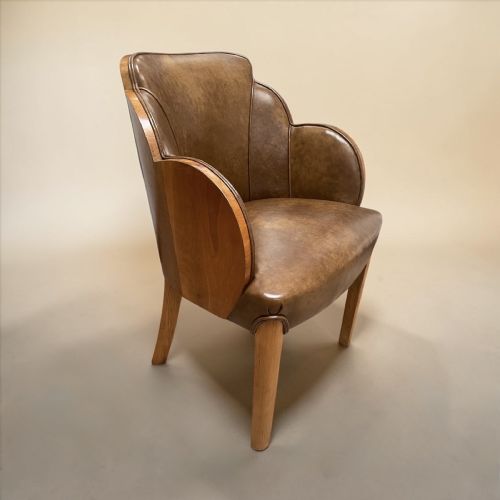
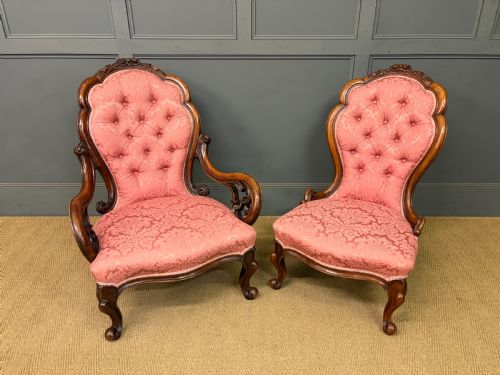
When you search for a vintage occasional armchair, you encounter smaller scale seating designed for bedrooms, salons, and libraries rather than heavy parlour use. The selection spans the nineteenth and twentieth centuries, encompassing Victorian walnut nursing chairs, Edwardian inlaid mahogany elbow chairs, and distinct Art Deco lounge pieces.
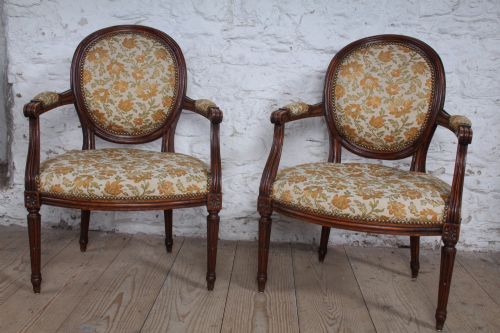
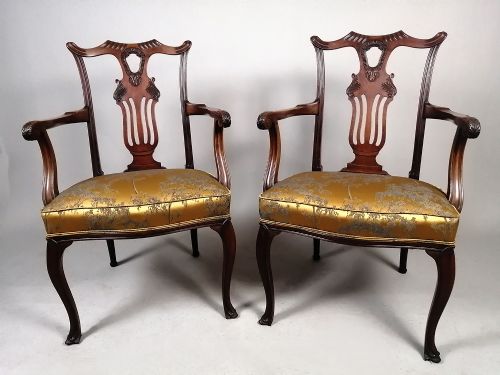
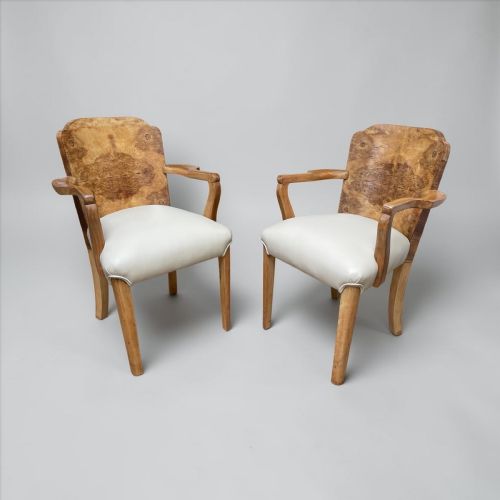
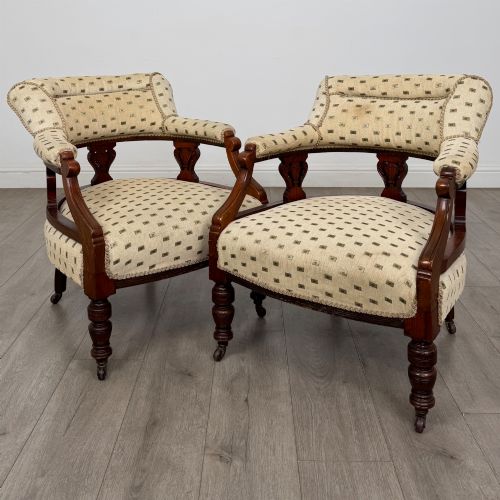
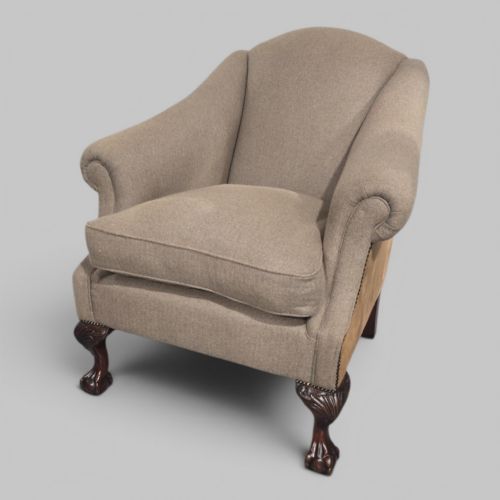
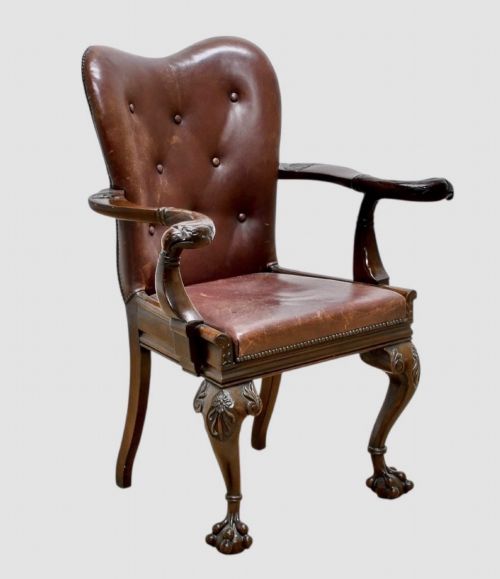
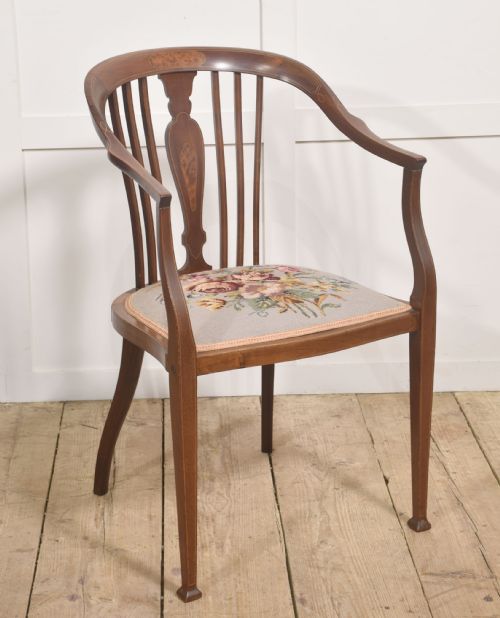
The version you are most likely to meet on this page is an Edwardian or 19th-century mahogany model, often featuring upholstered seating, delicate woodwork, and a supportive tub or high back structure. Alongside these, French painted frames, Arts and Crafts fruitwood designs, and occasional pairs appear frequently across the listings.
These seats serve to punctuate empty corners or supplement main seating groups without dominating a floor plan. Their varied forms include bridge chairs, library armchairs, salon seats, and rocking chairs, each retaining the craftsmanship of periods from the 1860s through to the 1930s.
Materials and construction methods
Makers built these frames predominantly from hardwoods such as mahogany, walnut, oak, fruitwood, and satinwood, frequently enhancing surfaces with string inlay or contrasting veneers. Carved details, turned components, and wrought iron elements appear across different regional workshops and stylistic movements.
Upholstery techniques involved traditional stuffing and spring methods, finished with fabrics ranging from patterned tapestries and floral prints to smooth leather and velvet. Button back tufting, scroll arms, and high back structures required rigorous tension and precision from the upholsterer.
Some Edwardian rocking chairs allowed Victorian readers to gently sway while deep in thought.
Distinctions in quality
The standard of timber selection and joinery marks the difference between basic utility seating and finer workshop output. Robust frame construction using solid hardwoods and tight joints ensures long-term stability, whereas lesser pieces rely on simpler fixings or heavily worn secondary timbers.
Subtlety of carved ornamentation and precision of satinwood string inlay separate standard production from superior pieces. Furthermore, the integrity of the original or period-appropriate upholstery work, including sprung support and hand-stitched edging, dictates the overall execution.
Hille·Harry and Lou Epstein·Anton Rosen
The Vintage Occasional Armchair Glossary
- Tub chair
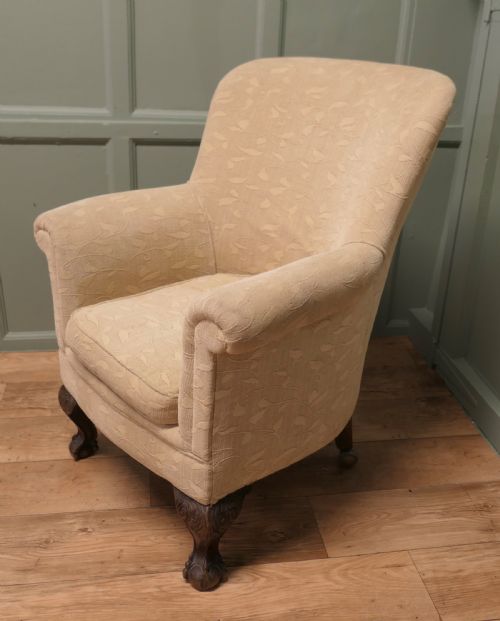
- An armchair featuring a continuous curved back and arms that form a single enclosing shape. This design provides compact comfort and appeared frequently in Victorian and Edwardian sitting rooms.
- Nursing chair
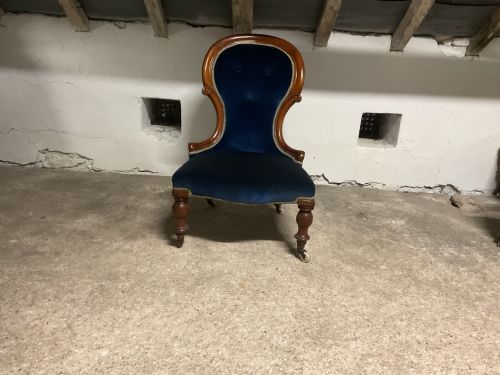
- A low-seated upholstered armchair traditionally used for feeding infants. The reduced height allowed the sitter to rest comfortably close to a nursery hearth.
- Elbow chair
- A wooden seating piece with integrated armrests designed for occasional use at a desk or in a bedroom. These often display stylistic traits of the Edwardian and Arts and Crafts periods.
- Fauteuil
- An open-framed French armchair with upholstered back and seat and exposed wooden armrests. Originating in earlier centuries, these pieces continued to be interpreted in later revival styles.
- String inlay
- A decorative technique involving narrow lines of contrasting light wood, such as satinwood, inserted into a darker primary timber like mahogany. It defines edges on Edwardian cabinetwork and chair rails.
Vintage Occasional Armchair: Frequently Asked Questions
What distinguishes an occasional armchair from a standard lounge chair?
An occasional armchair is generally smaller in scale, lighter in construction, and designed to be moved easily around a home for supplementary seating. These chairs served specific domestic functions in bedrooms, halls, and dressing rooms rather than forming part of a main suite.
They prioritise decorative form and compact footprints, appearing in styles ranging from Victorian nursing seats to Art Deco club designs.
How do I identify an Edwardian mahogany armchair?
Edwardian mahogany armchairs typically date from around 1900 to 1910, displaying lighter proportions than their heavy Victorian predecessors. Look for refined tapered legs, delicate string inlay, and subtle crossbanding in satinwood.
They often incorporate open lattice backs, tub contours, or upholstered elbow rests that reflect the neoclassical revivals popular during the Edwardian era.
Were these chairs originally upholstered in velvet or leather?
Victorian and Edwardian seating utilised a diverse range of textiles depending on the intended room and social status of the household. Library and hall armchairs frequently employed durable leather or heavy tapestry, while bedroom and salon chairs used velvet, brocade, or floral printed fabrics.
Many surviving pieces have been re-upholstered over time to suit contemporary interiors while retaining their historic frames.
How should I integrate a vintage armchair into a modern room?
A vintage armchair works effectively as a statement piece in a contemporary interior, providing textural contrast against neutral walls and modern sofas. Their compact dimensions allow them to fit into awkward corners, reading nooks, or beside a fireplace without overwhelming the floor space.
Pairing a walnut or mahogany frame with plain or patterned upholstery helps bridge different design eras successfully.