




Vintage Oak Tripod Table
A vintage oak tripod table brings sturdy timber and practical three-legged charm to any corner, offering a compact surface built to last.
Vintage Oak Tripod Table
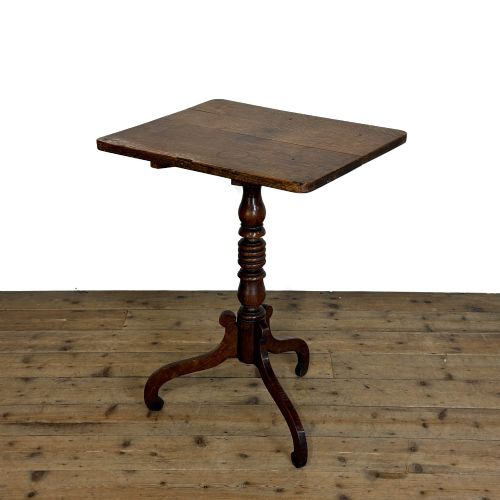
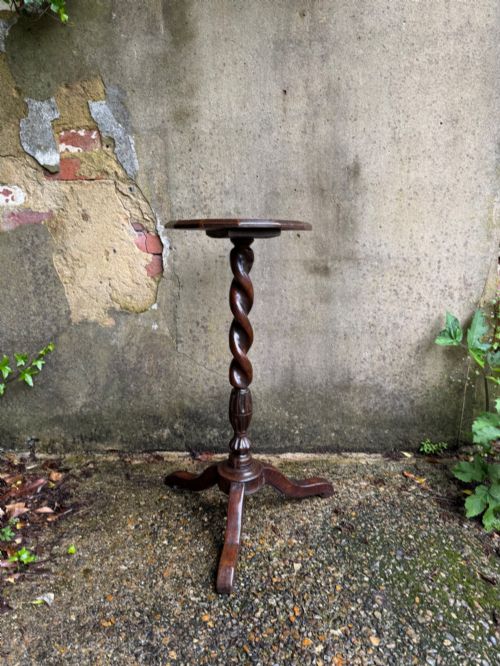
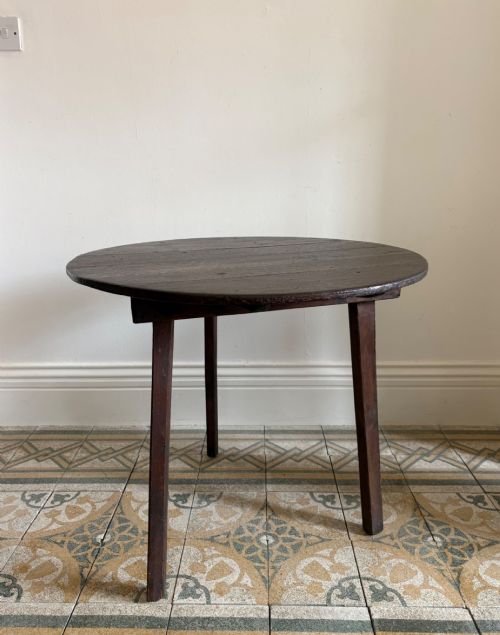
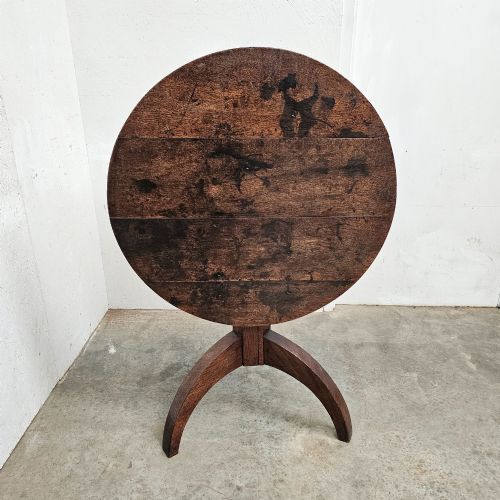
A vintage oak tripod table is a compact, three-legged piece designed for versatile placement as a side table, lamp stand, or tilt-top pedestal surface. You will frequently encounter rustic cricket tables and occasional tables spanning the Georgian, Victorian, and Edwardian periods.
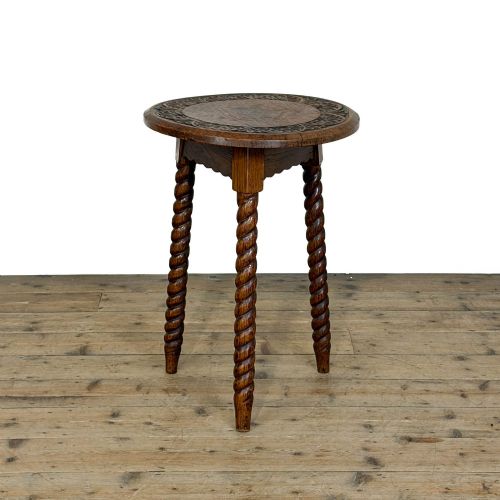
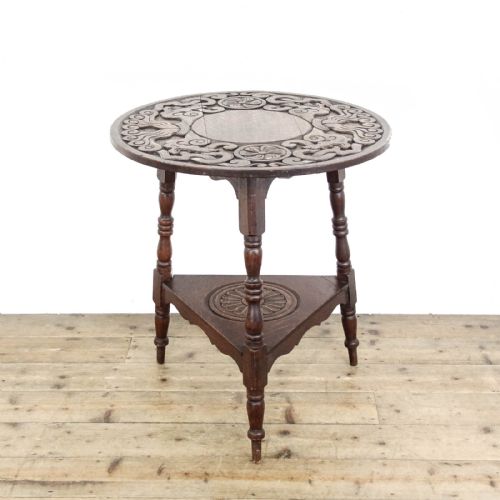
The selection here encompasses diverse forms, from carved Jacobean Revival examples to simpler utilitarian boards and plant stands. These pieces reflect practical domestic utility, often featuring circular tops supported by three splayed legs for stability on uneven floors.
Origins range across British and continental workshops, incorporating styles such as Arts and Crafts, rustic vernacular, and French country. Each specimen displays the utilitarian heritage of timber furniture adapted for daily use over centuries.
Gradations of Quality
Refinement in hand-carved detailing and the mechanical precision of tilt-top or adjustable mechanisms further distinguish the construction. Simpler vernacular pieces rely on honest utility, whereas designed styles showcase deliberate aesthetic ambition.
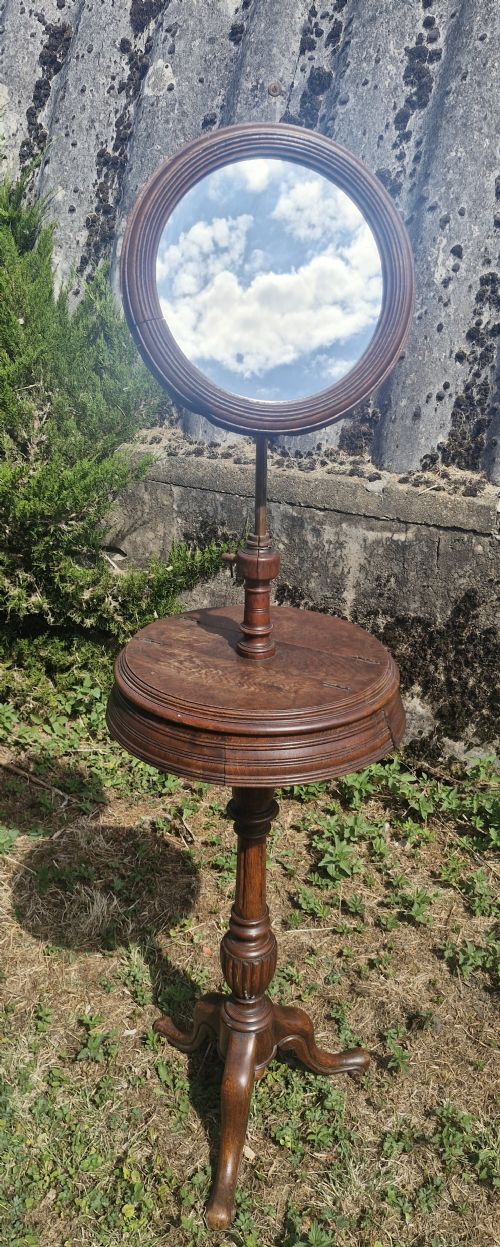
Several items double as sculptor stands and game blocks, proving sturdy timber found purpose far beyond the dining room.
The Vintage Oak Tripod Table Glossary
- Cricket table
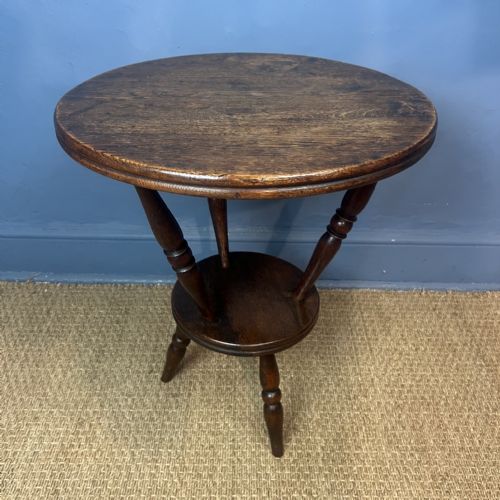
- A small, three-legged circular table traditionally featuring a triangular base frame beneath a wooden top. This form offers inherent stability on flagstone floors.
- Tilt-top table
- A pedestal table featuring a hinge mechanism allowing the top to pivot vertically when not in use. This design saved valuable floor space in smaller rooms.
- Torchere
- A tall, slender stand designed to elevate a lamp, candle, or decorative plant. These pieces emphasise vertical presence over surface area.
- Bobbin turned
- A method of woodturning that produces a series of rounded, spool-like shapes along the length of a table leg or stretcher. It adds decorative texture through repetitive profiles.
- Burr oak
- A specialised timber growth yielding highly figured, swirling grain patterns prized for decorative table tops and luxury furniture. It offers distinct visual depth compared to straight-grained oak.
Vintage Oak Tripod Table: Frequently Asked Questions
What is a cricket table?
A cricket table is a traditional three-legged round table designed with a sturdy triangular frame underneath. The three-leg format prevents wobbling on uneven historical floors.
These pieces served various domestic purposes near hearths or in sitting rooms. Their simple geometry remains popular for compact modern spaces.
How do I use a tripod table?
Tripod tables fit easily beside armchairs as lamp stands, or function as display surfaces for plants and decorative objects. Their modest footprint makes them adaptable for tight corners.
Tilt-top variants can also stand flat against a wall when not actively holding items. This flexibility matches original historical usage in domestic interiors.
How do I date an oak table?
Dating relies on examining construction marks, timber preparation methods, and stylistic cues such as turning patterns or carved motifs. Georgian and Victorian examples display distinct joinery traits compared to Edwardian revivals.
Nail types, saw marks, and overall wear provide further evidence of period manufacture. Comparing the form against known stylistic eras clarifies the age.
Are these tables sturdy?
The three-legged design naturally distributes weight evenly, making tripod tables remarkably stable on solid ground. Solid oak and elm construction adds substantial heft to the frames.
Properly maintained joints ensure these antique items remain fully functional for daily use. Regular checking of the leg fastenings preserves their structural integrity.