


Vintage Oak Timepiece
A vintage oak timepiece brings the honest grain and reliable mechanism of past decades right to your mantelpiece.
Vintage Oak Timepiece
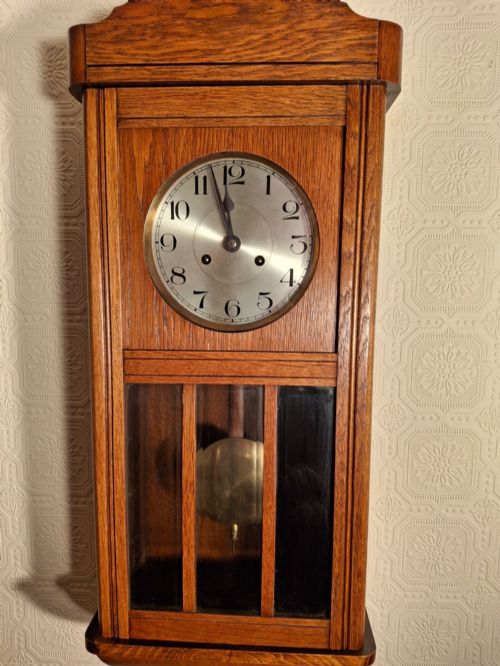
A vintage oak timepiece is a functional clock housed in timber, spanning wall-mounted dials, bracket clocks, and mantel pieces. When you search for a vintage oak timepiece, you encounter pieces originating from the Victorian era, Edwardian period, and through the 1920s, 1930s, and 1940s.
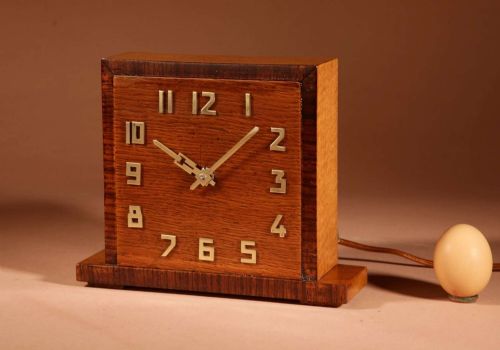
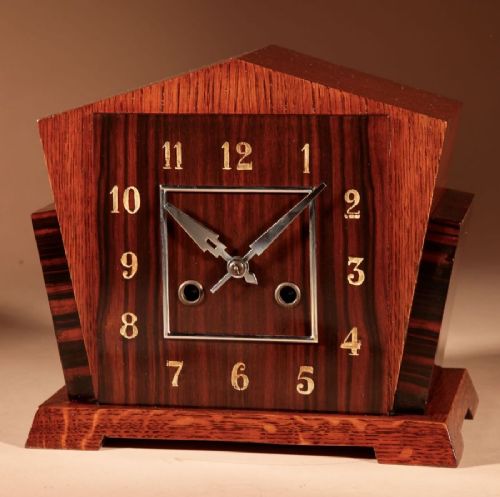
The selection ranges from utilitarian railway and military instruments to decorative Arts and Crafts, Art Nouveau, and Amsterdam School Art Deco designs. Mantel clocks and fusee wall clocks dominate the forms you meet.
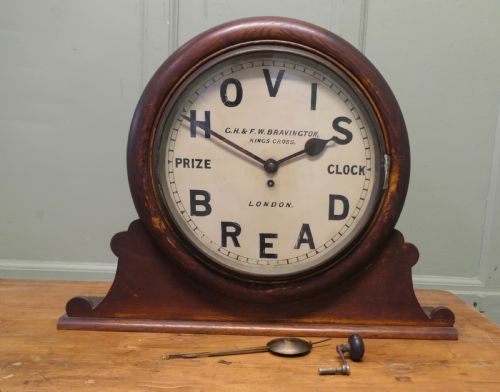
Makers and retailers range from local watchmakers like Jas Whitelaw of Edinburgh to major London names such as Harrods and Payne & Co.
How they were made
The construction relies heavily on solid oak and pollard oak cases, occasionally contrasted with rosewood, macassar ebony, or mahogany inlay. Brass bezels, glass dial covers, and metal fittings secure the internal movements.
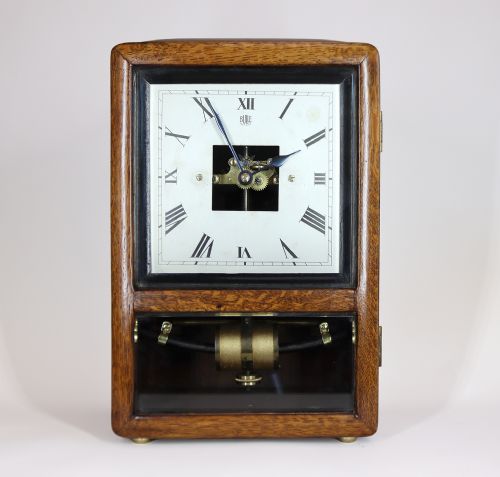
Dial faces feature painted enamel with Arabic or Roman numerals, driven by fusee movements, electrical systems such as Bulle, or eight-day striking mechanisms.
Keep an eye out for wartime novelty mantel clocks and Hovis prize pieces hiding among the railway and military timepieces.
What varies in quality
Quality separates mass-produced units from pieces bearing refined hand-carving, geometric inlay, or specialised movements like double fusees. The precision of the case carpentry and the integrity of the original dial face define the standard.
G.H.& F.W. Bravington London·Jas Whitelaw of Edinburgh·Harrods·Payne & Co of London
The Vintage Oak Timepiece Glossary
- Fusee
- A conical pulley used in older clock movements to maintain an even pull as the mainspring unwinds. This mechanism ensures more accurate timekeeping throughout the power reserve.
- Bracket clock
- A portable clock designed to sit on a bracket or furniture surface. They often feature robust carrying handles and striking mechanisms.
- Drop dial clock
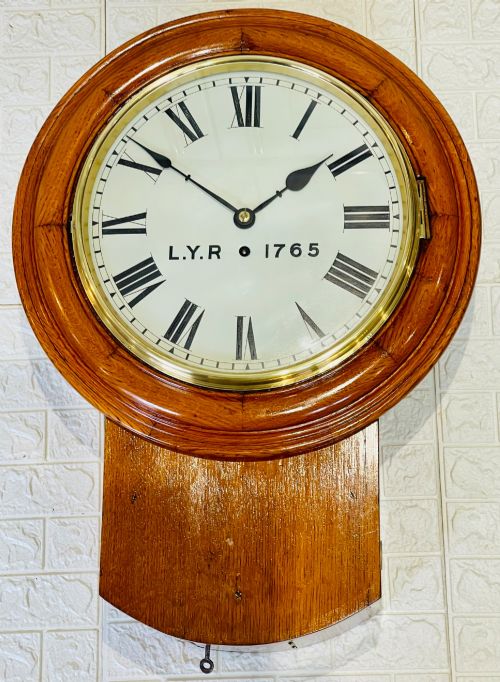
- A wall clock featuring a circular dial atop a short wooden trunk or drop case. These were standard for offices, railways, and public buildings.
- Bulle clock
- An early electrically driven clock utilising an electromagnetic pendulum. They appeared during the early twentieth century.
- Amsterdam School
- An architectural and design style originating in the Netherlands during the early twentieth century. It is characterised by expressive, organic forms and rich timber combinations.
Vintage Oak Timepiece: Frequently Asked Questions
How do I wind a fusee clock?
Use the appropriate key inserted into the dial aperture to wind the movement clockwise until resistance is felt. Take care not to overwind older mechanisms.
Ensure you support the pendulum or secure the movement if moving the clock after winding.
Where should I place a wall clock?
Mount your wall clock on a sturdy internal wall away from damp areas and direct sunlight. Secure it firmly to a wall plug or timber stud to bear the weight of the oak case.
Position it at eye level so the dial is easy to read and adjust.
How do I identify an Art Deco mantel clock?
Look for geometric shapes, stepped wooden cases, and contrasting veneers like macassar ebony paired with oak. The numerals often adopt stylised typography typical of the period.
These designs frequently date from the 1920s and 1930s.
What is a railway clock?
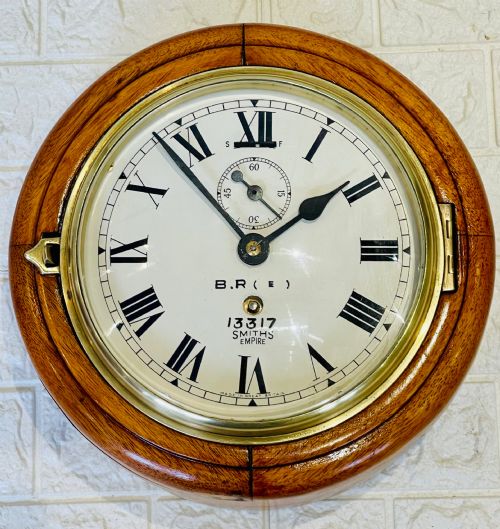
Railway clocks are robust wall timepieces historically utilised in stations and offices for precise scheduling. They usually feature clear, legible enamel dials and sturdy oak surrounds.
Many bear inscriptions or markings from specific railway companies.