

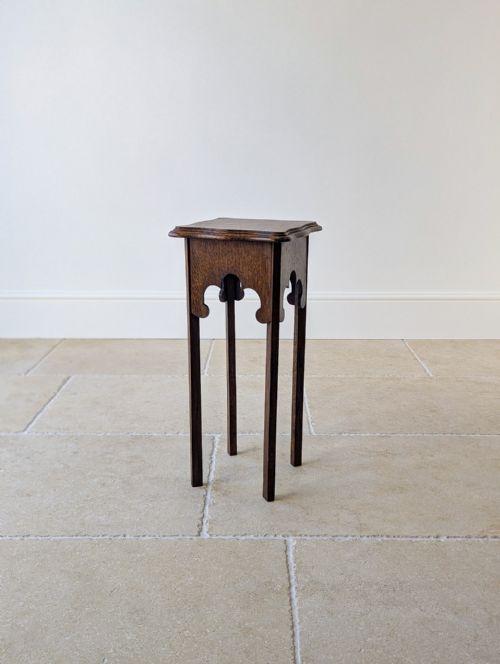
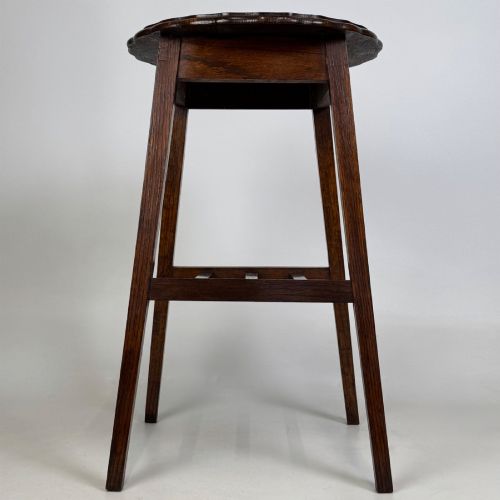
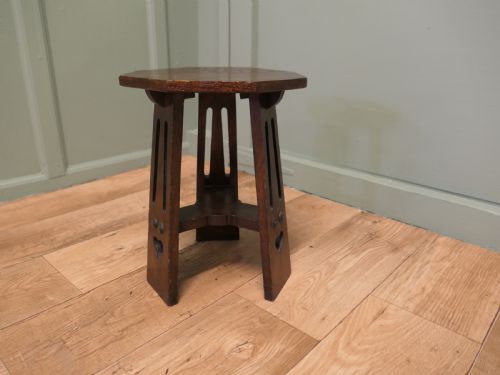
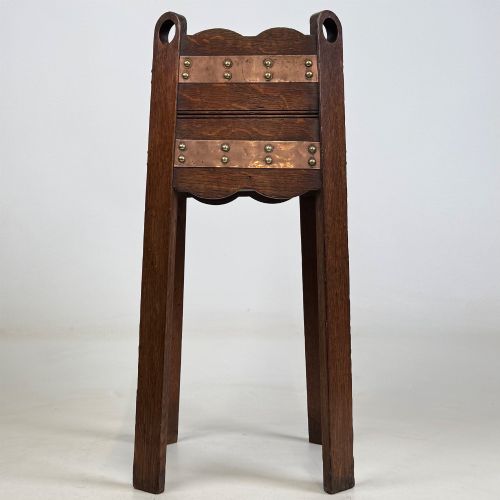




Vintage Oak Jardiniere Stand
A vintage oak jardiniere stand brings architectural timber and botanical display together in a single functional piece.
Vintage Oak Jardiniere Stand
When you search for a vintage oak jardiniere stand, you encounter elevated plant holders designed to display indoor foliage within nineteenth-century and early twentieth-century interiors. These objects appear in forms ranging from tall plant stands and side tables to coopered barrel planters mounted on legs.
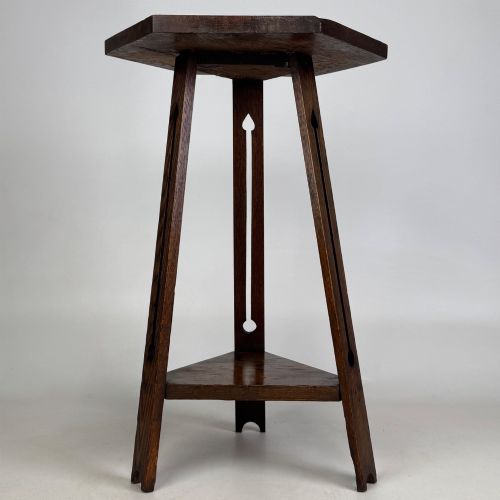
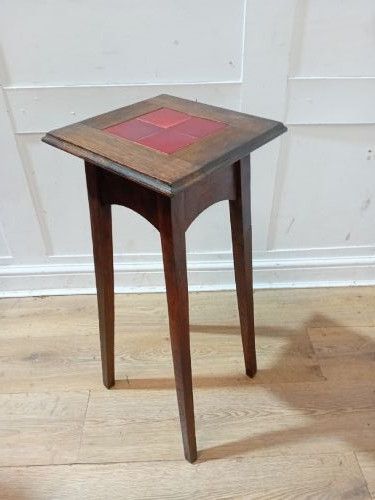
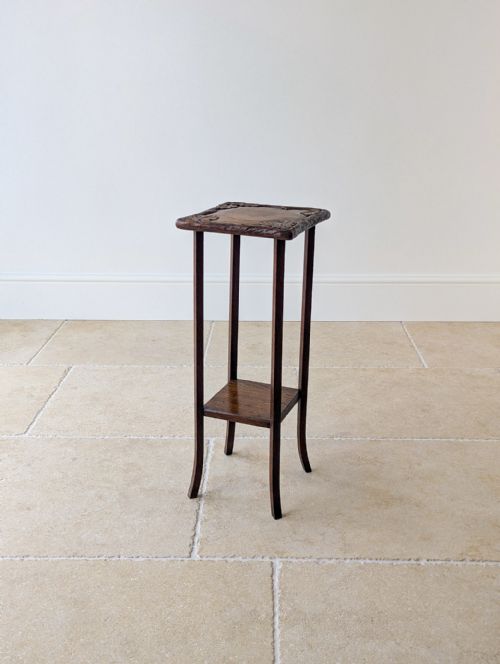
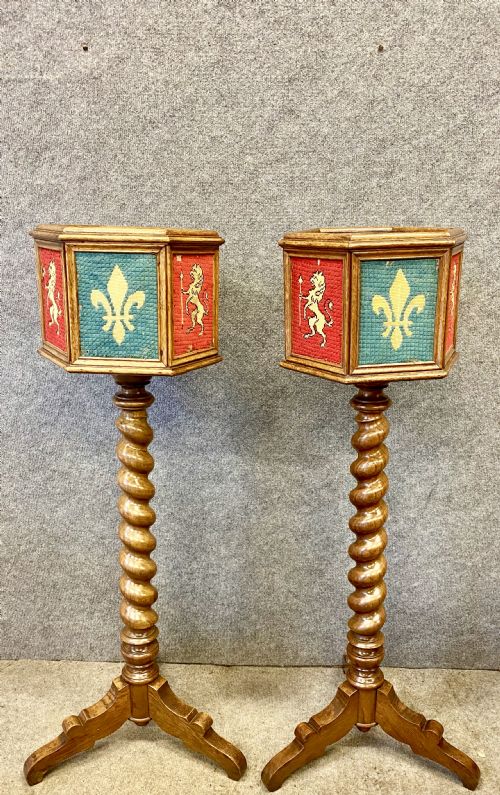
The pieces on this page span the Edwardian period, the nineteenth century, and the nineteen-twenties, incorporating regional British and French designs. You will frequently find Arts and Crafts interpretations alongside Jacobean Revival and Gothic Revival pieces.
Makers utilised these stands in reception rooms and parlours to hold heavy potted palms and flowering plants. They function equally well today as display pedestals or side tables in domestic settings.
Materials and Construction
The primary construction relies on solid oak, selected for its durable grain and finished with coopered stave construction or turned supports. Coopered examples utilise curved staves held together by metal bands, creating sturdy cylindrical bodies reminiscent of traditional barrels.
Metal components play a structural and decorative role, featuring brass and copper bindings, zinc linings, and metal liners to protect the wood from moisture. Artisans also turned timber on a lathe to produce barley twist legs and multi-tiered platforms.
Vintage Oak Jardiniere Stand Retail Price Guide 2026
Typical asking prices for vintage oak jardiniere stand among the pieces listed under this phrase on Sellingantiques today, from the lower quarter to the upper quarter. They describe what is for sale here now, not the wider market.
Listings feature oak combined with brass, copper, zinc, and needlepoint tapestry across multiple periods.
Assessing Quality and Craftsmanship
Quality rests in the integrity of the timber selection and the precision of the joinery, particularly in coopered barrel vessels where tight stave alignment matters. Hand-beaten metal bands and riveted brass work indicate superior workshop production compared to plain iron fittings.
The refinement of the turned woodwork dictates the tier of the piece, with crisp barley twist carving or complex octagonal tabletops separating bespoke examples from simpler utilitarian stands.
Lister and Co
The Vintage Oak Jardiniere Stand Glossary
- Coopered
- Constructed from curved wooden staves joined vertically and bound by metal hoops, similar to barrel-making.
- Jardiniere
- An ornamental pot or stand for holding plants or flowers indoors.
- Barley Twist
- A form of furniture leg or support carved in a helical, rope-like spiral.
- Arts and Crafts
- A design movement prioritising traditional craftsmanship, visible construction, and simple forms.
- Edwardian
- Pertaining to the decorative arts of the reign of King Edward VII, noted for lighter forms.
Vintage Oak Jardiniere Stand: Frequently Asked Questions
What is a jardiniere stand used for?
These stands were originally designed to elevate heavy potted plants and indoor palms off domestic carpets and floorboards.
Today, they serve the same botanical purpose or function simply as decorative display columns and compact side tables.
How do I care for oak and metal planters?
Protect the timber interior by using sealed plastic or ceramic liners inside the metal insert rather than planting directly into the vessel.
Treat the oak periodically with suitable wax to nourish the grain and prevent the wood from drying out.
Are these stands suitable for modern rooms?
The compact footprint of a plant stand makes it easy to integrate into corners, hallways, and beside seating.
Their warm oak tones and metal accents complement both traditional interiors and minimalist contemporary spaces.
How do I distinguish Arts and Crafts stands?
Arts and Crafts pieces emphasise honest construction, visible grain, and hand-worked metal fittings like exposed brass bands and rivets.
They avoid excessive surface ornamentation in favour of solid proportions and architectural simplicity.
What indicates an Edwardian date?
Edwardian examples often feature lighter timbers, two-tier shelving configurations, and refined turning on the legs.
They frequently combine practical storage surfaces with dedicated plant-holding wells.