



Vintage Oak Hall Clock
A vintage oak hall clock brings a steady, rhythmic presence to an interior, marking time with solid joinery and sonorous chimes.
Vintage Oak Hall Clock
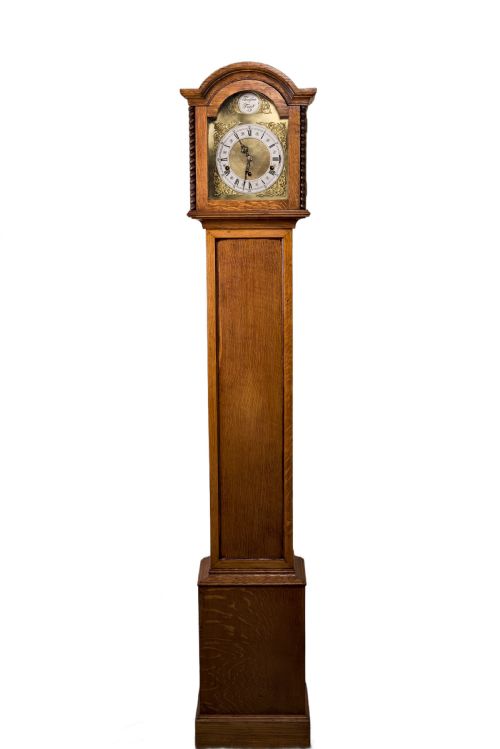
A vintage oak hall clock encompasses tall timepieces designed for domestic spaces, ranging from imposing floor-standing models to more modest formats. These objects combine architectural casework with precision movement, functioning as both practical timekeepers and focal points in a room.
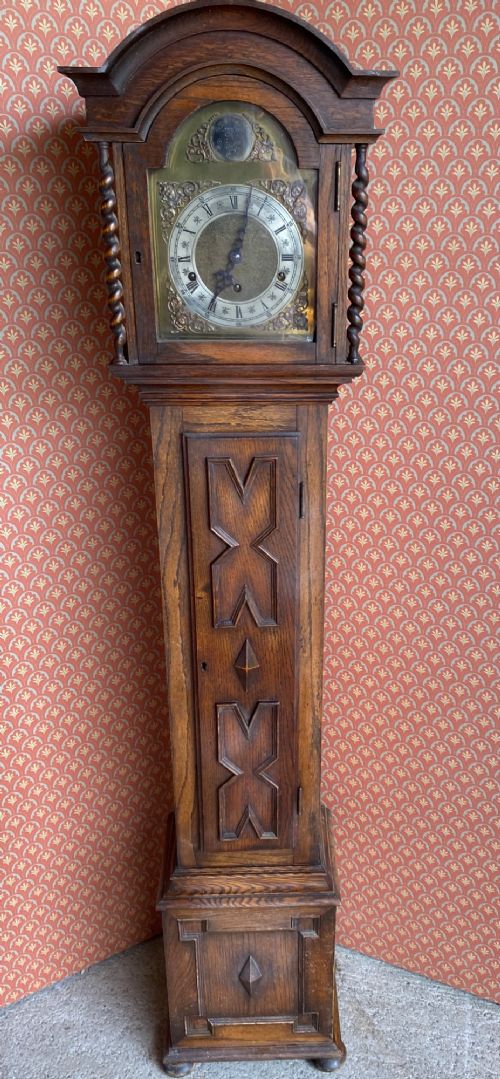
The selections span distinct periods, drawing heavily on Georgian traditions alongside Edwardian and 1920s interpretations. Buyers frequently encounter smaller formats such as grandmother clocks, which offer the presence of a traditional longcase within reduced proportions suitable for modern ceiling heights.
Makers and regional craftsmen utilised durable hardwoods to house complex mechanisms featuring brass dials and painted iron faces. Styles vary from restrained early Georgian constructions to decorative Revivals incorporating Jacobean or Gothic motifs.
Construction and materials
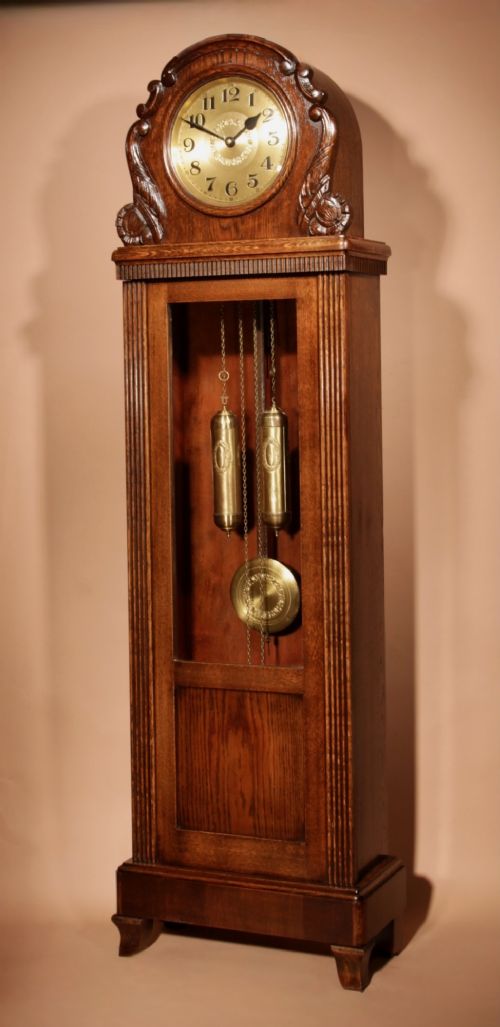
Casework relies fundamentally on solid oak, occasionally paired with mahogany accents, joined using traditional cabinetmaking techniques to withstand the weight of heavy movements and pendulums. Glass panels protect the dial while allowing visibility of the swinging pendulum within the trunk door.
Interior mechanics incorporate brass wheels, arbors, and plates driven by weights or spring-driven fusee movements. Dials feature engraved brass chapter rings or painted iron surfaces, frequently complemented by tubular bells or gongs in chiming iterations.
Vintage Oak Hall Clock Retail Price Guide 2026
Typical asking prices for vintage oak hall clock among the pieces listed under this phrase on Sellingantiques today, from the lower quarter to the upper quarter. They describe what is for sale here now, not the wider market.
Some small musical models pack three distinct tunes into a compact case, proving that great symphonies occasionally come in pint-sized wooden packages.
Determinants of quality
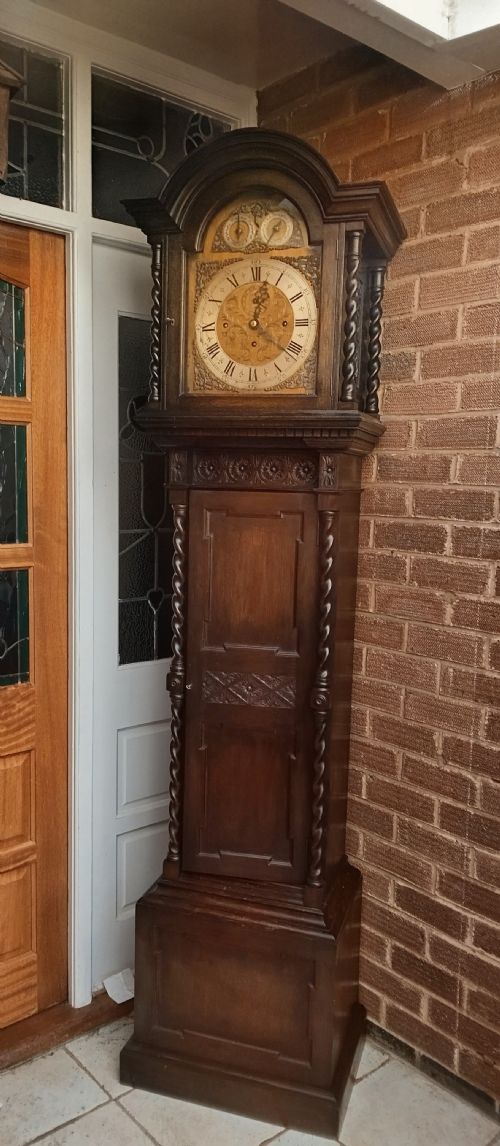
Quality reveals itself in the crispness of timber carving, the proportional harmony of the hood, trunk, and base, and the structural integrity of the oak boards. Superior examples exhibit thoughtful grain matching and robust internal framing that supports the mechanical load without distortion.
On the mechanical side, complexity and precision separate standard movements from exceptional ones. Clocks featuring multiple chime tunes, triple weights, or specialised musical cylinders demonstrate higher levels of horological ambition and fine adjustment.
Richard Northen·Herbert of Haversham·Thomas Baker of Malling
The Vintage Oak Hall Clock Glossary
- Longcase clock
- A tall, floor-standing pendulum clock housed in a protective wooden case comprising a hood, trunk, and base. These pieces are often referred to colloquially as grandfather clocks.
- Grandmother clock
- A smaller, more slender variant of the longcase clock, typically standing under six feet tall. This format gained popularity during the early twentieth century.
- Fusee
- A conical pulley used in spring-driven clocks to equalize the diminishing power of the mainspring as it unwinds. It ensures consistent force is delivered to the gear train.
- Dial
- The visible face of the clock where hours and minutes are displayed, frequently constructed from brass or painted iron. It often bears the signature of the maker.
- Quarter chiming
- A mechanical capability allowing the clock to strike or play tunes on the quarter hours. Such movements often utilise multiple gongs or bells.
Vintage Oak Hall Clock: Frequently Asked Questions
How do I wind my hall clock?
Winding involves using a specialised key to draw up the weights or tension the spring barrels according to the movement type. Care should be taken not to overwind the mechanism.
Consult the specific requirements of your eight-day or thirty-hour movement to establish a regular maintenance schedule that keeps the clock running accurately.
Where should I place a longcase clock?
Position the clock against a solid interior wall away from direct sunlight, heating vents, and damp environments. Stable placement prevents temperature fluctuations from affecting the wood and movement.
Ensure the floor surface is entirely level so the pendulum swings with an even beat, which is essential for proper timekeeping.
What is the difference between a grandfather and grandmother clock?
The primary distinction lies in scale, with grandmother clocks offering a significantly reduced height and narrower footprint compared to their larger counterparts. This makes them adaptable to smaller rooms.
Despite the size difference, both share similar architectural components including a hood, trunk, and base constructed from timbers like oak.
How do I date an oak hall clock?
Dating relies on examining stylistic clues in the oak cabinetry, such as Georgian proportions or Edwardian revival motifs, alongside the construction of the dial and movement. Engraved signatures on brass faces often point to specific periods.
Changes in dial materials, from brass to painted iron, also offer reliable chronological markers for narrowing down the decade of production.