


Vintage Oak Draw Leaf Table
A vintage oak draw leaf table gives you a sturdy dining surface that extends smoothly when guests arrive.
Vintage Oak Draw Leaf Table
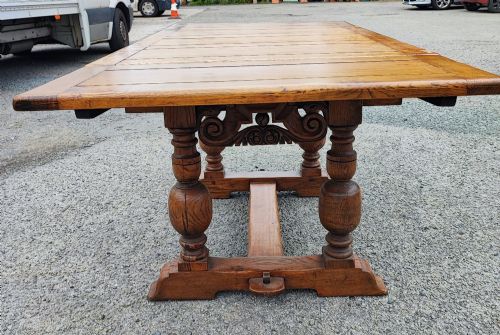
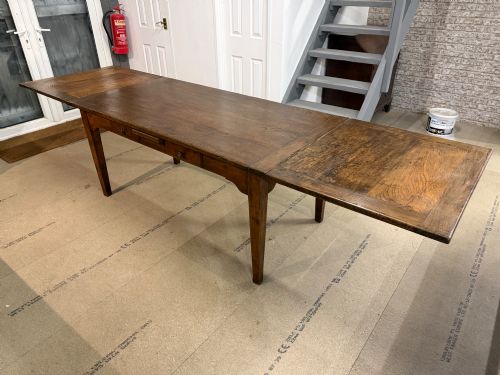
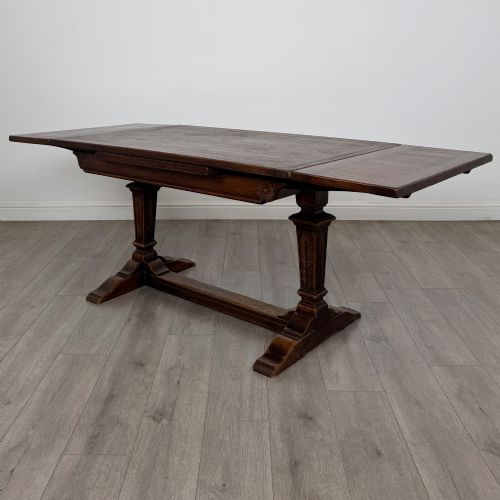
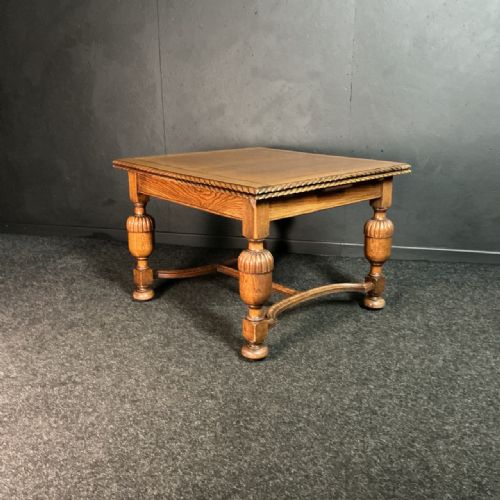
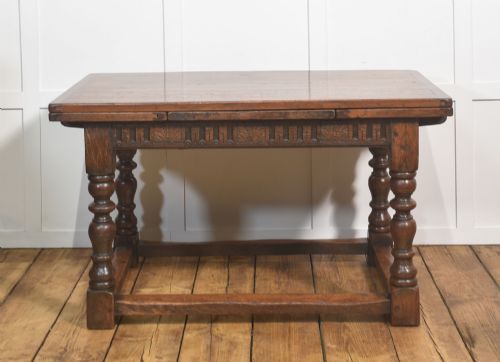
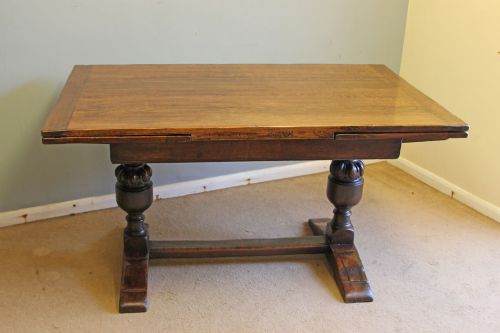
The selection here encompasses various regional interpretations and stylistic revivals. Pieces range from Jacobean and Elizabethan revival designs to French provincial styles, English country house aesthetics, and arts and crafts interpretations. Many present as refectory or farmhouse kitchen tables built for heavy daily use.
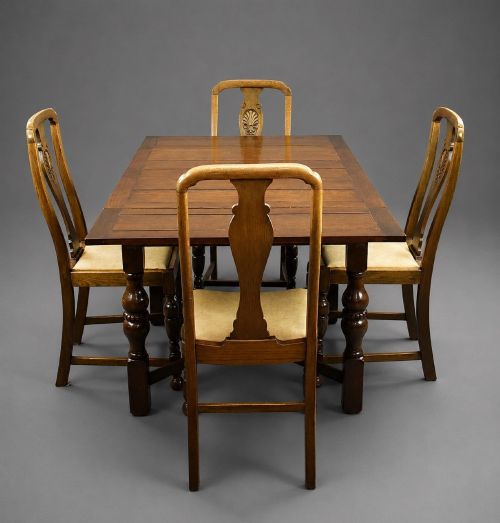
Makers and retail houses such as Heal's and Maple and Co appear among the inventory, alongside unbranded vernacular pieces. Dining sets including matching chairs also feature in the listings alongside standalone tables. The overriding characteristic remains the functional extension mechanism paired with solid timber construction.
Materials and construction
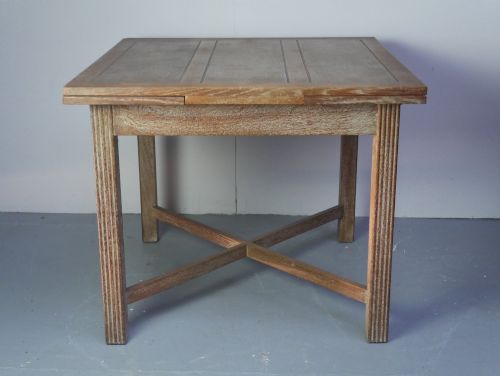
Oak forms the primary material across the inventory, appearing as solid oak, limed oak, or incorporated into parquet and parquetry surfaces. Cabinetmakers utilised the natural strength of hardwood to support the sliding leaf mechanism beneath the main top. Some examples include upholstery on associated seating.
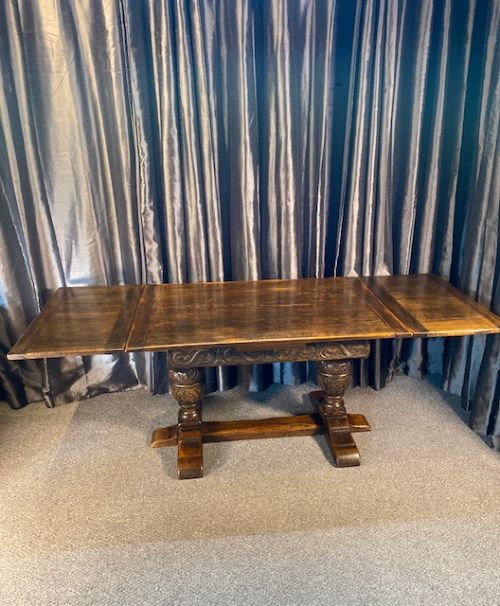
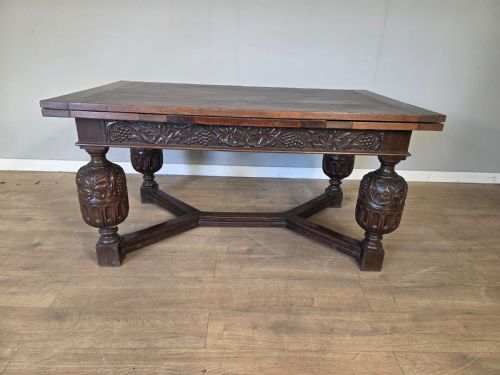
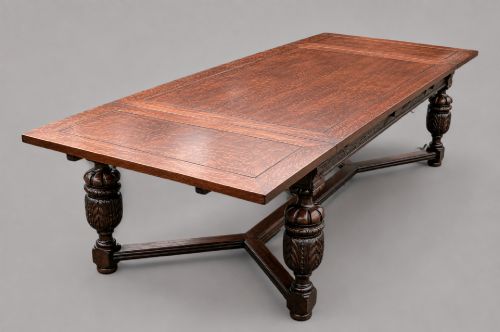
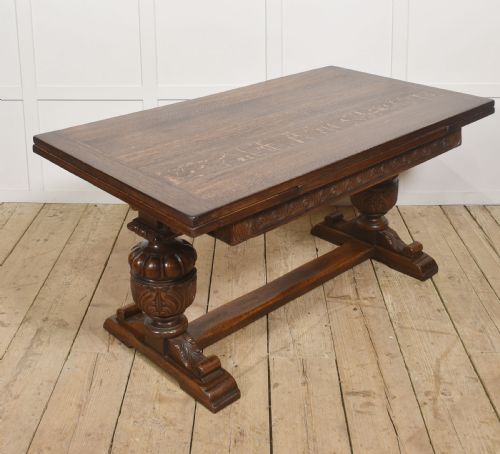
Carving and parquetry define the decorative approach on many pieces, reflecting revivalist tastes from the Elizabethan and Jacobean styles. Joinery relies on traditional framing methods that allow the timber to expand and contract while supporting the pull-out extensions.
The listings show oak as the predominant material, spanning the Edwardian period through the nineteen-thirties with revivalist styles.
Distinctions in quality
The refinement of the draw leaf mechanism dictates much of the functional standard. Superior tables allow the hidden leaves to slide out smoothly and lock level with the main surface without sticking. Timber selection also separates standard production from finer cabinet work, particularly where detailed carving or parquet top patterns are involved.
Attribution to known makers such as Maple and Co or Heal's introduces a higher tier of design pedigree and workshop precision. The integrity of the structural joinery in the legs and stretcher base ensures the table remains rigid when fully extended.
Heals·Maple and Co
The Vintage Oak Draw Leaf Table Glossary
- Draw leaf table
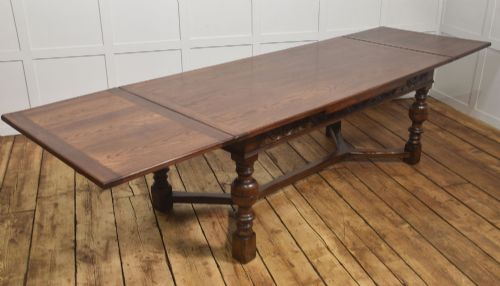
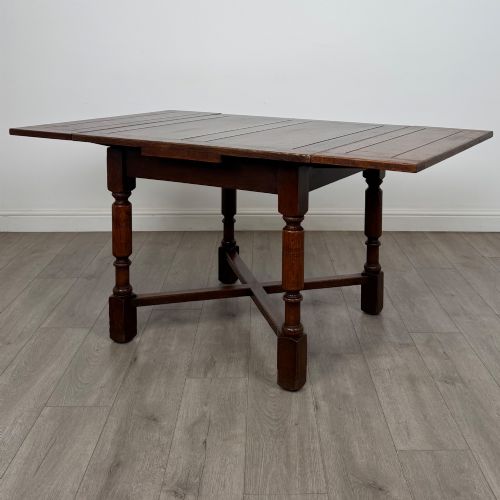
- A dining table with two sliding leaves stored underneath the main top that pull out to lengthen the surface. This ingenious mechanism allows the table to double its seating capacity quickly.
- Refectory table
- A long, narrow dining table originally used in monasteries and large halls, characterised by sturdy legs and a central stretcher. They provide generous legroom and a solid framework.
- Parquetry
- Geometric wood mosaic work used for decorative tabletops, creating patterns from contrasting timber pieces. It adds visual texture to the surface.
- Limed oak
- A finish achieved by applying a white pigment into the open grain of oak timber, producing a pale, softened appearance. This treatment gained popularity in the early twentieth century.
Vintage Oak Draw Leaf Table: Frequently Asked Questions
How do draw leaf tables work?
The main top sits slightly above two sliding leaves tucked underneath at each end. When you pull one end, the leaf glides out on runners and drops or rises flush into place.
This design lets you extend the table length without removing a heavy central leaf and storing it elsewhere.
Will these tables fit a modern dining room?
Many Edwardian and early twentieth-century examples offer relatively compact dimensions when closed, making them suitable for everyday meals. Extending them provides extra length specifically for hosting dinner parties.
Checking the unextended measurements against your room dimensions ensures comfortable movement around the seating.
How do I care for an oak surface?
Regular dusting with a dry or slightly damp cloth keeps the timber clean without stripping natural finishes. Using mats under hot dishes and wiping spills promptly protects the antique wood from marking.
Applying occasional appropriate wax preserves the lustre of the grain over decades of daily use.
What styles are common in these tables?
Revival styles dominate this category, particularly Jacobean and Elizabethan revivals featuring turned supports and carved details. You will also encounter rustic farmhouse, arts and crafts, and French provincial interpretations.
These varied aesthetics reflect the historic revival movements popular during the late nineteenth and early twentieth centuries.