
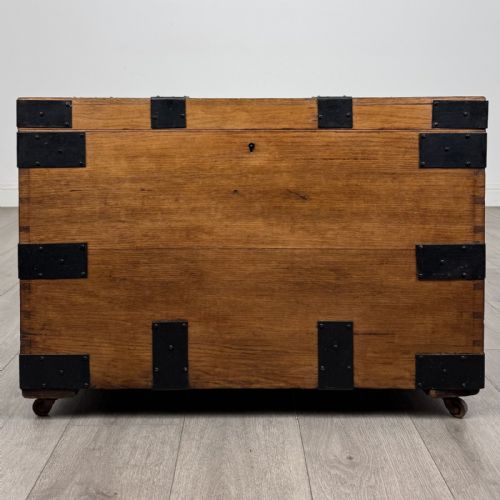
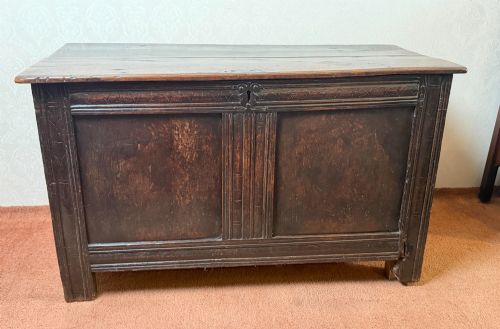
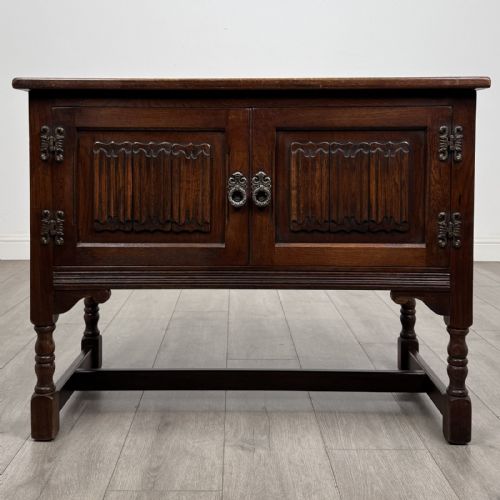
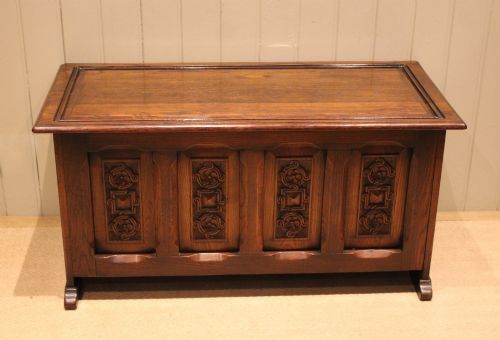
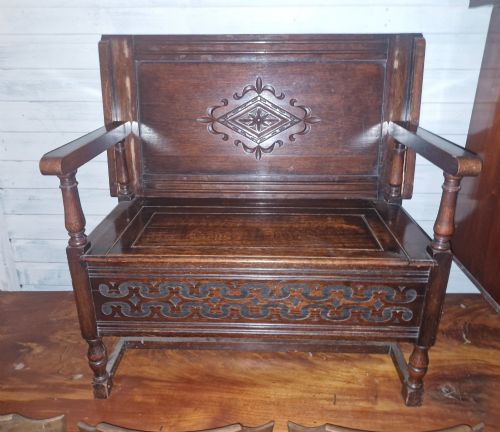
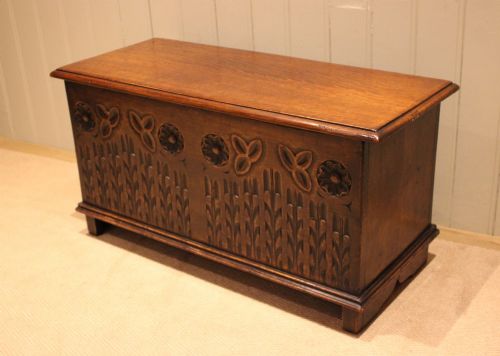
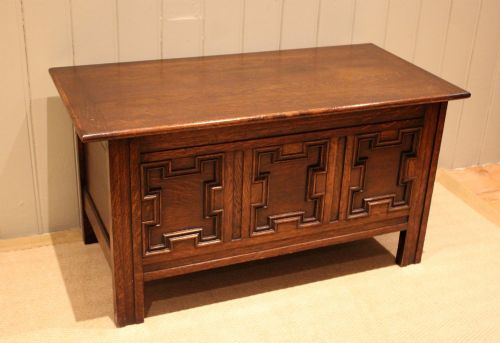
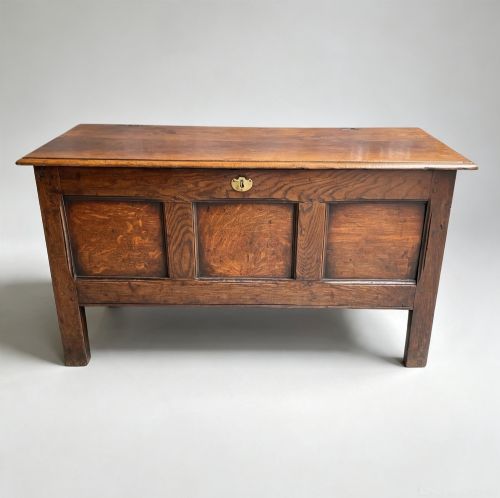
Vintage Oak Coffer Box
A vintage oak coffer box brings sturdy timber storage and centuries of craft directly into a room.
Vintage Oak Coffer Box
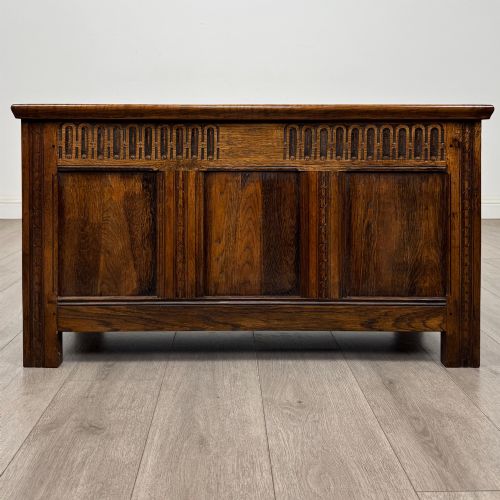
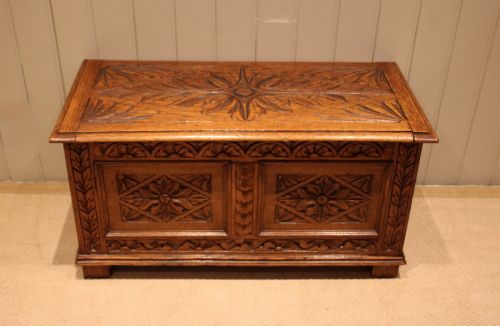
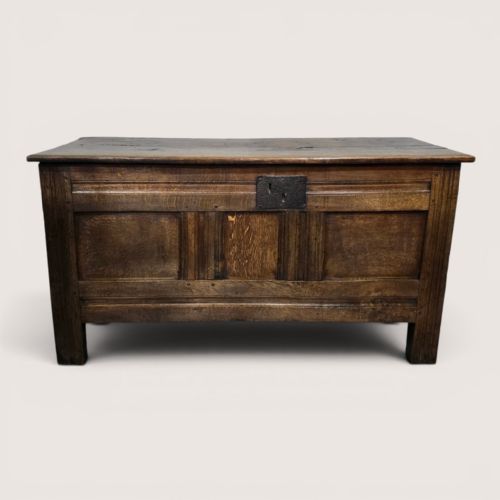
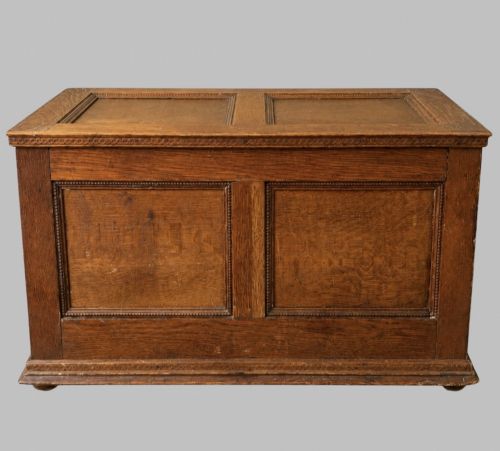
A vintage oak coffer box serves as a robust storage chest, frequently found in iterations spanning from the sixteenth century through the Edwardian era. These pieces function practically for blankets, linen, and documents while anchoring a room with traditional country character.
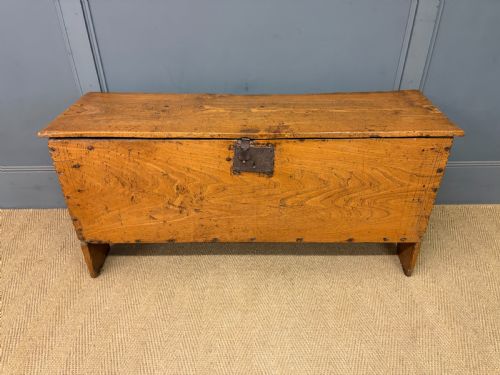
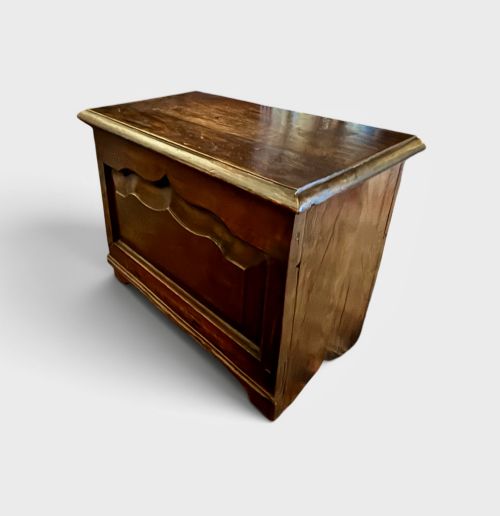
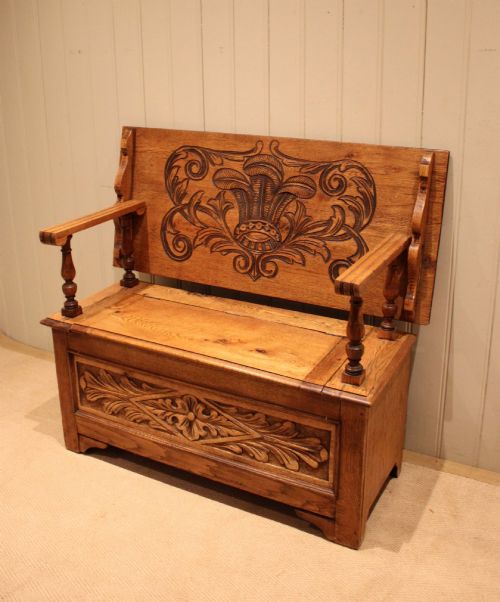
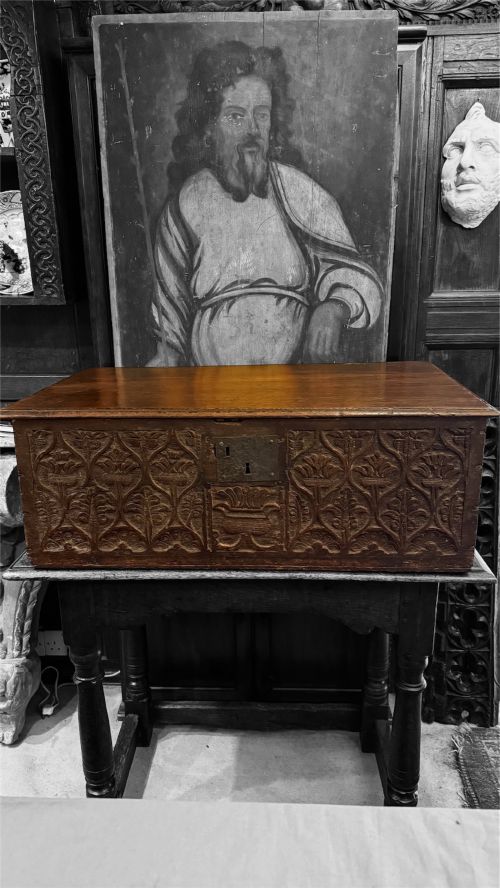
Buyers encounter numerous regional and stylistic variations, including mule chests equipped with lower drawers, panelled blanket boxes, and compact document or Bible boxes. The selection ranges from plain seventeenth-century boarded designs to heavily carved Jacobean revival examples from the early twentieth century.
The materials centre primarily on solid oak, frequently paired with elm, walnut, or pine, alongside iron and brass hinges and locks. Pieces appear from English country houses and continental workshops alike, showing forms adapted for travel, domestic storage, or ecclesiastical use.
How they were made
Joinery methods define these pieces, relying on heavy frame-and-panel construction or early boarded construction pegged together without modern adhesives. Carpenters shaped solid timber using hand tools, resulting in visible tool marks and adzed surfaces on older examples.
Hardware consists of hand-forged wrought iron or brass, utilised for strap hinges, lock plates, and corner brackets that reinforce the heavy timber lids and bases. Surface treatments range from natural wax finishes on golden or dark oak to painted coatings and limed effects seen in later Arts and Crafts interpretations.
Some seventeenth-century document boxes include hidden compartments beneath the floorboards for stashing emergency coins.
What varies in quality
The degree of original surface preservation dictates much of the distinction between examples, particularly where timber patination has deepened over centuries of handling and polishing. Carving depth and execution also separate standard production from master craftsmanship, with crisp relief work on panels marking superior workshops.
Structural integrity relies on the retention of original timber, authentic ironwork, and uncompromised baseboards rather than extensive modern replacements. The subtlety of proportion in smaller boxes and the harmony of carved motifs determine the visual balance of the piece.
The Vintage Oak Coffer Box Glossary
- Coffer
- A heavy wooden chest traditionally used for storing valuables, linen, or documents. These pieces often feature hinged lids and sturdy timber construction.
- Mule chest
- A storage chest featuring one or more drawers built into the base beneath the main compartment. This form bridges the evolution between the simple coffer and the chest of drawers.
- Bible box
- A small tabletop or desk-mounted box designed to hold sacred texts and personal papers. Many feature sloping lids and integrated lock mechanisms.
- Boarded chest
- An early form of trunk constructed from thick planks nailed or pegged edge-to-edge. This technique represents some of the oldest surviving vernacular furniture.
- Panelling
- Framework consisting of stiles and rails grooved to hold thin central boards. This method accommodates the natural expansion and contraction of timber.
Vintage Oak Coffer Box: Frequently Asked Questions
What is the difference between a coffer and a mule chest?
A standard coffer provides a single deep interior compartment accessed solely through the top lid. Carpenters added lower drawers to create the mule chest, allowing access to stored items without disturbing objects resting on top.
This evolution appeared in domestic interiors as households sought more organised storage for clothing and household textiles. Both forms utilise solid timber construction and heavy iron hardware.
How do I date an early oak coffer?
Dating relies on observing construction techniques, tool marks, and hardware styles rather than relying on decorative carving alone. Early pieces from the sixteenth and seventeenth centuries frequently employ boarded construction or heavy pegged frames with hand-forged iron strap hinges.
Later revival pieces from the nineteenth and twentieth centuries often display machine-sawn timber elements or standardised modern screws behind traditional facades. Examining the underside and interior surfaces reveals the true age of the woodwork.
Where were these boxes used in the home?
Historical inventories place these sturdy chests in bedrooms, hallways, and living spaces for the secure storage of valuables, blankets, and clothing. Smaller document boxes sat upon tables or desks to protect deeds, correspondence, and family records.
Travelling variants accompanied owners on military campaigns or coaching journeys, built with reinforced iron bands to withstand rough transit. Today, their flat lids allow them to function easily as window seats or coffee tables.
How should I care for vintage oak timber?
Maintaining vintage oak requires steady indoor humidity levels and protection from direct heat sources that can split dry timber. Occasional applications of traditional beeswax nourish the grain and preserve the natural patination built up over generations.
Harsh chemical cleaners and modern silicon polishes damage the historic surface finish. Gentle dusting with a soft, dry cloth remains the best daily maintenance for antique wood.