




Metal Bound Storage Chest
A metal bound storage chest brings heavy utility and rugged structure into a room, offering dependable containment with centuries of travel and domestic history.
Metal Bound Storage Chest
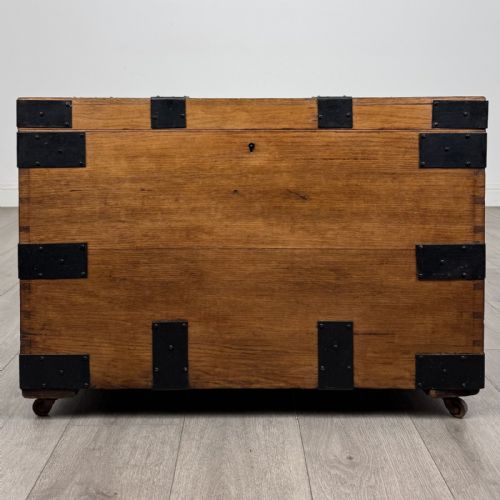
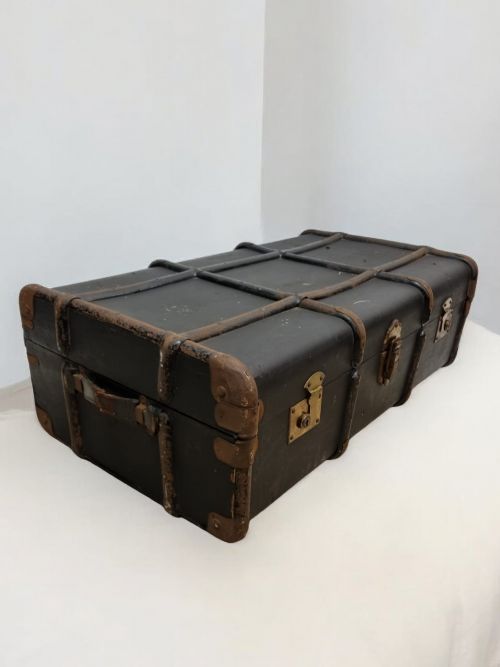
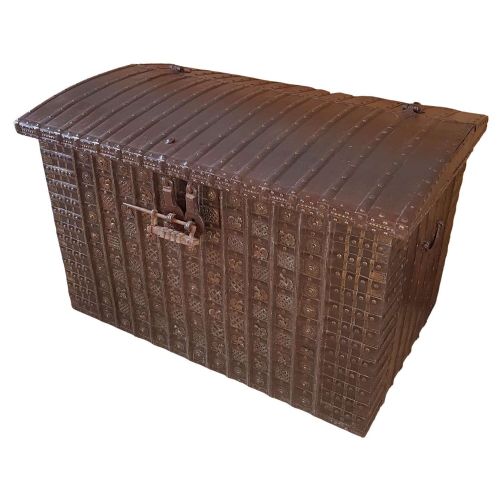
A metal bound storage chest encompasses robust receptacles built to protect valuables, silver, and personal luggage during transit or static home use. These items emerge in diverse forms across the evidence, including heavy oak silver chests, domed pine boxes, travel trunks, and iron-banded dowry coffers.
Buyers on this page most frequently encounter nineteenth-century pieces, particularly Victorian oak silver chests reinforced with iron or steel, alongside rustic pine travel trunks and Indian brass-bound hardwood boxes. The selection spans utilitarian campaign cases to decorative Baroque revival designs.
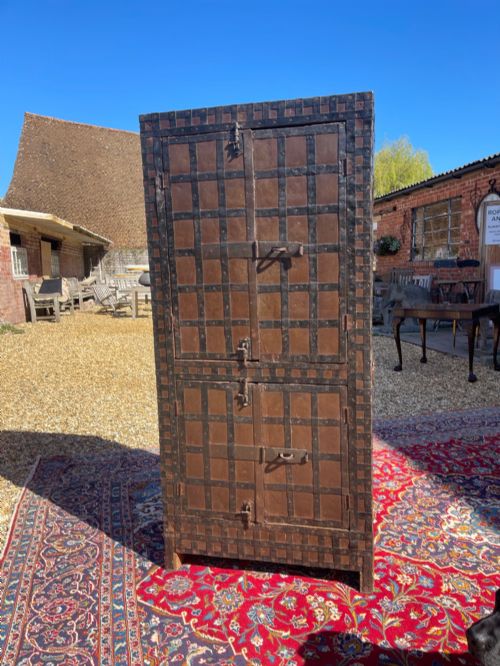
Origins vary widely, ranging from English country houses and London makers to Swedish painted pine boxes, Japanese tansu chests, and Rajasthan dowry trunks. Each piece reflects the specific logistical and domestic demands of its period and region.
How they were made
Construction relies on durable domestic and exotic timbers such as oak, pine, hardwood, and hide, chosen for structural resilience. Carpenters and joiners built these bodies to withstand heavy handling, sea voyages, and military campaigns.
Reinforcement involves iron, brass, and wrought metal bands, hinges, and straps secured across corners and seams to prevent splitting. Original hardware often includes specialised locks, side carrying handles, and zinc or red-painted interiors designed for specific storage functions.
Some nineteenth-century travelling trunks hide bright red painted interiors beneath dark, unassuming exterior leather and iron straps.
What varies in quality
Quality rests upon the integrity of the original construction, the thickness of the timber, and the substance of the metal bindings and hardware. Superior examples retain their original brass or iron mounts, functioning locks, and internal fitted trays or linings rather than replaced elements.
The distinction between a standard utility packing case and a high-end maker's silver chest lies in the precision of the dovetail joinery, the quality of the oak or hardwood, and documented provenance from known London retailers.
Samuel Pratt·Seaward·Seabrook of St.Pauls·Allen of London
The Metal Bound Storage Chest Glossary
- Silver chest
- A heavy timber trunk, usually constructed from oak with iron or steel bindings, lined to protect domestic silver plate from tarnish and impact during transit. These pieces often feature fitted internal compartments.
- Campaign case
- A portable chest or packing case built for military officers on active service, designed for easy dismantling or stacking during travel. They typically incorporate robust brass corners and recessed carrying handles.
- Cofer
- A heavy wooden box or chest used for storing valuables, often bound with iron straps for security. Older examples date back to the sixteenth century and display primitive yet sturdy carpentry.
- Damchiya
- A traditional Indian dowry chest or storage cabinet featuring intricate iron-banding and specialised locking mechanisms. These pieces serve as both decorative furniture and secure domestic storage.
- Steamer trunk
- A lower-profile travel trunk popular in the late nineteenth and early twentieth centuries, designed to fit beneath a ship's cabin berth. They often incorporate canvas, wood, and metal construction with internal compartments.
Metal Bound Storage Chest: Frequently Asked Questions
What were metal bound storage chests originally used for?
These chests served primarily for transporting and safeguarding valuable personal possessions, silver service, and military equipment across land and sea. Their sturdy construction protected contents from moisture, theft, and the heavy impacts of nineteenth-century travel.
In domestic settings, they transitioned into stationary storage for household linens, documents, and seasonal items. Many retained their specialised internal trays and linings long after their travelling days ended.
How do I date a metal bound chest?
Dating relies on observing the timber species, the style of the metal straps, the type of joinery, and any maker's plates or stamps. Earlier pieces from the eighteenth century or earlier often feature hand-forged ironwork and pegged construction.
Victorian and later nineteenth-century examples frequently show standardised brass corners, lock mechanisms, and zinc linings tailored for silver storage or steamship travel.
Are these chests suitable for modern living rooms?
Their substantial structure and flat tops make them practical as coffee tables, end tables, or hallway storage benches. They provide concealed space for blankets and books while anchoring a room with historic character.
Placing them in contemporary spaces requires balancing their dark woods and industrial metal straps against lighter surroundings. Ensure the interior is clean and dry before storing modern textiles inside.
How should I maintain the metal and wood?
Maintenance involves dusting the timber regularly and applying a microcrystalline wax to nourish dry oak or pine without attracting dust. The metal bindings benefit from light cleaning to remove active oxidation while preserving the historical patina.
Keep these pieces away from direct heat sources and dramatic humidity shifts to prevent the wood from warping and the metal fixtures from loosening.