









Vintage Nude Statue
A vintage nude statue captures the human form with sculptural precision, offering collectors a timeless study in anatomy and decorative elegance across multiple periods.
Vintage Nude Statue
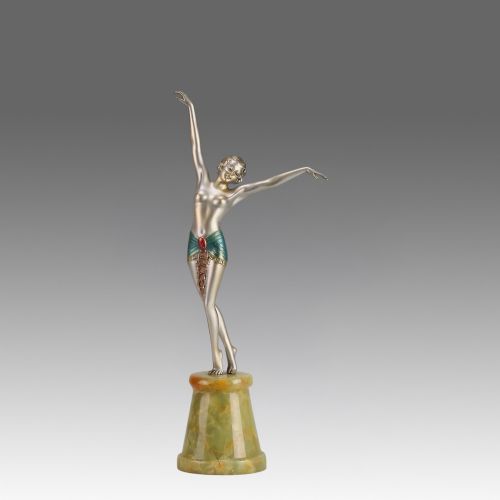
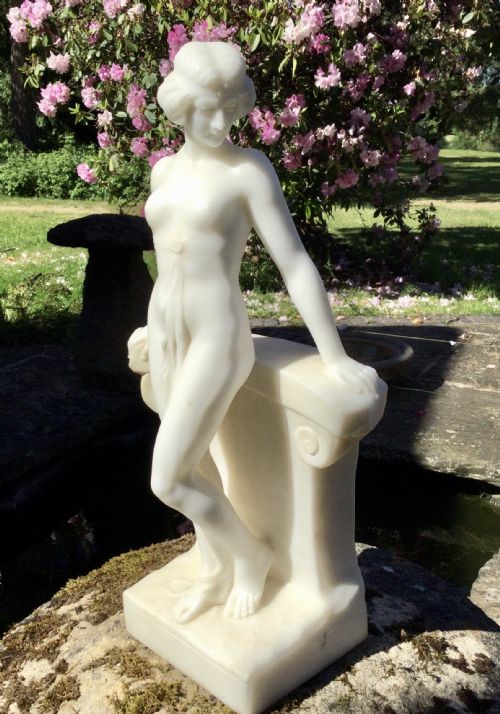
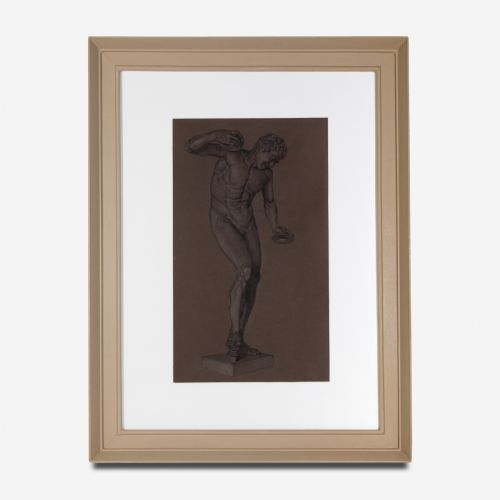
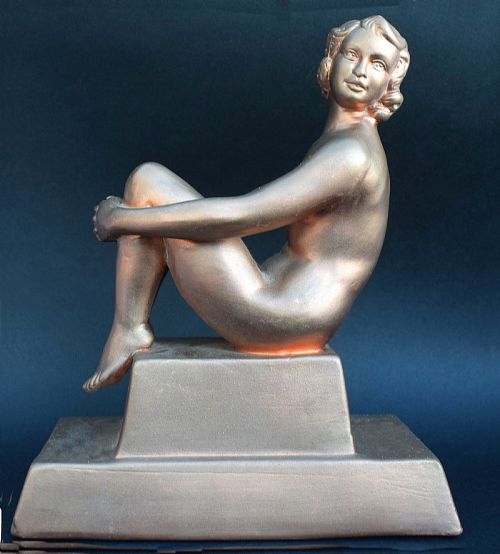
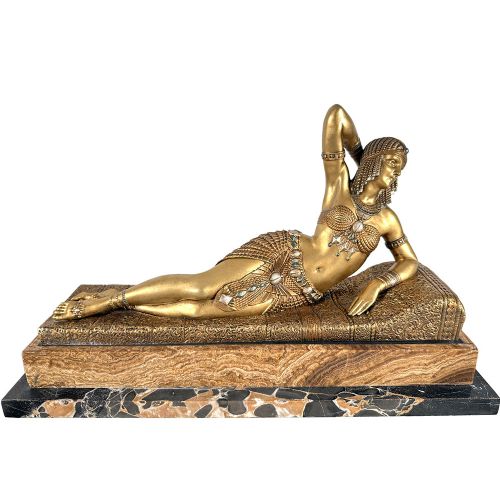
The versions most frequently encountered on this page originate from the Art Deco period of the nineteen-twenties and thirties, often reflecting stylized geometries and dynamic dance poses. Alongside these, nineteenth-century Grand Tour bronzes and academic studies provide a strong presence of classical and mythological subjects.
Makers and schools from Britain, France, and across Europe shaped these pieces, utilising materials that span heavy cast bronze, carved marble, and delicate porcelain. Each object records the aesthetic preoccupations of its decade, shifting from nineteenth-century realism toward the sleek lines of the twentieth century.
How they were made
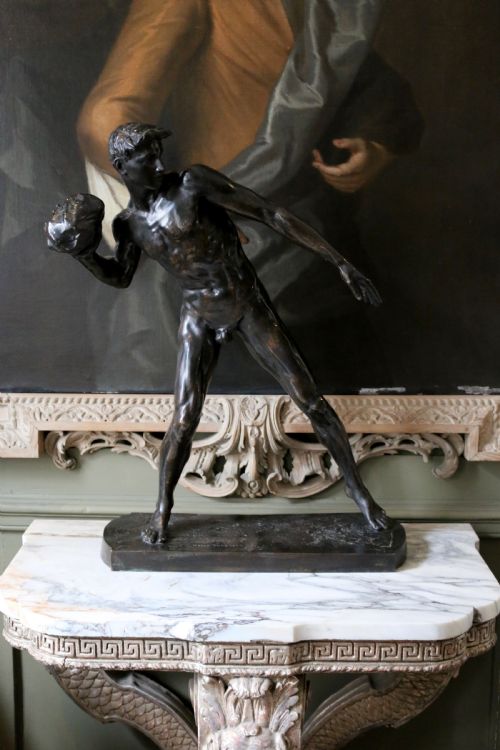
Bronze casting forms the backbone of these pieces, utilising the lost-wax method to capture fine muscular detail, drapery, and patination. Founders applied patinas ranging from deep brown and cold-painted colours to gilt surfaces, often mounting the heavy metal figures onto marble or onyx bases.
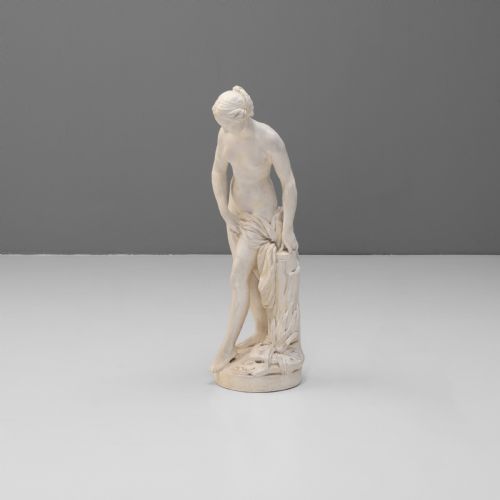
Carved stone and wood represent traditional craftsmanship, employing alabaster, fossil marble, and limewood shaped with chisels and rasps. Sculptors worked these natural materials to exploit the grain and translucency, producing smooth reclining nudes and torsos.
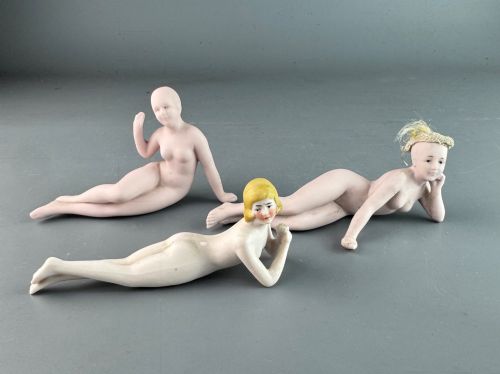
Ceramic and spelter production introduced alternative mediums for domestic display, utilising porcelain, majolica, and zinc alloys. These materials allowed workshops to cast and glaze figures efficiently while retaining the sculptural contours of the original models.
Vintage Nude Statue Retail Price Guide 2026
Typical asking prices for vintage nude statue among the pieces listed under this phrase on Sellingantiques today, from the lower quarter to the upper quarter. They describe what is for sale here now, not the wider market.
Listings span the nineteenth and twentieth centuries, uniting classical revival themes with Art Deco forms in bronze, marble, and wood.
What varies in quality
The refinement of the casting and carving defines the upper tier of these sculptures, separating mechanical reproductions from works with hand-finished chasing. Superior pieces display crisp musculature, delicate facial expressions, and integrated bases that complement the composition without distraction.
Material selection and patination significantly alter the character and integrity of a figure. Dense marbles, substantial bronze walls, and stable patinas indicate higher production standards, whereas lesser examples rely on painted spelter or composite bases that show wear more readily.
Gustave Dussart·Josef Lorenzl·Hamo Thornycroft·Sibylle May·Demetre Chiparus·Maurice Guiraud Riviere·Hans Müller·Pierre Le Faguays·Paul de Boulogne·Royal Dux·Ugo Cipriani·Bruno Zach
The Vintage Nude Statue Glossary
- Grand Tour
- A nineteenth-century tradition where travellers collected small bronze reductions of classical antiquities in Italy. These souvenirs replicated famous statues found in museums and excavations.
- Spelter
- A zinc alloy used as a less expensive alternative to bronze, commonly painted or electroplated to mimic heavier metals. It requires careful handling due to its relative softness.
- Patinated metal
- A metal surface treated with chemical solutions to produce a specific coloration or aged finish. This technique protects the underlying metal while enhancing visual depth.
- Cold-painted bronze
- A method where enamel paint is applied to a bronze sculpture without subsequent firing. Surviving paint layers remain sensitive to cleaning and moisture.
- Car mascot
- A sculptural ornament mounted on the radiator caps of automobiles during the early twentieth century. Many aerodynamic nude figures were cast in bronze for this purpose.
Vintage Nude Statue: Frequently Asked Questions
How do I identify an Art Deco nude?
Art Deco nudes typically feature stylized, geometric proportions, sleek lines, and subjects engaged in dance or athletic movement. Materials often include patinated bronze paired with contrasting marble bases.
Creators from this era favored dynamic postures and modern motifs, distinguishing their work from earlier nineteenth-century academic realism and classical revival pieces.
What is a Grand Tour bronze?
Grand Tour bronzes are nineteenth-century souvenir reductions modeled after famous classical sculptures seen by travellers in Italy. These pieces served as scholarly desk ornaments and cabinet displays.
They are recognised by their dark patination, classical subject matter such as dancers or mythological figures, and occasional mounting on marble plinths.
How should I clean a bronze sculpture?
Bronze statues require minimal intervention, generally needing only a gentle dusting with a soft, dry cloth. Avoid using water, polishes, or chemical cleaners which can strip the original patina.
Preserving the surface integrity is essential, as the applied coloration contributes significantly to the historical and aesthetic character of the piece.
Where were these statues displayed originally?
Nineteenth-century grand sculptures and Grand Tour bronzes were typically housed in libraries, studies, and drawing rooms as marks of classical education and refined taste. Smaller figures and lamp bases became popular in domestic interiors during the early twentieth century.
Their placement depended on scale, with large marble statues occupying hallways or niches while metal figurines decorated mantelpieces and desks.