


Vintage Nude Portrait Canvas
A vintage nude portrait canvas captures the human form through oil paint, offering a direct record of academic study, modernist experimentation, and personal expression.
Vintage Nude Portrait Canvas
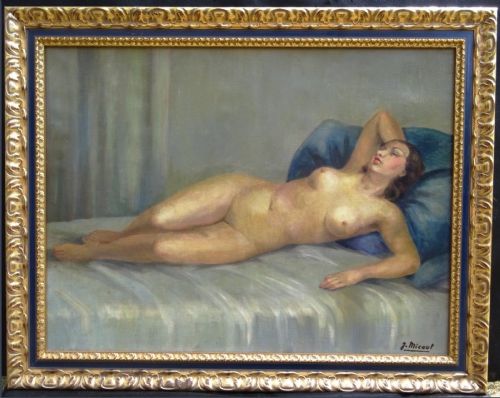
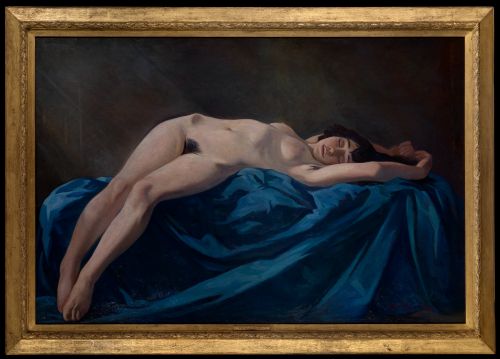
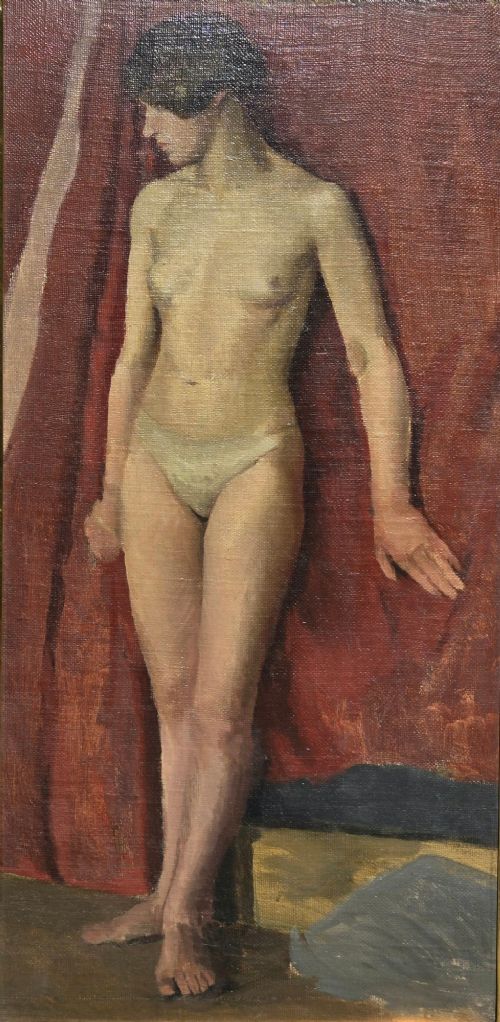
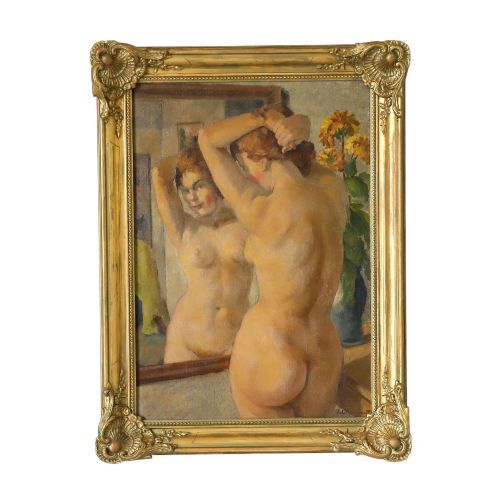
A vintage nude portrait canvas is an oil painting on stretched fabric depicting the human figure, created across periods from the Edwardian era through the mid-twentieth century. These works range from formal academic studies to relaxed bohemian compositions executed by European and British artists.
The selections available here emphasise oil on canvas supports, spanning movements like French Art Deco, Modern British, and Expressionism. Collectors encounter everything from intimate interior sketches to large gallery-scale reclining figures.
Originating from artist studios, Parisian quarters, and regional academies, these portraits preserve the physical techniques and aesthetic priorities of their respective decades.
How They Were Made
Makers applied oil paint directly onto stretched canvas, sometimes utilising wood panels or board reinforcements depending on the scale and period. Brushwork varies from tight academic realism to loose post-impressionist application and avant-garde cubist fragmentation.
Many works retain their original gilt wood frames, which complement the texture of the oil pigment and protect the perimeter of the canvas. Pigments were layered to build depth in flesh tones, often contrasting starkly with muted studio backgrounds or vibrant landscape settings.
Several canvases quietly record the domestic presence of studio cats lounging near the bather.
What Varies in Quality
The strength of a vintage nude portrait canvas rests on anatomical confidence, brush economy, and the psychological engagement between subject and observer. Superior works demonstrate an assured handling of light across the form, avoiding stiff outlines in favour of tonal integration.
Framing and provenance elevate certain pieces, particularly when signed by listed Royal Academy or continental painters whose documented exhibition history establishes their standing within twentieth-century art movements.
Philippe de Rougemont·Raymond Moritz·Tony Giles·Henri Vincent-Anglade·Alexandre-Louis Martin·Gaetan Dumas·James Clark·Jean Hippolyte Marchand·Pinchus Krémègne·Yetta Kane·Raymond Arthur Roadnight
The Vintage Nude Portrait Canvas Glossary
- Oil on Canvas
- Pigment mixed with drying oil applied to a woven fabric support. This combination allows for rich blending and textured impasto.
- Academic Realism
- A style of painting produced under the influence of European academies. It emphasises precise proportion, smooth finishes, and traditional anatomical study.
- Impasto
- Paint laid on an area of the canvas in thick layers. This technique makes brushstrokes stand out visibly from the surface.
- Gilt Wood Frame
- A wooden moulding coated with gold leaf or metallic paint. It provides a decorative border that isolates the painting from its surroundings.
Vintage Nude Portrait Canvas: Frequently Asked Questions
How do I date a vintage nude canvas?
Dating relies on stylistic markers, framing techniques, and signatures linked to active artist periods. Twentieth-century movements such as Art Deco and Mid-Century Modern offer distinct visual clues.
Examine the stretcher bars, canvas weave, and any inscriptions on the reverse for clues regarding the original creation date.
Where were these portraits painted?
These works originate primarily from artist studios, academic institutions, and bohemian quarters across Britain, France, and Sweden. Paris Montparnasse served as a major hub for such figurative studies.
Artists worked from live models within controlled studio environments or integrated figures into landscapes.
How should I hang an oil portrait?
Hang oil paintings away from direct sunlight and fluctuating heat sources to protect the canvas and paint layer. Ensure the wall fixings match the weight of both the canvas and its original wood frame.
Lighting should be angled carefully to minimise glare on varnished oil surfaces.
What defines Modern British nude art?
Modern British figurative painting departs from strict Victorian academic rules in favour of simplified forms and expressive brushwork. Artists prioritized emotional resonance over photographic accuracy.
These canvases reflect broader European modernist shifts while retaining a distinct domestic character.