

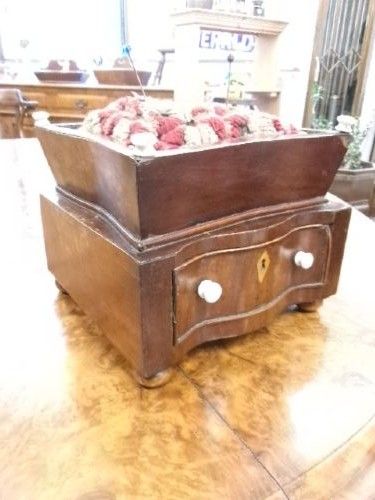


Vintage Needlework Box
A vintage needlework box organises threads, pins and tools while adding timber grain and textile interest to a room.
Vintage Needlework Box
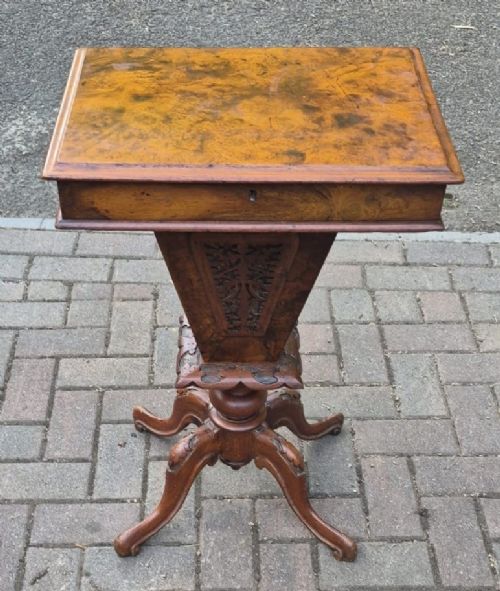
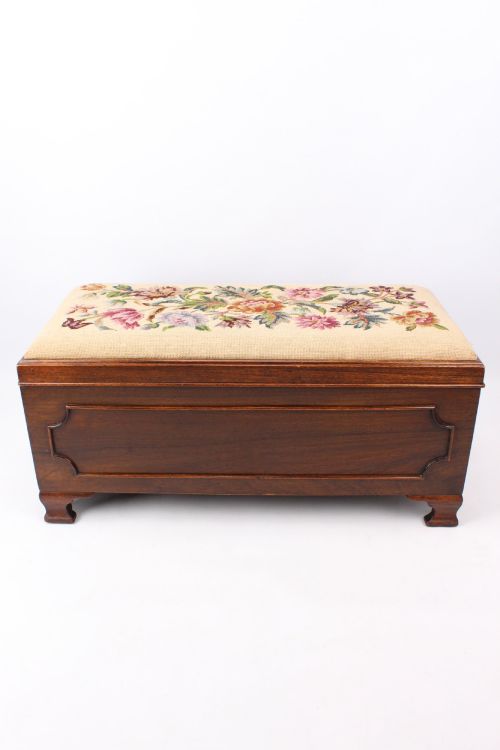
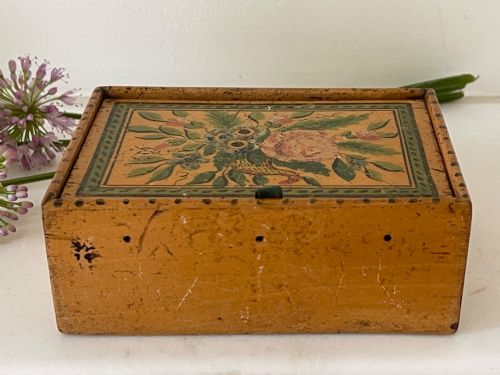
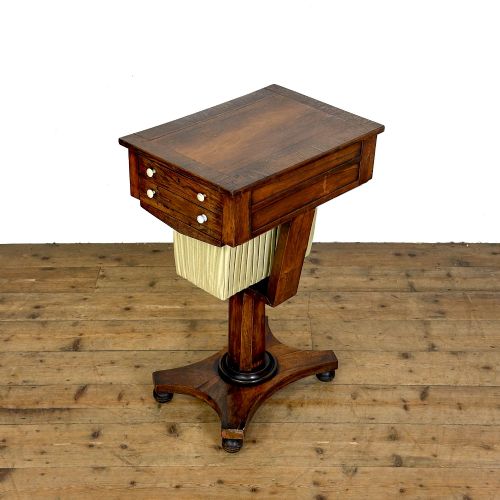
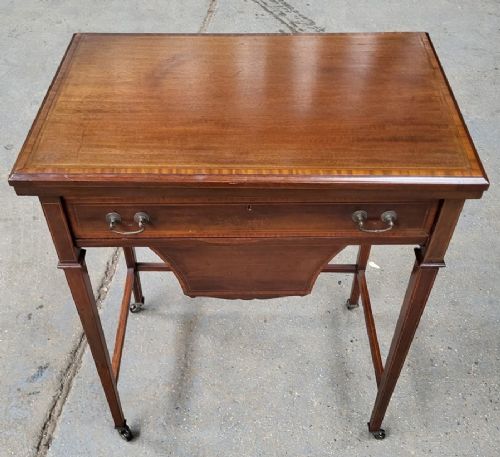
A vintage needlework box encompasses small tabletop caskets, fitted wooden chests and larger freestanding work tables designed for sewing equipment. The selection here spans Victorian, Edwardian and Regency periods, alongside Georgian and 19th century examples.
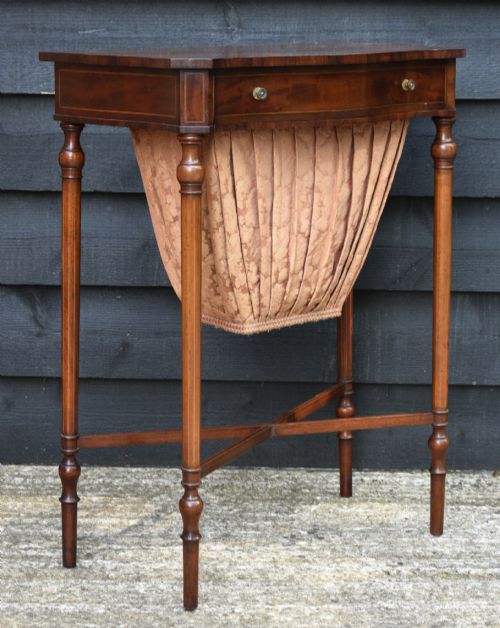
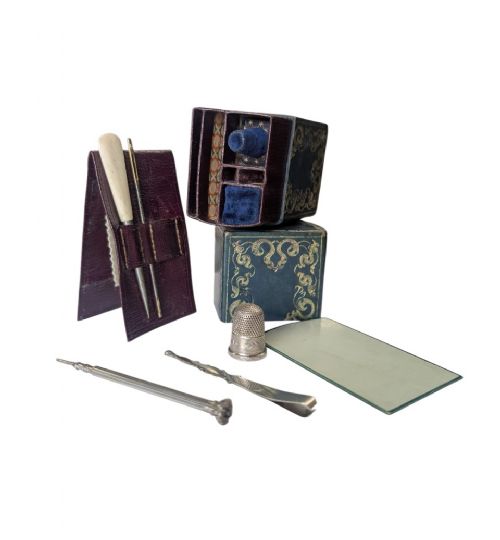
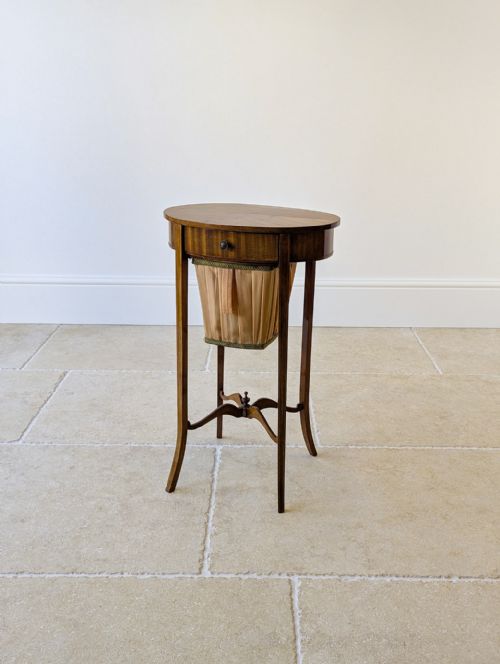
Tabletop versions include small pincushions, reel boxes and leather-cased etui sets, often detailed in mother-of-pearl or Tunbridge ware. Larger freestanding work tables provide fitted interiors and under-mounted fabric silk baskets for ongoing textile projects.
Makers and origins range from English workshops to French ateliers, utilising traditional forms that function as occasional tables, side tables and storage chests within domestic interiors.
Materials and construction
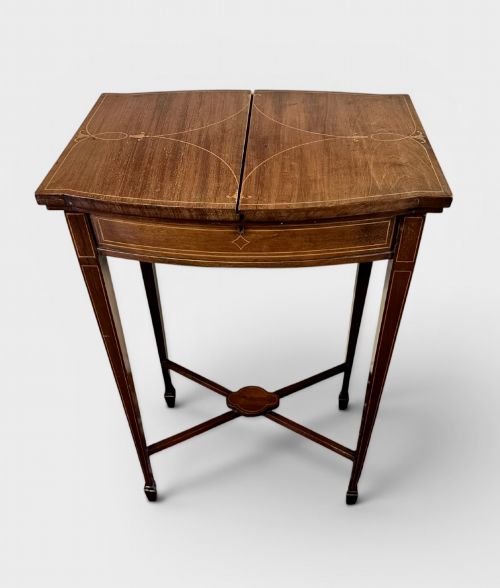
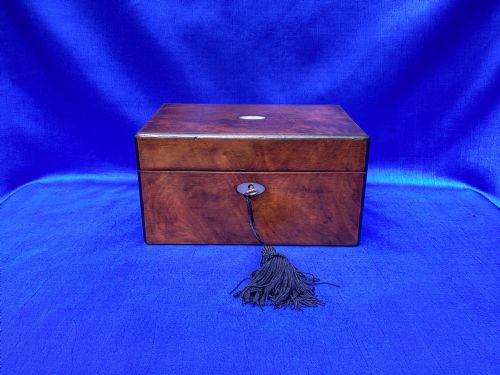
Cabinetmakers constructed these pieces using dense hardwoods such as mahogany, rosewood, walnut, burr walnut and satinwood, frequently applying decorative cross-banding and marquetry inlay.
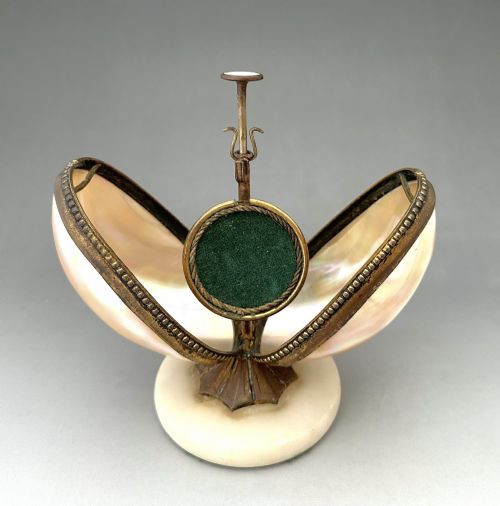
Smaller boxes and fitted interiors incorporate delicate brass hardware, mother-of-pearl panels and velvet linings, while tables often utilise silk baskets, lyre-shaped supports and turned legs.
Periods represented span from the Georgian era through Regency, William IV, Victorian and Edwardian up to the 1930s.
Assessing craftsmanship
Quality rests upon the precision of the timber selection, the crispness of any marquetry or Tunbridge ware inlay, and the structural integrity of hinged lids and drop-in compartments. Superior pieces maintain intact fitted interior trays, original silk baskets and unblemished veneers across curved surfaces.
Finer examples show considered proportions and careful attention to secondary timbers, whereas simpler utilitarian items rely on straightforward joints and plain surfaces without specialised banding or decorative mounts.
Waring and Gillow
The Vintage Needlework Box Glossary
- Etui
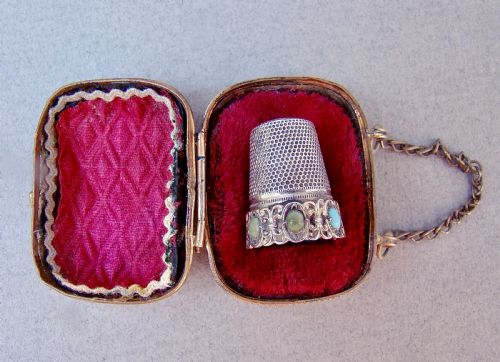
- A small ornamental case used for holding needles, scissors and other small sewing implements. These are often lined with silk or velvet.
- Tunbridge Ware
- A type of decorative woodwork characterised by intricate mosaic designs formed from tiny tinted wood blocks. It appears frequently on Victorian and Georgian boxes.
- Work Table
- A freestanding table incorporating drawers, compartments or a suspended fabric bag designed specifically for sewing and needlecraft. They double as occasional tables.
- Marquetry
- The art of applying pieces of veneer to a structure to form decorative patterns and pictures. It is commonly found on Victorian rosewood and walnut furniture.
- Chatelaine
- A decorative belt hook or clasp worn from the waist to which tools such as scissors, thimbles and etui cases were attached by chains.
Vintage Needlework Box: Frequently Asked Questions
What is the difference between a sewing box and a work table?
A sewing box is a portable tabletop container designed to hold threads, needles and small tools inside a fitted interior. They are easily moved between rooms by hand.
A work table is a freestanding piece of furniture that incorporates storage drawers, compartments and often a hanging fabric basket underneath for larger projects. They function simultaneously as small side tables.
How do I identify an Edwardian needlework box?
Edwardian pieces often feature light mahogany timbers decorated with subtle cross-banding and inlaid stringing. Their proportions tend to be smaller and lighter than their Victorian predecessors.
Many Edwardian examples include dedicated compartments for modern sewing paraphernalia alongside silk storage baskets suspended beneath the main tabletop.
What are Tunbridge ware boxes?
Tunbridge ware boxes are specialised wooden caskets decorated with mosaic patterns assembled from thousands of tiny tinted wood splints. These geometric or floral pictures depict local scenes or natural motifs.
They represent a distinct regional tradition of woodworking found in Kent during the Georgian and Victorian periods.
Where should I place a work table in a modern home?
A work table fits easily beside a sofa or armchair as a compact side or lamp table. The top surface holds everyday items while internal compartments provide discreet storage.
Freestanding versions with silk baskets add textural contrast and historical character to a living room or study corner.