


Vintage Needlepoint Chair
A vintage needlepoint chair brings tactile warmth and historic charm to a room through textured wool upholstery mounted on sturdy timber frames.
Vintage Needlepoint Chair
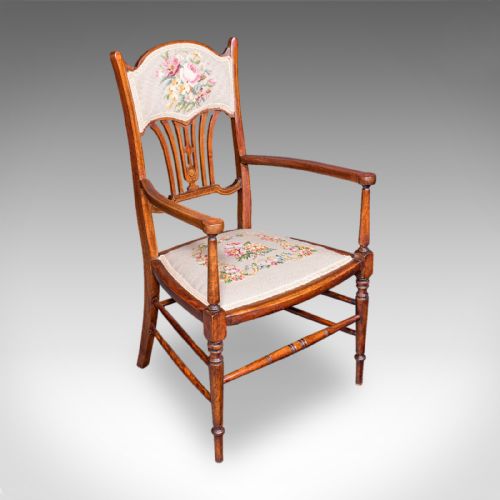
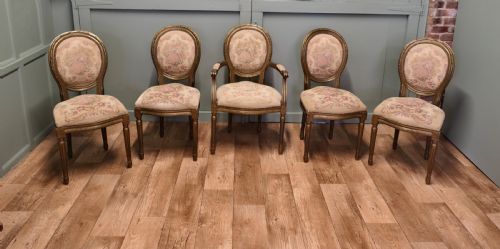
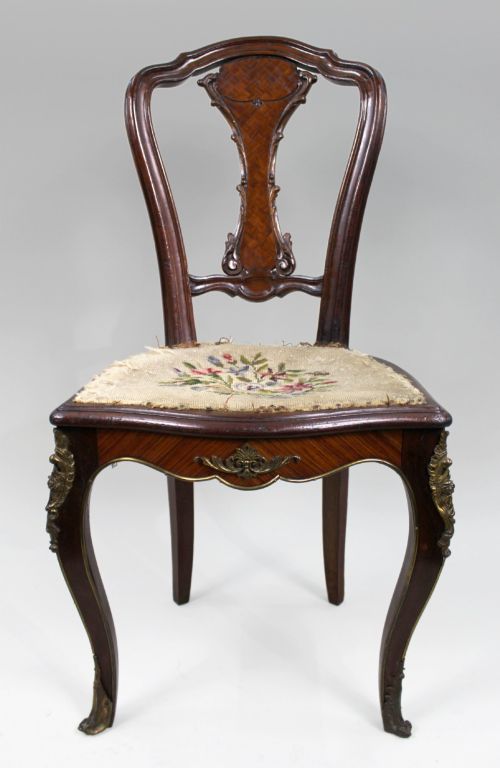
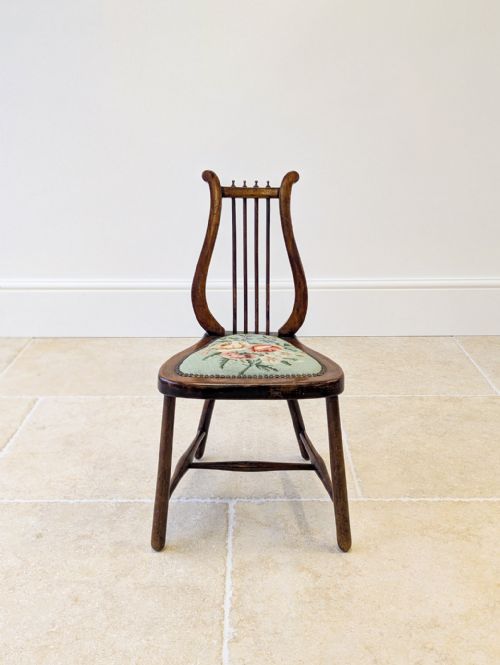
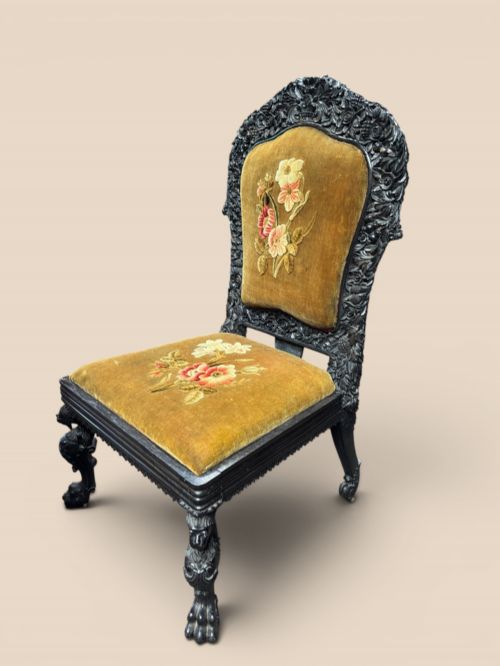
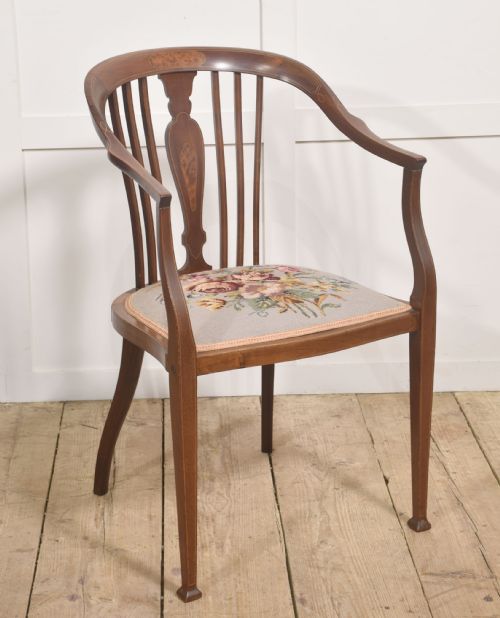
A vintage needlepoint chair encompasses seating forms ranging from robust armchairs and elbow chairs to compact nursing chairs, side chairs, and piano stools. These pieces draw on diverse historical periods including the eighteenth century, the Victorian era, the Edwardian period, and the Regency years.
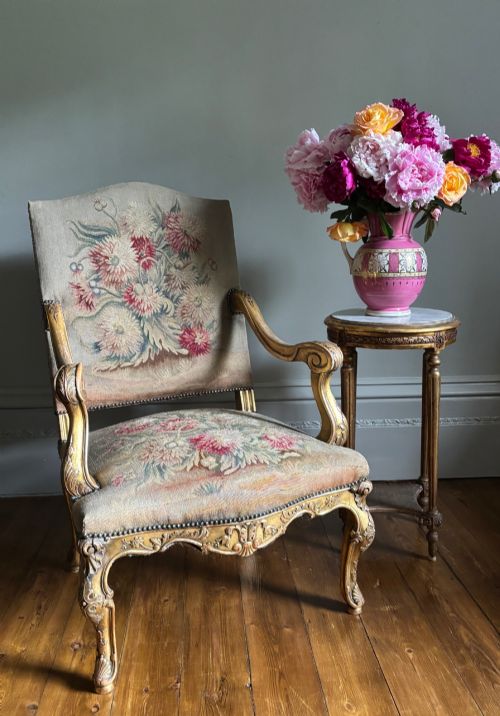
Buyers commonly encounter walnut, mahogany, and beech frames paired with wool tapestry or needlepoint upholstery. Styles vary widely, taking inspiration from French Rococo Revival, Georgian designs, and Arts and Crafts principles.
The integration of hand-worked textile panels into wooden frameworks defines the category, linking utilitarian seating with decorative craft traditions across various European and British workshops.
Materials and construction methods
Makers utilised dense hardwoods such as walnut, mahogany, kingwood, and beech to construct resilient chair frames that could support intricate hand-carved details, marquetry, and ormolu mounts.
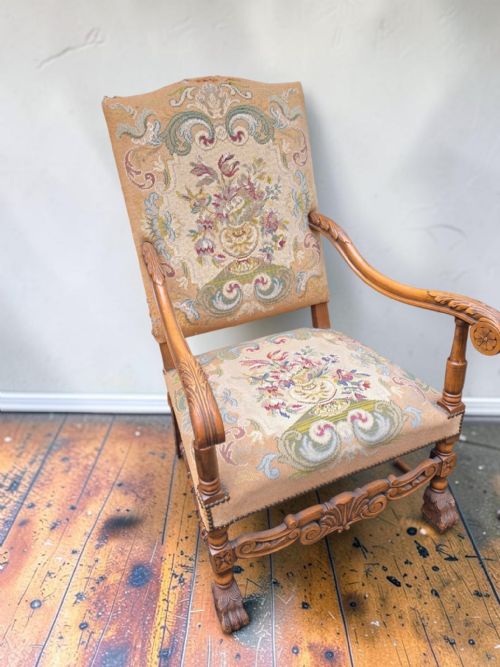
Upholstery relies on durable wool tapestry and needlepoint stitching, where artisans worked wool yarns through stiff canvas foundations to create dense, pictorial panels.
Joinery techniques combined traditional mortise and tenon joints with turned supports, cabriole legs, or sabre legs, ensuring structural longevity alongside aesthetic elegance.
Vintage Needlepoint Chair Retail Price Guide 2026
Typical asking prices for vintage needlepoint chair among the pieces listed under this phrase on Sellingantiques today, from the lower quarter to the upper quarter. They describe what is for sale here now, not the wider market.
Listings feature walnut, mahogany, beech, and rosewood frames paired with wool tapestry, brass accents, and textile upholstery across multiple historical periods.
Evaluating craftsmanship and condition
Quality rests primarily on the tightness and complexity of the needlepoint stitching, where finer petit point work and dense wool yarns indicate superior execution compared to looser execution.
The integrity of the timber frame, the crispness of any carved ornamentation, and the originality of the textile panels set the finest examples apart from standard utility seating.
Waring and Gillow·Gillows·Wheeler
The Vintage Needlepoint Chair Glossary
- Needlepoint
- A form of counted or uncounted thread embroidery stitched onto an open-weave canvas foundation. It provides the durable, patterned textile panels seen on historic seat covers.
- Fauteuil
- An open-armed French armchair with upholstered back and arm pads set over an exposed wooden frame. It typically dates to revival periods or eighteenth-century models.
- Elbow chair
- A traditional British term for a seating piece equipped with short arms, often positioned at the head of a dining table or placed in a morning room.
- Ormolu
- Gilded bronze mounts applied to furniture frames for decorative enrichment. It appears on mid-nineteenth-century luxury pieces.
Vintage Needlepoint Chair: Frequently Asked Questions
How do I clean a needlepoint seat?
Maintenance requires gentle surface dusting with a soft brush to prevent wool fibres from trapping abrasive dirt particles.
Avoid liquid cleaners or soaking the textile, as historic wool yarns and natural dyes react poorly to moisture and harsh chemical treatments.
Are these chairs suitable for daily use?
Many sturdy walnut and mahogany frames easily accommodate regular sitting when joints remain solid and secure.
Fragile or heavily worn needlepoint panels benefit from lighter use or placement in low-traffic areas to preserve the historic textiles.
What distinguishes Victorian from Georgian chairs?
Victorian examples often display heavier proportions, darker woods, and revivalist ornamentation influenced by Gothic or Rococo tastes.
Georgian pieces favor restrained lines, simpler cabriole or straight legs, and classic walnut or mahogany construction without nineteenth-century revival excesses.