


Vintage Navy Red Rug
A vintage navy red rug brings grounded colour and intricate tribal geometry to a floor, offering durable wool construction that anchors a room with historic character.
Vintage Navy Red Rug
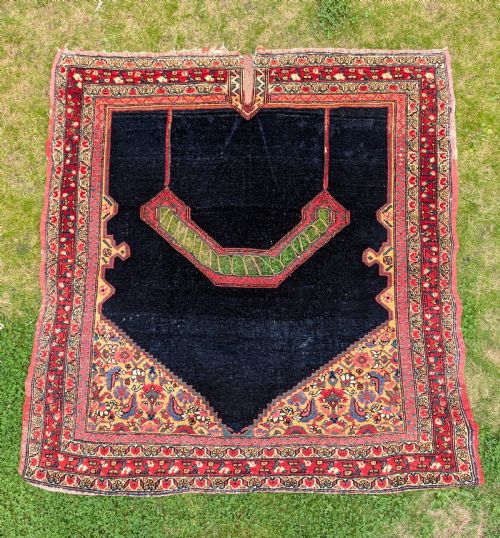
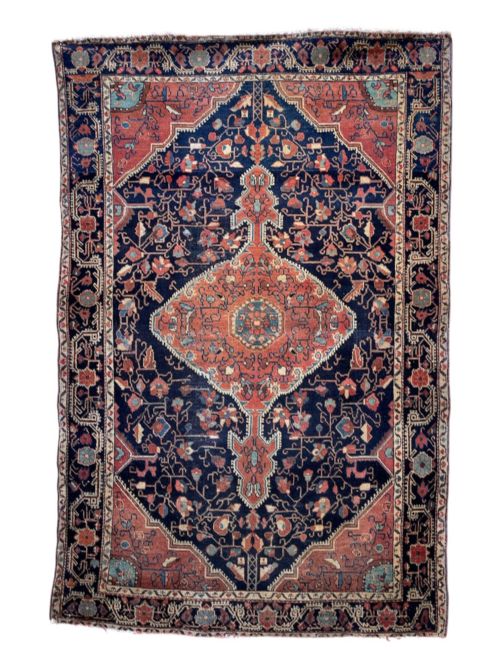
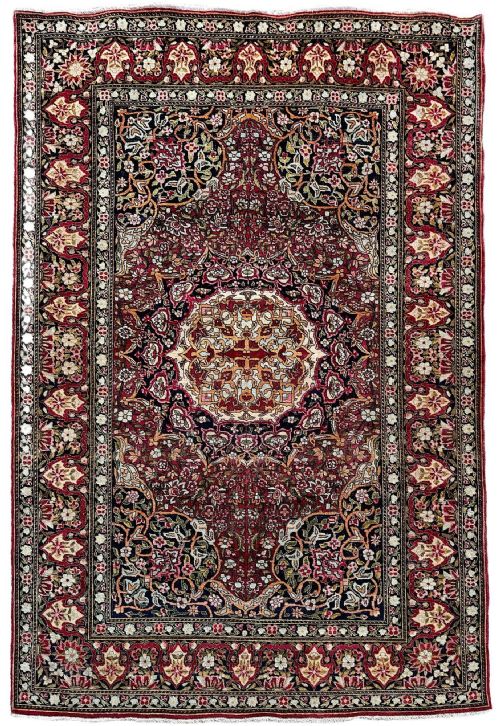
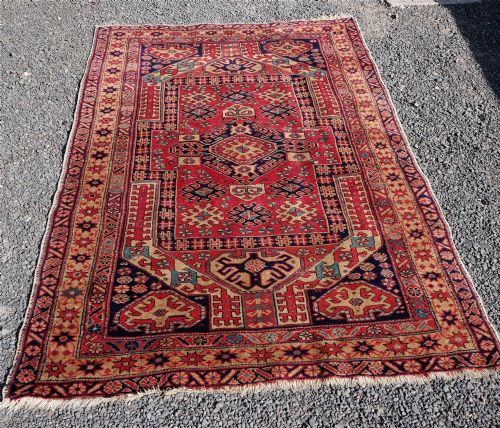
When searching for a vintage navy red rug, buyers encounter hand-knotted wool textiles spanning the nineteenth century through the mid-twentieth century. These pieces encompass regional Persian and Caucasian weaving traditions, ranging from room-sized carpets down to runners, saddle covers and cushions.
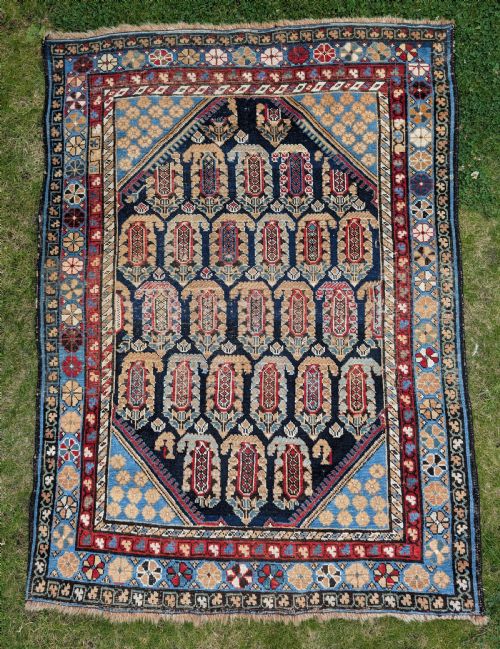
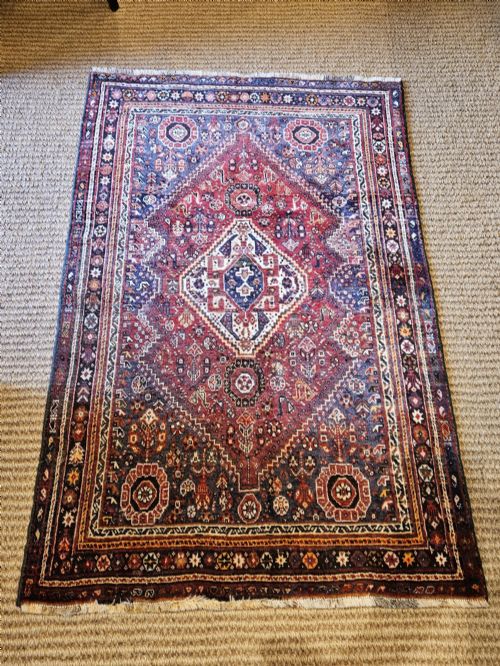
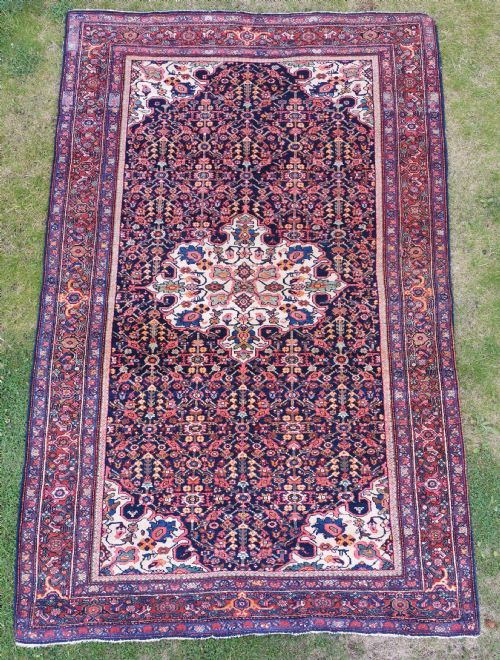
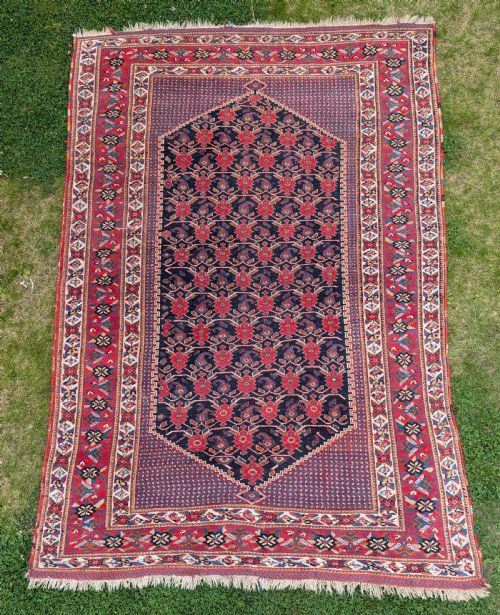
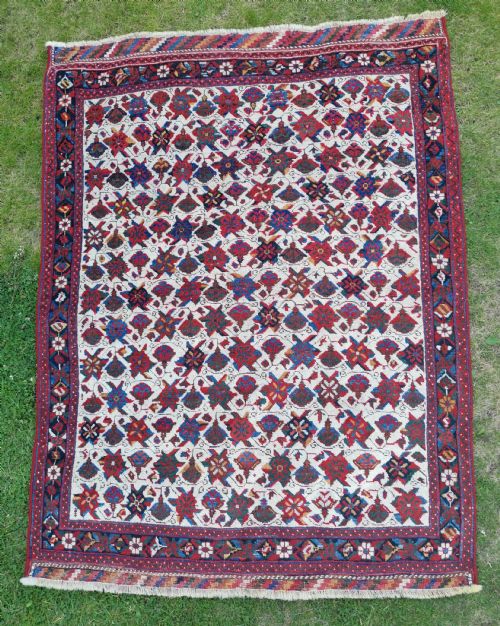
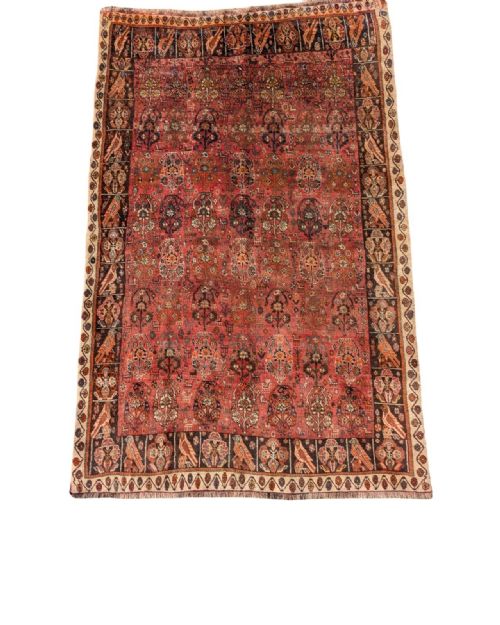
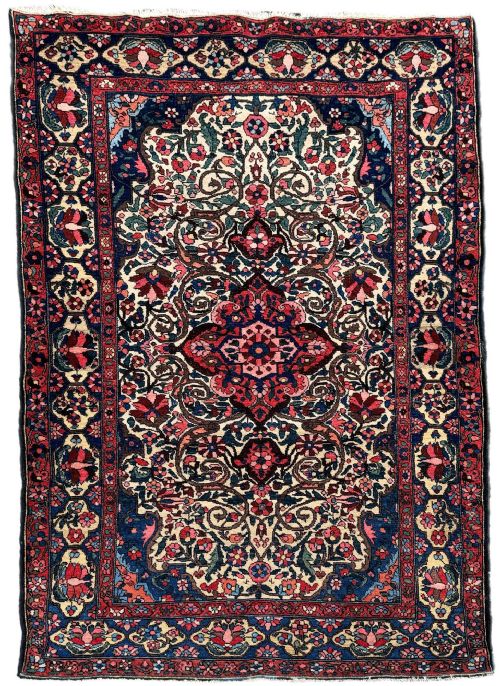
The selections on this page lean heavily into Persian styles, including Heriz, Afshar, Khamseh and Kurdish tribal formats, alongside Caucasian examples. Geometric medallions and Mina Khani patterns dominate the visual landscape of these floor coverings.
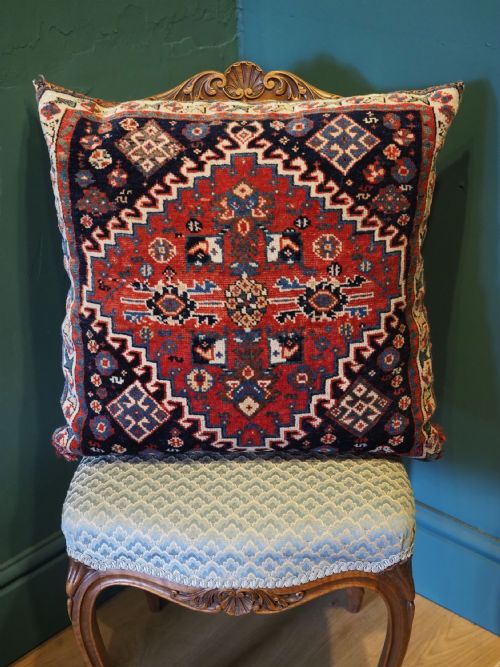
Buyers will find everything from compact area rugs to substantial carpets measuring over four metres in length. Forms vary from traditional rectangular floor rugs to specialised saddle bags and long narrow runners.
Materials and construction
The pieces recorded in these listings rely principally on wool, cotton and occasional silk. Weavers knotted these materials by hand to build dense, resilient piles designed for everyday wear.
Foundation threads of cotton or wool support the hand-knotted surface designs. Traditional dyeing methods produced the deep navy blues and rust or red backgrounds characteristic of these carpets.
Listings span production dates from eighteen-fifty through nineteen-sixty, featuring wool, cotton and silk materials.
Judging quality in woven textiles
Knot density and structural integrity dictate the standing of an individual rug. Finer pieces demonstrate precise execution in geometric medallions and tight pile foundation work.
The condition of the wool pile and the clarity of the navy and red dye contrasts separate standard examples from finer tribal works. Surface wear and historical distress alter the uniform appearance of the pile across older pieces.
The Vintage Navy Red Rug Glossary
- Medallion
- A central ornamental motif set into the field of a rug. These geometric or floral shapes form the focal point of Persian and Caucasian designs.
- Runner
- A long, narrow carpet format suited for hallways and corridors. These pieces often feature repeating geometric patterns along their length.
- Pile
- The upright surface yarn of a carpet formed by knotted loops of wool, cotton or silk. Pile depth and density vary according to regional weaving techniques.
- Knot
- The individual loops of thread tied around warp threads to form the carpet pile. Hand-knotted construction requires meticulous placement of each knot by the weaver.
Vintage Navy Red Rug: Frequently Asked Questions
How do I clean an old wool rug?
Maintenance requires gentle vacuuming without a rotating brush bar to protect the delicate wool pile. Professional specialist cleaning remains essential for addressing deep dirt without damaging historical natural dyes.
Harsh chemical treatments and immersion washing must be avoided to preserve the structural integrity of the cotton and wool foundations. Regular rotation ensures even exposure to foot traffic and sunlight over time.
Where should I place a runner?
Long runner formats suit corridors, hallways and narrow entryways where linear floor coverage is needed. They provide durable woolen pathways that soften hard flooring while introducing historic pattern.
Careful measurement of the clearance required for doors opening over the pile ensures the rug functions correctly in everyday use. Underlays prevent slipping on smooth timber or stone surfaces.
How do I identify a tribal rug?
Tribal carpets typically display repeating geometric motifs, stylized animal forms and asymmetrical medallion layouts rooted in regional nomadic traditions. Weavers constructed these pieces from memory using local wool and traditional dye palettes.
Closer inspection of the fringe and side cordings reveals hand-spun characteristics distinct from urban workshop production. Variations in symmetry highlight the individual hand of the maker.
Will a vintage rug fit a modern interior?
The deep navy and red tones found in these textiles pair effectively with neutral modern flooring and minimalist furniture schemes. The grounding presence of traditional geometric patterns adds texture and historic depth to contemporary spaces.
Scale matters when selecting a piece for a specific room layout, making careful dimension checking essential. Area rugs help define seating zones within larger open-plan living areas.